Elvis Mboya
The sector supports 58% of workers, but government must now turn policy commitments into measurable improvements.
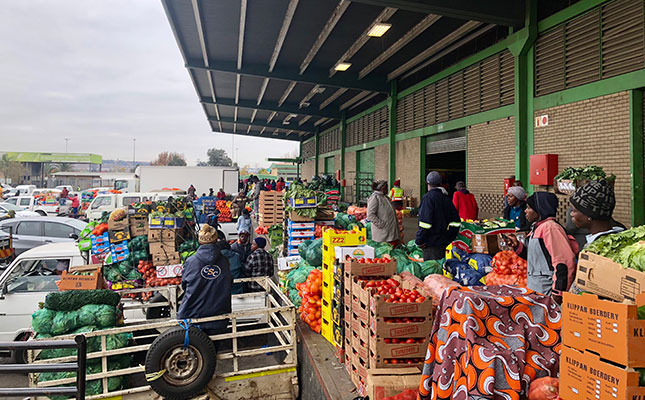
Namibia’s informal economy is valued at approximately N$49 billion in purchasing power parity (PPP) terms. It contributes 26.5% of gross domestic product (GDP) and provides livelihoods for 58% of the national workforce.
Yet most people operating in the sector lack adequate social protection, access to finance and secure business premises.
The figures come from the Diagnostic of Informality in Namibia, launched in November 2025. The report puts the scale of the sector beyond dispute.
The question now is whether the government is doing enough to improve the conditions of those who depend on it.
Michael Humavindu, then executive director in the ministry of finance and chairperson of the National Working Group on Informality, described the sector as more than a collection of small trading activities.
“This sector is not a side economy; it is a pillar of our national life,” Humavindu said at the launch.
He added that Namibia could not achieve shared prosperity while nearly half its workforce continued to move between survival and exclusion.
The diagnostic was jointly led by the Bank of Namibia, the ministry of industries, mines and energy and the ministry of justice and labour relations, with support from United Nations agencies.
An economy government cannot ignore
The report identifies agriculture, forestry and fishing, alongside food and accommodation services, among the sectors with particularly high levels of informal employment.
These activities sustain food production, rural livelihoods, tourism-related businesses and household incomes.
Women account for 53% of the informal workforce, according to the Bank of Namibia’s summary of the findings.
But economic participation does not necessarily mean financial security. The diagnostic puts social protection coverage among informal workers at just 0.69%.
Many operate without adequate pension arrangements, social security coverage or affordable business financing.
The sector also presents opportunities for established businesses.
Informal producers and traders could become suppliers, distributors and customers in organised agricultural, manufacturing, retail and tourism value chains.
That requires better access to finance, infrastructure and markets.
The President’s warning against overregulation
President Netumbo Nandi-Ndaitwah has previously called for the formalisation of informal businesses without creating additional regulatory barriers.
In September 2024, when she was Vice-President, Nandi-Ndaitwah told the third Annual MSME Forum that the sector should be formalised but not overregulated.
“Necessary frameworks to be put in place to formalise the sector, not to overregulate it, but to collect accurate and timely data that can be used by policy makers,” she said.
Her remarks were delivered on her behalf by Mateus Kaholongo, then deputy executive director in the office of the Vice President.
The position provides an important benchmark for the current administration. Formalisation must not become another layer of licensing, taxation and compliance costs for businesses already struggling to survive.
The 2030 targets under scrutiny
The Sixth National Development Plan (NDP6), covering 2025/26 to 2029/30, targets an increase in informal enterprises transitioning into the formal economy from 310 in 2024 to 950 by 2030.
It also seeks to increase the MSME sector’s contribution to GDP from 16% to 19.4%.
These are measurable commitments. The government must account for progress.
How many enterprises have been formalised since the 2024 baseline? What budget has been allocated? Which institutions are responsible for delivering the targets?
Formalisation should mean more than issuing registration certificates or trading licences.
A registered trader without secure premises, electricity, water, sanitation, affordable credit or access to markets has not necessarily achieved meaningful business growth.
NDP6 recognises these barriers. It proposes improved trading infrastructure, flexible credit facilities, lower collateral requirements, business development support and better market access.
Funding and implementation will determine whether these commitments deliver results.
NamRA wants compliance, but also growth
The Namibia Revenue Agency (NamRA) also has a role in creating a more formal business environment.
Commissioner Sam Shivute has said the agency wants to support small businesses while ensuring compliance with tax and customs requirements.
Speaking at a December 2025 engagement with small online importers operating under the “Order with Me” model, Shivute said: “Today, you may be part of an SME. But every big business started somewhere. Our wish at NamRA is to see your businesses grow and scale up so that you can compete internationally and pay your fair share of tax.”
The challenge is balancing revenue collection with the need to encourage entrepreneurship.
For informal operators, compliance costs, documentation requirements and access to guidance can determine whether formalisation becomes an opportunity or an additional burden.
From committees to measurable delivery
In August 2026, Industries, Mines and Energy Minister Modestus Amutse inaugurated the 35-member National Steering Committee on the Informal Economy.
The committee is chaired by Diina Nashidengo, director of commerce in the ministry. David Iigonda of the ministry of justice and labour relations is deputy chairperson.
At the inauguration, Amutse identified access to finance, suitable business premises, markets and reliable infrastructure among the sector’s major challenges.
The committee is expected to coordinate interventions and guide implementation of the policy roadmap covering 2026 to 2035.
But another coordination structure will not automatically improve traders’ operating conditions.
The government must show how the committee will mobilise resources, coordinate local authorities and deliver against NDP6 targets. Regular public updates should disclose spending, progress and the number of enterprises benefiting.
The private sector also has a role. Banks and development finance institutions could develop working-capital facilities and flexible lending suited to businesses with irregular incomes and limited collateral.
Investors could find opportunities in agricultural aggregation, food processing, logistics, storage, distribution and digital payments.
The real test is implementation
United Nations Resident Coordinator Hopolang Phororo challenged the government and its partners to move beyond research and policy discussions at the diagnostic’s launch.
“Let us commit not just to analysis, but to action. Let us build a Namibia where every job has value, every worker has rights, and no one is left behind,” Phororo said.
Namibia has quantified the scale of its informal economy, established formalisation targets and created an institutional framework to coordinate interventions.
The government must now publish regular progress reports showing how many businesses have transitioned into the formal economy, how many remain operational, the financing extended to them and the jobs created.
By 2030, success should not simply be measured by registration certificates issued. It should be measured by how many businesses have become financially sustainable, created jobs and contributed to national growth.