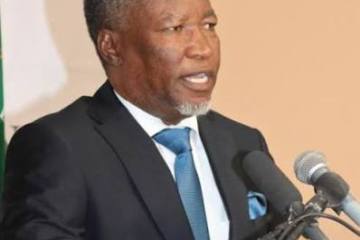
Sostenus Wilherm
Namibia will host one of the African Union’s most important labour and social policy meetings later this month as African governments seek solutions to rising unemployment, poverty and weak social protection systems affecting millions across the continent.
The ministry of justice and labour relations announced that Windhoek will host the Sixth Ordinary Session of the African Union Specialised Technical Committee on Social Development, Labour and Employment (STC-SDLE 6) from 27 to 31 July.
The summit comes as many African countries continue to struggle with high unemployment, particularly among young people, expanding informal economies and growing inequality, challenges that have placed increasing pressure on governments to strengthen social protection programmes.
Acting executive director Aune Mudjanima said the meeting will provide African countries with an opportunity to develop coordinated policy responses to some of the continent’s most pressing socio-economic challenges.
“The meeting will provide an important platform for policy dialogue, collaboration and consensus-building on matters relating to social development, labour and employment across the continent,” Mudjanima said.
The five-day meeting will bring together ministers responsible for labour, employment and social development from African Union member states, senior government officials, representatives of workers’ and employers’ organisations, regional economic communities and development partners.
Held under the theme “Investing, Strengthening and Expanding Social Protection Systems in Africa: A Critical Enabler for Inclusion, Resilience and Social Justice,” the summit will focus on strengthening labour markets, expanding employment opportunities and improving social protection systems.
Mudjanima said the discussions come at a time when Africa continues to face multiple socio-economic pressures.
“The meeting takes place in the context of significant socio-economic challenges confronting the continent, including persistent unemployment, widespread labour market informality, demographic shifts, migration, inequality, poverty and the growing impact of economic, public health and climate-related shocks,” she said.
Delegates are expected to review progress made in implementing African Union labour and social development policies while identifying practical measures to improve labour market inclusion and expand social protection coverage.
According to Mudjanima, special attention will be given to vulnerable groups that remain largely excluded from formal protection systems.
These include workers in the informal economy, migrant workers, women, young people, older persons, children and persons with disabilities.
The summit will also deliberate on strengthening child protection systems, eliminating harmful practices affecting women and children, addressing online child abuse and exploitation, promoting disability inclusion and responding to Africa’s ageing population.
Delegates are further expected to examine how employment policies, migration governance and social protection can be better integrated to support sustainable development and the African Union’s Agenda 2063.
The session will begin with a three-day experts’ Meeting from 27 to 29 July, where technical specialists will review reports submitted by member states and prepare recommendations for ministers.
The experts will hold separate deliberations on labour and employment issues and on social development before forwarding their recommendations to the ministerial session.
The ministerial meeting, scheduled for 30 and 31 July, will consider and adopt policy frameworks and strategic decisions that will guide implementation across the continent.
Mudjanima said hosting the summit presents Namibia with an opportunity to influence Africa’s labour and social development agenda.
“Hosting this meeting offers Namibia a strategic moment to showcase leadership in shaping Africa’s labour and social protection agenda, while reaffirming our commitment to human-centred and sustainable development,” she said.
She added that the meeting aligns with Namibia’s Vision 2030 and the Sixth National Development Plan, which prioritise employment creation, stronger social protection systems, resilience-building and inclusive economic growth.