CHAMWE KAIRA
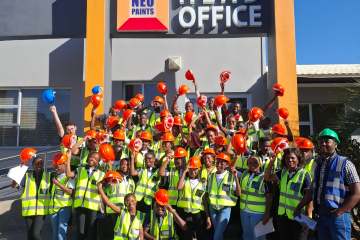
US ambassador to Namibia John Giordano recently led a senior US Department of State delegation to Deep Yellow’s Tumas uranium project in the Erongo Region.
The visit provided an opportunity to discuss project development, infrastructure, and the broader role of uranium in supporting energy security.
According to Giordano, Namibia is becoming an increasingly important participant in global energy and industrial supply chains.
“There is no substitute for seeing major projects firsthand. As global demand for reliable energy continues to grow, projects such as Tumas highlight the increasingly important role Namibia can play in global energy supply chains,” he said during the visit.
Deep Yellow says its Tumas uranium project has a total mineral resource of 137 million pounds of uranium oxide (U₃O₈) at an average grade of 245 parts per million (ppm).
The project has an ore reserve of 79.5 million pounds at a grade of 298 ppm.
The company said the resource includes an inferred resource of 30.8 million pounds, which could be converted into additional reserves in the future and potentially extend the mine’s current planned life of 30 years.
According to Deep Yellow, the Tumas project contains 125 kilometres of prospective palaeochannels, with around 30% of the area still to be explored.
The company said this provides significant potential to discover more uranium resources.
Deep Yellow also highlighted the results of its Tumas Definitive Feasibility Study (DFS), completed in February 2023.
The study was carried out during a period of high inflation and major disruptions to global supply chains following the Covid-19 pandemic, which increased expected construction and operating costs.
The ministry of industries, mines and energy granted the Tumas mining licence shortly after the re-costing study was completed.
The licence, issued in September 2023, is valid for 20 years and allows the company to move the project towards production. Once operational, Tumas is expected to become Namibia’s fourth uranium mine.
Meanwhile, Giordano joined Bloomberg Horizons Middle East & Africa in Cape Town to discuss Namibia’s growing role in the future of energy security.
“The race for artificial intelligence, advanced manufacturing, and economic growth is also a race for abundant, reliable energy,” he said.
He said Namibia’s stable regulatory environment and world-class uranium resources have positioned it as an increasingly important player in the global energy economy.
He added that President Donald Trump’s vision of American strength is built on energy dominance, technological leadership, and economic growth.
“The United States has a strong interest in working with reliable partners that are helping expand the energy resources needed to power the industries of the future,” Giordano said.