Staff Writer
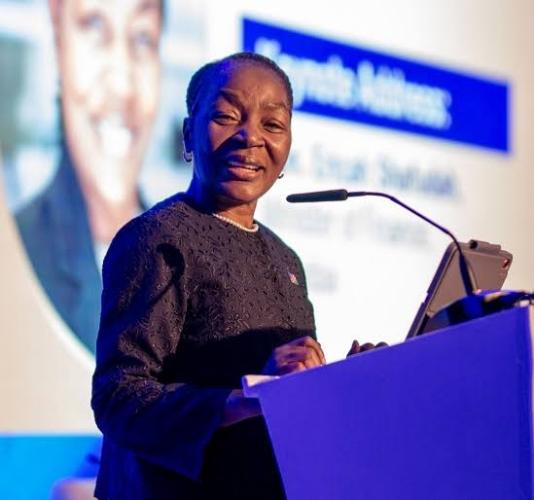
Finance minister Ericah Shafudah has listed several investment projects expected to contribute to Namibia’s future economic growth, including the approximately N$8.5 billion Osino Resources project near Karibib, which is targeting operations in August 2027, and the Etango uranium mine, where first yellowcake production is expected in 2028.
Other projects include the N$4 billion underground expansion at Navachab, the N$2 billion B2Gold Antelope project and NamPower’s N$2.6 billion Oshikoto Biomass Power Plant.
She also cited the N$2 billion Aus-Kokerboom transmission line, the NamWater Katima-Ngoma bulk water supply project, road works valued at N$1.6 billion through the Roads Fund Administration and developments in the green hydrogen sector.
Shafudah said the African Development Bank approved a grant of approximately US$5.9 million in September 2026 for the development of the Hyphen Green Hydrogen Project.
She further disclosed that CMMZE Energy Namibia had approved a N$17 billion final investment decision for a green hydrogen and ammonia project at Henties Bay.
Presenting her response to members of parliament on the 2026/27 Mid-Year Budget Review, Shafudah said the projects were among several investments at different stages of development that would support future growth and create employment during implementation.
She said Namibia’s long-term growth would increasingly depend on higher productivity, skills development, technology adoption and economic diversification.
Responding to concerns about the country’s economic growth compared with other African economies, Shafudah said comparisons needed to take into account differences in income and development levels.
She said Namibia’s GDP per capita was estimated at approximately US$4876 in 2025, substantially higher than the median of the comparator countries cited during parliamentary debate.
On the fiscal outlook, Shafudah said the government had reduced total expenditure for the 2026/27 financial year by 0.9% to N$105 billion following a projected revenue shortfall of N$1.5 billion.
The government had projected revenue of N$88.1 billion but decided against additional borrowing to accommodate funding requests amounting to N$13 billion.
Instead, funding for new priorities was secured through reallocations from projects that could not spend their allocated budgets.
She said the government remained committed to the Southern African Development Community’s 60% debt-to-GDP benchmark and aimed to converge towards it by the final year of the next Medium-Term Expenditure Framework.
Shafudah acknowledged concerns about rising public debt and interest payments, which she said were more than twice the N$6.6 billion allocated to development projects through the State Revenue Fund.
She said high interest payments were crowding out resources available for development, requiring greater fiscal discipline across ministries, offices and agencies.
The government also redirected N$685 million from projects and offices classified as non-performing, which Shafudah said represented funds that could not be spent during the current financial year rather than money lost.
The reallocations supported priorities including foot-and-mouth disease containment, grain reserves, the public servants’ medical aid scheme and replenishment of the Contingency Fund.
The government allocated N$179 million towards containing and managing the foot-and-mouth disease outbreak.
Shafudah warned that lifting livestock movement restrictions before the outbreak was contained could jeopardise access to premium export markets, including the European Union and United Kingdom.
She said Namibia had started bilateral trade negotiations with potential trading partners to explore opportunities for resuming trade in livestock and livestock products.