CHAMWE KAIRA
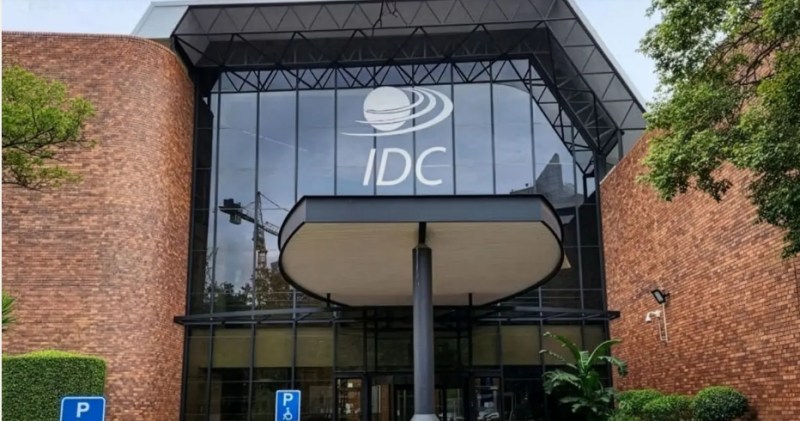
The Industrial Development Corporation of South Africa Limited (IDC) is continuing efforts to dispose of its minority stake in Namibia’s Rössing Uranium Limited, citing compliance requirements linked to the company’s shareholder structure.
The IDC holds approximately 10.48% of Rössing Uranium, one of the world’s largest and longest-running open-pit uranium mines, located near Arandis in Namibia’s Erongo Region.
According to the IDC, some of Rössing’s current shareholders are subject to international sanctions, resulting in the uranium producer being classified as a sanctioned entity under the corporation’s risk and compliance management programme.
The IDC said its continued investment in Rössing is therefore inconsistent with its internal policies and lender requirements, which require it to exit business relationships involving sanctioned parties.
The corporation has undertaken a broad marketing and advertising campaign, both locally and in Namibia, alongside direct engagement with targeted financial and strategic investors.
The process generated 35 expressions of interest, but the disposal of the IDC’s equity stake remains ongoing.
Rössing shareholders include China National Uranium Corporation (CNUC): 68.6% (majority owner since 2019), Government of Iran: 15% (held since 1976 via the Iranian Foreign Investment Company), Industrial Development Corporation (IDC) of South Africa: 10.2%, Government of Namibia: 3% equity stake (holds 51% of voting rights) Local Individual Shareholders: 3%.
The IDC also disclosed progress on the disposal of several other investments classified as non-current assets held for sale.
Eastern Produce South Africa (EPSA), a macadamia producer based in Makhado, northern South Africa, is one such asset. The IDC holds a 26.8% equity stake, while the remaining 73.2% is owned by UK-listed Camellia PLC.
The IDC executive committee approved a mandate in July 2025 to dispose of its stake in EPSA. The company is currently loss-making, with low macadamia prices and high production costs weighing on its financial performance. The fair value of the investment has consequently remained at R0.
The disposal process is still awaiting ministerial approval in terms of the Public Finance Management Act (PFMA).
Another investment, Incwala Resources, remains classified as a non-current asset held for sale. The IDC board approved the disposal of its entire 23.6% shareholding in the majority black-owned and controlled mining investment company, with ministerial approval obtained in April 2026.
The IDC also reported that the disposal of its 35% stake in Umicore Catalyst South Africa was completed during the current financial year.
The company manufactures automotive emission-control catalytic converters and was jointly owned by the IDC and Umicore Group.
The IDC increased its consolidated total assets to N$154.8 billion for the financial year ended 31 March 2026, up from N$145.0 billion in the restated 2025 financial year.
The figures are contained in the IDC Consolidated Annual Financial Statements for 2026.
Loans and advances remained one of the largest components of the IDC’s asset base, increasing to N$48.3 billion in 2026 from N$43.5 billion in the restated 2025 figures.
Investment securities recorded a significant increase, rising to N$50.6 billion from N$37.2 billion a year earlier.
The IDC’s cash and cash equivalents, however, declined to N$13.7 billion from N$15.2 billion, while short-dated investments fell to N$559 million from N$1.1 billion.
Investments in associates decreased to N$19.8 billion from N$22.9 billion, while deferred tax assets declined to N$4.9 billion from N$7.9 billion.