CHAMWE KAIRA
Namibia has been cited as an example of how Africa can use its emerging green hydrogen industry to create local value and support industrialisation rather than repeating traditional extractive economic models.
Germany’s Federal Ministry for Economic Cooperation and Development (BMZ) Commissioner for Africa, Philipp Knill, said Namibia’s emerging green iron industry demonstrated how partnerships could support value creation closer to renewable energy production.
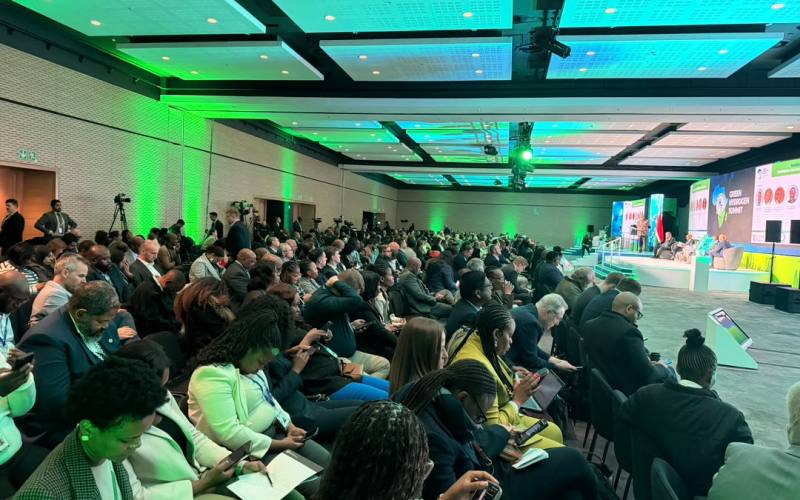
Knill made the remarks on the sidelines of a technical briefing ahead of the Africa Green Hydrogen Summit, taking place in Cape Town, South Africa, from 15 to 16 September 2026.
He said Africa should increasingly use green hydrogen and its derivatives within the continent to support industrialisation and value addition, including the production of fertilisers, green ammonia, mining inputs, green iron and green steel.
According to Knill, this approach could help Africa develop stronger local and regional industrial value chains instead of exporting raw resources while retaining limited economic benefits on the continent.
Namibia is participating in the summit, which brings together governments, development partners, investors, project developers and other stakeholders to advance green hydrogen, Power-to-X and related green industrial value chains.
The summit follows Namibia’s hosting of the Africa Green Industries Summit, with the country positioning green hydrogen as a potential driver of industrial development and investment.
Joseph Mukendwa, interim Head of the Namibia Green Hydrogen Programme, said continental platforms such as the summit were important for advancing economic diplomacy, attracting investment and strengthening regional cooperation around Africa’s emerging green economy.
Mukendwa said Namibia and South Africa could leverage their respective strengths to advance green industrialisation within the Southern African Development Community (SADC), develop regional value chains and create economic opportunities.
He said cooperation between the two countries could also help position Southern Africa as a competitive producer of green products for global markets.
The summit has also been accompanied by new financing commitments for green hydrogen and green industrial development.
The European Union has committed €20 million in grant funding for South Africa, with the potential to mobilise a further €200 million from KfW.
An additional €37 million has been committed through the EU’s Global Gateway for South Africa.
The African Development Bank has also announced US$20 million in reimbursable grant funding for four green hydrogen projects in Morocco, Egypt, South Africa and Namibia.
The financing commitments come as African countries seek to move beyond the export of raw resources and develop industries around renewable energy and green hydrogen production.
For Namibia, the development of green iron and other green industrial products forms part of efforts to convert the country’s renewable energy resources into higher-value economic activity.