Patience Makwele
Oshana governor Hofni Iipinge has urged young people in the region to take the lead in agriculture and reduce dependence on food from other areas.
Speaking at a youth agricultural engagement in Oshakati, he said rising food prices and unemployment make it urgent for the region to produce its own food.
“We cannot continue depending on others to feed us,” he said. “That must change now.”
Iipinge said young people must use available land and opportunities to produce food to improve food security and create jobs.
Iipinge urged young people to openly discuss their challenges and advocated for the revival of inactive agricultural projects.
He advised those without land to engage traditional authorities on how to access land.
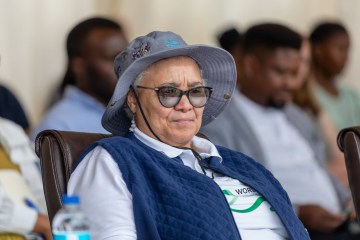
The engagement was led by the deputy minister of agriculture, fisheries, water and land reform, Ruthy Masake and focused on encouraging youth to take part in agriculture as a business.
“These sectors are not just about survival; they are about wealth creation, food security and national pride,” she said.
Masake called on young people to move beyond subsistence farming and adopt modern farming methods that can generate income.
“Farmers, the market is accessible to all. Do not ask your fellow youth whether your ideas will succeed. Instead, commence work on them. Especially with fish farmers, why are we not seizing this opportunity?”
She encouraged young people to improve mahangu and legume production using better seeds and conservation methods.
Masake also urged them to explore poultry farming, small livestock, horticulture, vegetable farming, and fish feed production.
Masake said the Oshana region has been allocated about N$577 million for youth programmes and urged young people to approach constituency offices to access funding.
Despite the push, challenges remain. Access to land, finance, water infrastructure and training continues to limit many young farmers. High input costs and limited irrigation also affect participation.
Agriculture expert Sackeus Luboni Mutumwa said financial support is key.
“Encouraging youth to go into agriculture sounds good, but it needs financial support. Young people have the skills and the willingness to create jobs for themselves, but access to start-up capital is a major challenge,” he said.
He said land access is another major issue.
“Land is also an issue. You cannot expect young people to farm if they don’t have secure and authorised access to land. In many cases, when land is used without proper approval, it leads to disputes. We have seen young people being taken to court over land issues.”
Mutumwa said structured support is needed.
“Instead of only urging young people, there must be clear systems in place to allocate agricultural land properly. Local people should be identified, given access to land, and supported to use it productively.”
He said long-term support is important for success.
“Yes, the opportunities are there, but young people need support to get started and to sustain their projects. Government needs to introduce more long-term projects, not just seasonal ones.”
Oshana remains reliant on food from other regions. Iipinge and Masake said the region has the potential to increase local production if young people take action.
“If young people rise to the challenge, Oshana can become a hub of food production,” Iipinge said.
The engagement forms part of efforts by the Ministry of Agriculture, Fisheries, Water and Land Reform to strengthen agriculture and create jobs.