Patience Makwele
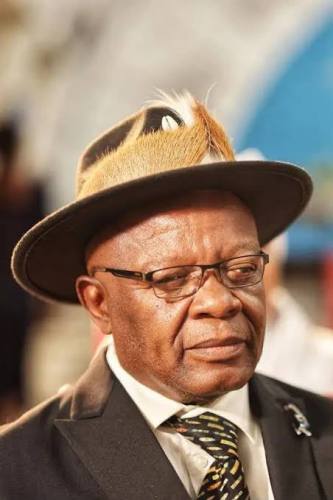
Otjozondjupa governor John Julius //Khamuseb has called for more money to be channeled into education infrastructure, saying the roughly 10% allocated for development is not enough to meet the needs of schools.
Speaking at the National ICT in Education Convention and Exhibition (NICE2026) in Otjiwarongo on Monday, //Khamuseb said the government needed to reconsider how it funds education as the country pushes to introduce more technology into schools.
“It is at times like this that we should really sit down and put emphasis on the ministry of finance and let them realise that although education takes the biggest chunk, the 10% is not enough for infrastructure development and the needs that we are experiencing in education,” he said.
He called for additional funding for classrooms, infrastructure and technology, suggesting that the government consider cutting allocations from other ministries to strengthen education.
“It is a must that we should cut from another ministry, if not so, so that we can justify that even the children of the poorest of the poor should have access to this information technology,” //Khamuseb said.
He stressed that he was not calling for cuts to teachers’ salaries, but for additional resources to ensure learners from poor communities are not left behind.
The governor’s warning comes as the government pushes for a major digital transformation of the education sector.
Deputy education minister Dino Ballotti said education received N$28 billion in the current national budget, accounting for 32% of the N$87.9 billion budget after interest repayments.
But despite education receiving the largest share, Ballotti said less than N$1 billion was allocated to development and capital expenditure.
“That amounts to only 3.3% and operational budget standing at 96.7%,” he said.
Ballotti questioned whether simply asking the treasury for more money was enough, pointing to the structure of the education budget.
“To ask the treasury for more funding, I’m not sure is the solution,” he said, noting that Angola allocates about 9% of its budget to education, while South Africa allocates approximately 17%.
He said Namibia’s challenge was not only about the amount allocated to education, but also about where the money was being spent.
The funding pressure comes as the government targets a sharp expansion in digital access. Under the Sixth National Development Plan, Namibia aims to increase access to digital technologies from an average of 28% to 70% by 2030 and national internet usage from 53% to 90%.
Ballotti said the country nevertheless faced five major obstacles to fully digitising education: unstable internet bandwidth, particularly in remote schools including ageing ICT infrastructure and electricity constraints, high data and hardware maintenance costs, unequal digital literacy among teachers and learners, and funding pressures.
“We must be careful not to confuse leapfrogging technology with skipping foundations,” Ballotti said.
“Digital education can help us to leapfrog certain stages of technological development but we cannot leapfrog the basic conditions necessary for learning.”
//Khamuseb made a similar argument, warning against putting technology ahead of basic educational skills.
“We must not repeat the same mistake that was done in America at the peak of the computer technology era. They realised that children do not read, they do not write, they do not know the basic arithmetic,” he said.
He argued that learners needed a strong foundation at pre-primary and primary level before technology could significantly improve their education.
Ballotti said the government was nevertheless moving ahead with plans to expand digital learning, including digitising curriculum content, equipping teachers with digital teaching skills and deploying off-grid solar-powered technology to rural schools.
He said the country wanted a learner in rural Otjozondjupa or Kunene to have the same digital learning opportunities as one in Windhoek.
“We have promised the nation” to complete digitisation of core academic subjects, establish an integrated digital hub and accelerate the provision of computer laboratories, smart classrooms and internet infrastructure, Ballotti said.
Otjiwarongo mayor Leonard Simushi warned that the digital push must not create another layer of inequality.
“Digital transformation must close gaps, not create new ones,” Simushi said, calling for technology to reach learners in remote communities, learners with disabilities and schools still facing infrastructure and connectivity challenges.
Ballotti said the government could not achieve its digital education targets alone, calling on telecommunications companies, academia, private industry and international partners to establish long-term partnerships.
“We need formalised Public-Private Partnerships (PPPs) that establish long-term investment models,” he said.
The challenge now, as raised by the officials, is whether Namibia can finance the infrastructure needed to deliver its ambitious digital education targets while still addressing the basic needs of schools.