Renthia Kaimbi
Former First Lady Monica Geingos’ documented response to the 2020 killing of Andy Kazekondjo and the assault of his younger sister focused on psychological and emotional support for the affected family, rather than a commitment to build them a house.
The clarification follows a recent letter by Affirmative Repositioning activist and Moses Garoëb constituency chairperson, Vilbardina Kalume addressed to Geingos, in which she asked for an update on what she described as a housing commitment made by Geingos’ office after the incident in Havana.
Kalume said Geingos’ office, working with the One Economy Foundation and social welfare partners, had announced plans to provide permanent housing to the affected family, which had reportedly been temporarily sheltered by a community member following the attack.
“It has now been several years since that pledge was made, and I have not been able to find any public update on its outcome,” Kalume wrote.
She said, to her knowledge, the mother and children had since returned to the house where the incident occurred and were therefore reminded of the traumatic experience on a daily basis.
Kalume asked whether the promised housing had ever been completed and handed over to the family and, if there had been delays, what had caused them and whether the project was still active.
“If the pledge was fulfilled, why does the family remain in the original house?” she asked.
However, a social media post published by Geingos on 23 September 2020, following her visit to the bereaved family, does not mention a housing commitment.
Instead, Geingos’ account of the intervention records an emphasis on grief counselling and psychological support for the family, particularly the children who had witnessed the violent incident.
“Yesterday during a home visit to the bereaved family of Andy Kazekondja, the 29-year-old man who was brutally killed while protecting his younger sister from being raped, FLON spent time with the family pledging to share in their journey to finding peace after this tragic loss,” Geingos’ office shared at the time.
She had said she was particularly concerned about the impact of the incident on the minor children.
“As a mother with children of the same age, FLON shared her heart with the family and her concerns for the trajectory of the minor children who witnessed this violent attack,” her office further wrote.
Geingos further stated that she had offered “ongoing psychological support to the bereaved family”.
Her technical adviser at the time, Dr Veronica Theron, reportedly also conducted a debriefing session with family members who were present during the incident and spent individual time with the children.
“The minor children … are experiencing nightmares and flashbacks after the traumatic incident,” Geingos’ office wrote.
Additional reports published at the time similarly also stated that Geingos assured the family of her office’s support, including psychosocial counselling.
The documented 2020 post therefore provides an account of Geingos’ engagement with the family, while the recent letter raises a separate claim about housing.
Following an investigation into the matter, the Windhoek Observer found that there is no reference to a housing construction pledge following the 2020 incident, apart from a home visit, psychological support and intervention by Theron.
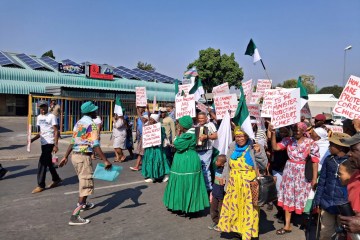
Kazekondjo, 29, was killed in Havana in September 2020 after reportedly intervening when his younger sister was attacked.
The incident became one of the cases that fuelled widespread national anger over gender-based violence at the time.
Geingos was First Lady between 2015 and 2024.
Kalume, however, maintains that a housing pledge was made and has called for clarity on its alleged implementation.
She said her intention was not to accuse those involved, but to ensure that the family received an explanation.
She further told the Windhoek Observer that the family claimed they had signed documents related to the housing pledge with unidentified individuals, presumably from the ministry of gender and child welfare and the City of Windhoek, but had, however, not obtained any copies of the said documents.
“Survivors and their families are often let down not by malice but by promises that quietly stall once public attention moves on,” she wrote.
“I raise this in that spirit, not to accuse, but because this family deserves to know that a commitment made to them in their most vulnerable moment was kept, or to understand honestly why it wasn’t.”
The correspondence has raised a question about whether a housing commitment may have been made separately by another party.
However, based on the records reviewed, there is currently no evidence that such a housing pledge was made by Geingos or through her office as former First Lady.
Geingos’ office said that while it was possible that someone may have made a promise of permanent housing to the Kazekondjo family, there would have been a public record of such a commitment had it been made through her office.
Her office also cautioned members of the public against drawing conclusions from AI-generated reports circulating online, stressing that such information remains inconclusive without supporting evidence.
The Windhoek Observer was unable to obtain the documents the family reportedly signed and could not independently verify the alleged housing pledge.
Investigations into the alleged housing pledge, including who may have made it and under what arrangement, remain ongoing.