Patience Makwele
Livestock owners in Judea Lyaboloma are facing a sharp rise in attacks on their animals, with reported incidents surging from one in May to nine in June and 14 in July.
This comes after the constituency’s conservancy in the Zambezi region recorded 37 livestock attacks between January and July, with lions accounting for most of the recent incidents.
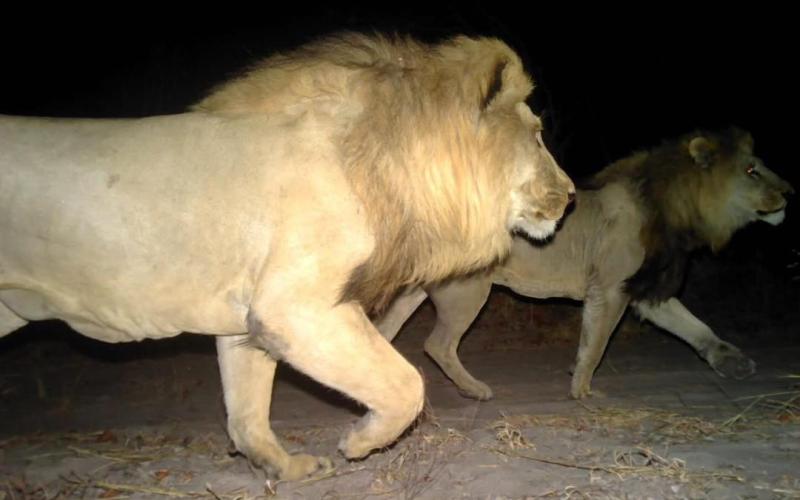
Speaking to the Windhoek Observer on Tuesday, Judea Lyaboloma conservancy field officer Oscar Ñande revealed that 12 of the 14 livestock attacks recorded in July were caused by lions, compared to seven lion-related incidents in June.
The figures show livestock attacks rising steadily in recent months, despite an overall decline in human-wildlife conflict incidents.
The conservancy recorded three livestock attacks in January, three in February, six in March, one in April, one in May, nine in June and 14 in July.
Ñande said the situation is particularly concerning because lions are increasingly being found close to villages, where dense bush provides cover for predators during the day before they move out at night.
“Lions are wrecking havoc,” he said.
He identified bush encroachment around communities as one of the factors contributing to the problem, saying thick vegetation gives predators places to hide close to homes and livestock kraals.
“Some of these animals, they hide under bushes during the day and only attack at night,” Ñande said.
According to Ñande, Judea Lyaboloma is situated between two national parks, meaning residents have long lived alongside wildlife. Ñande said, however, that the growing population means people cannot simply be expected to move away from wildlife areas.
Instead, he suggested that the government should consider creating employment opportunities for locals through tenders to clear selected areas of dense bush around villages.
He said this could create clearer passages for people and wildlife while reducing places where predators can hide.
“If the bush is cleared, people can be sure that it’s safe and that there are not a lot of animals that can hide,” he said.
The latest figures show that the nature of human-wildlife conflict changes with the seasons.
While livestock attacks have risen sharply in recent months, crop damage accounted for most recorded incidents earlier in the year.
The conservancy recorded six crop-damage incidents in January, 18 in February, 61 in March and 67 in April, before the number dropped to nine in May and one in June.
Ñande said elephants were responsible for most crop-related incidents during the farming and harvesting period, with 53 elephant incidents recorded in March and 65 in April.
The picture is different for livestock, with lions becoming the dominant problem animal in recent months.
Lion-related incidents rose from two in January to three in February, four in March, one in April, one in May, seven in June and 12 in July.
Only one hyena-related incident was recorded during the period, in July, while no leopard-related incidents were recorded.
The new figures come after the Windhoek Observer reported concerns from farmers in the area who said repeated attacks by lions and hyenas were threatening their livelihoods and safety.
One farmer, 76-year-old Brendan Miliko, said he had lost three cattle since the beginning of the year, including a pregnant cow. He also said predators had entered livestock kraals inside villages.
Ñande said the conservancy is also concerned about the safety risks posed by dense vegetation.
He pointed to an elephant incident recorded earlier this year, saying the victim may have been able to identify the animal sooner had the area not been so overgrown.
On compensation, Ñande said the government provides about N$60 000 to affected victims, but questioned whether the amount is sufficient given the losses suffered by farmers.
He stressed that conservancies and game guards are often left dealing with victims and responding to the consequences of human-wildlife conflict.
Ñande, however, said the conservancy has not yet confirmed how the N$60 000 is distributed or how many Judea Lyaboloma residents have received compensation.
He also urged farmers not to deliberately kill wildlife, saying incidents where animals are killed while farmers defend their livestock are investigated to establish what happened before any legal action is taken.
The latest figures come against a wider increase in human-wildlife conflict across the Zambezi region.
More than 560 human-wildlife conflict incidents were recorded in the region during the 2025/26 period, up from 411 the previous year, according to figures presented by Zambezi Governor Dorothy Kabula-Simushi in July.
Between January and April this year alone, the ministry of environment, forestry and tourism recorded 132 livestock attacks in the region, with lions, leopards and spotted hyenas being responsible for most of the reported cases.
The figures highlighted the growing pressure on communities living alongside wildlife, particularly livestock owners now facing a sharp rise in lion attacks in the region.