Sostenus Wilherm
The Central Procurement Board of Namibia (CPBN) has facilitated the signing of a N$268.7 million contract to transform flood-prone Muzii Combined School in the Zambezi Region, with the project expected to protect teaching and learning from recurring flooding.
The contract, valued at N$268,720,303.67, was signed on Wednesday and awarded to Art Construction CC under a procurement process conducted by the CPBN on behalf of the ministry of education, innovation, youth, sports, arts and culture.
The project will focus on the embankment and elevation of the school grounds, with the aim of improving the safety, resilience and functionality of the school, which has been repeatedly affected by floods.
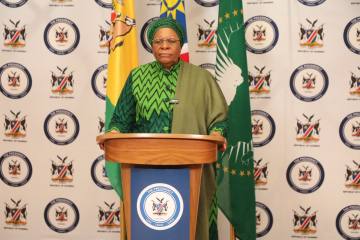
CPBN board chairperson Mary Shiimi said the investment goes beyond construction, arguing that learners have a right to study in safe and conducive surroundings.
“This project is therefore not only about addressing the challenges posed by flooding, but also about ensuring that learners at Muzii Combined School are afforded an environment in which they can learn and develop without disruption,” Shiimi said.
The project is expected to reduce disruptions to teaching and learning while addressing health and safety risks associated with flooding and the school’s existing infrastructure challenges.
As part of the development, elevated platforms and embankment protection will be constructed, alongside a docking station and a range of supporting infrastructure.
The planned facilities include male and female hostel blocks, a kitchen and dining hall, a matron’s house with sickbays, a services block, a principal’s house, three back-to-back staff houses and an administration block.
The development will also include ablution facilities, classroom blocks with laboratories, a guard house and associated external works and services.
The scale of the investment makes the project one of the significant education infrastructure interventions aimed at addressing the impact of flooding on a school community.
Shiimi said public institutions have a responsibility to ensure that money allocated to such projects results in infrastructure that is durable and provides long-term value.
“As public institutions, we have a responsibility to ensure that Government funds are protected through the delivery of quality, sustainable infrastructure that provides lasting value to the Namibian people,” she said.
The ministry’s executive director, Erastus Haitengela, welcomed the signing and stressed the need for close coordination between the ministry, contractor and other stakeholders during construction.
Haitengela said timely communication and the early resolution of challenges would be critical to preventing unnecessary delays and ensuring that the project is completed within the agreed timeframe.
He reaffirmed the ministry’s commitment to working with the contractor and other stakeholders to facilitate the smooth implementation of the project.
The development is expected to provide learners, teachers and other staff with a safer environment for teaching, learning and accommodation once completed.
The project has an intended completion period of 36 calendar months.
The CPBN said the contract signing represents an important milestone towards the commencement of construction work designed to protect educational activities at Muzii Combined School from the impact of recurring floods.
Flooding has long presented challenges for communities and infrastructure in parts of the Zambezi Region, making resilient public infrastructure increasingly important for uninterrupted service delivery.
The planned elevation and embankment works are expected to provide a longer-term solution to the disruption caused by flooding, rather than relying solely on temporary responses whenever water levels rise.
The project will also expand and improve the school’s supporting infrastructure, potentially addressing accommodation, classroom, administration and health-related needs alongside the flood mitigation measures.
The CPBN said its role in facilitating the project forms part of its broader mandate to promote efficiency, transparency, accountability and value for money in public procurement.
The board said strategic procurement projects such as the Muzii development should contribute not only to infrastructure delivery but also to improved public services and lasting benefits for communities.