CHAMWE KAIRA
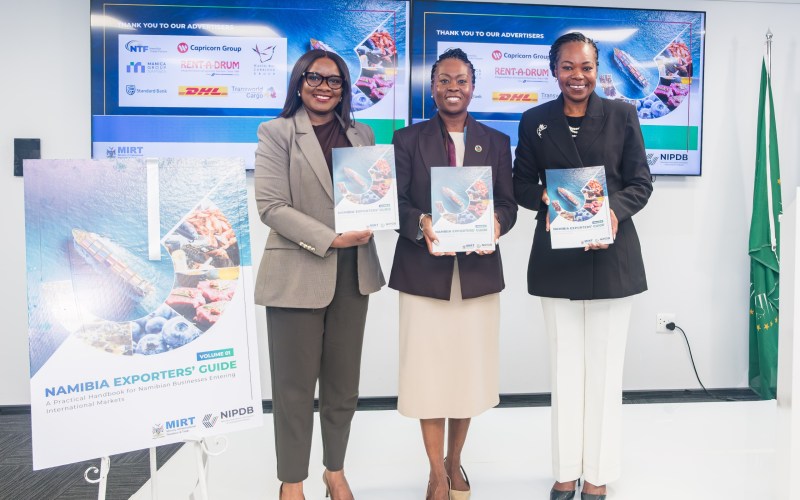
The recently launched Exporters’ Guide is expected to help local businesses, particularly micro, small and medium-sized enterprises (MSMEs), enter regional, continental and international markets.
The guide was released by the ministry of international relations and trade (MIRT) in collaboration with the Namibia Investment Promotion and Development Board (NIPDB).
The handbook provides practical information on export procedures, regulatory requirements, logistics, financing and digital trading platforms to help businesses navigate the process of selling goods in foreign markets.
International relations and trade minister Selma Ashipala-Musavyi believes expanding Namibia’s export base is a key part of the country’s industrial development policy.
The government aims to increase the share of manufactured goods in total exports from 42% to 60% by 2029, while raising the contribution of agro-processing to gross domestic product from 7.5% to 10%.
The guide seeks to help businesses take advantage of trade arrangements such as the African Continental Free Trade Area (AfCFTA) and the Southern African Customs Union (SACU), which provide access to regional and continental markets.
According to the NIPDB, businesses often face challenges understanding export regulations and procedures, particularly when entering markets outside Namibia.
Acting NIPDB chief executive officer Julia Muetudhana said the guide breaks down the export process into practical steps for emerging entrepreneurs.
It includes export-readiness assessments to help businesses evaluate their financial and operational capacity, as well as guidance on using e-commerce platforms such as Amazon, Alibaba and Takealot to reach customers.
The handbook also covers export documentation, logistics through infrastructure such as the port of Walvis Bay and regional transport corridors, and financial risks associated with currency fluctuations and non-payment.
The guide highlights Namibian businesses that have expanded their operations through exporting.
Aranos Firewood and Charcoal increased deliveries from one truckload a month to eight truckloads monthly to wholesalers in South Africa, according to the information provided in the guide.
Tuli-Line Trading used the NIPDB’s She Exports Programme to obtain food safety certifications that enabled the business to access international markets, including China.
MIRT and the NIPDB are encouraging entrepreneurs, innovators, youth-led enterprises and women-owned businesses to use the guide and engage with available trade-support services.
The initiative comes as Namibia seeks to increase the contribution of manufacturing and agro-processing to the economy and expand the range of locally produced goods sold in international markets.
The 74-page guide brings together information on export procedures, regulatory requirements, market opportunities, trade agreements, logistics, financing and risk management that was previously dispersed across different institutions and resources.
The initiative supports Namibia’s export diversification agenda under the Sixth National Development Plan (NDP6), the National Trade Policy and the African Continental Free Trade Area (AfCFTA) National Strategy.
The government has set a target of generating N$100 million in export revenues from MSMEs by 2028, according to the launch announcement.
With Namibia’s domestic market estimated at approximately 3.2 million people, the guide is intended to help businesses identify opportunities beyond national borders and overcome challenges associated with entering foreign markets.
Outgoing executive director of MIRT, Ndiitah Nghipondoka-Robiati, said access to international markets through trade agreements needed to be supported by practical guidance and accessible business support services.
Namibia has preferential market access through arrangements including the AfCFTA, the Southern African Customs Union (SACU), the Southern African Development Community (SADC) Trade Protocol, the European Union-SADC Economic Partnership Agreement and the United States’ African Growth and Opportunity Act (AGOA).
The guide is primarily aimed at first-time exporters and MSMEs, but is also intended to assist established exporters seeking to expand into new markets, policymakers and business support institutions.
Its 12 chapters cover the export process, from assessing a business’s readiness to export and identifying market opportunities to meeting legal requirements, registering as an import-export trader and applying for permits.
It also provides information on digital exporting and e-commerce, market selection, export strategies, documentation, customs clearance, logistics and product certification.
Other topics include export financing, payment methods, pricing, commercial and political risks, operational challenges, buyer relationships and sustainability.
The publication includes an export readiness checklist, a summary of Namibia’s trade agreements, an overview of export support institutions and contact details for selected Namibian embassies that assist exporters.
Muetudhana said the guide was intended to make the export process more accessible to businesses seeking to enter international markets.
She said the guide should encourage more Namibian businesses to explore international markets, strengthen existing exporters and contribute to a more diversified and resilient economy.
Muetudhana added that the NIPDB provides support through initiatives including its High Potential Pool, Business Advisory Services, market intelligence and policy advocacy.