As Parliament debates the new Investment Bill, Dangote’s investments in Kenya and Ethiopia raise questions about local ownership, investor certainty and Namibia’s returns from foreign capital.
Elvis Mboya
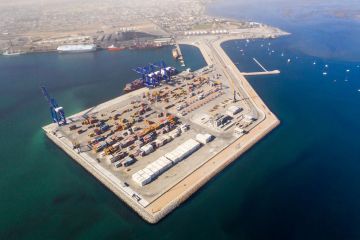
Namibia has attracted a historic N$41 billion (US$2.5 billion) investment from Nigerian industrialist Aliko Dangote. The project will establish a major fuel storage facility and regional pipeline network at Walvis Bay.
But the revelations that Namibia owns zero equity in the facility raise an important question: how much ownership and long-term commercial value is Namibia securing from foreign investment, even igniting comparisons with Dangote’s recent investments in Kenya and Ethiopia?
The debate comes as parliament considers the Namibia Investment Promotion and Facilitation Bill. Industries, mines and energy minister Modestus Amutse tabled the proposed legislation.
“It seeks to establish clearer rules for domestic and foreign investors. It also addresses investor protection, investment approvals and local participation.”
The challenge is to attract capital while expanding Namibian ownership and business participation.
Infrastructure first, equity questions remain
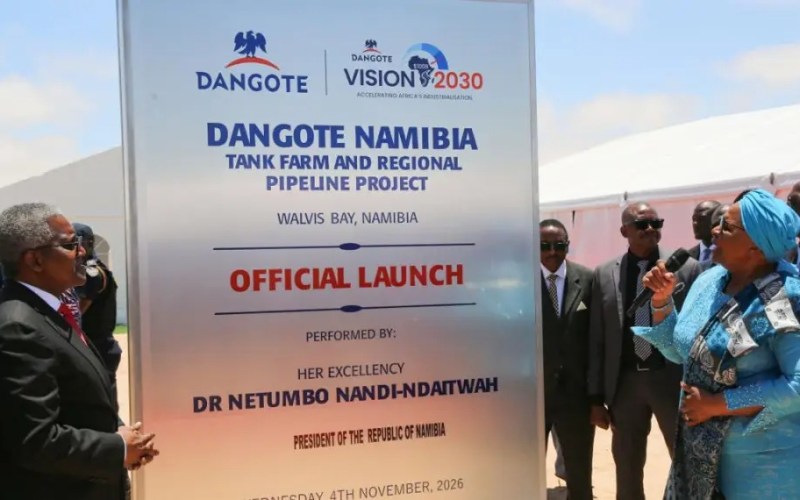
President Netumbo Nandi-Ndaitwah launched the Dangote Namibia Tank Farm and Regional Pipeline Project on 4 November 2026.
The project includes a 600-million-litre fuel storage facility and a planned 1 700-kilometre pipeline network. It will serve Namibia and regional markets. Completion is expected within 18 to 20 months.
No Namibian government equity stake has been publicly disclosed. This does not prove that local participation was excluded from negotiations. But it leaves questions about ownership and the involvement of domestic investors.
Namibia may have prioritised infrastructure development, job creation and tax revenue. The project could also improve fuel security and strengthen Walvis Bay as a regional logistics hub. These are important economic benefits.
However, jobs, taxes and infrastructure are not equity. They do not give the country direct ownership or a share of future profits. The distinction matters when assessing the project’s long-term returns.
Kenya offers a different example. On 21 October, Dangote announced that his group had acquired a 24.76% stake in the Kenya Pipeline Company.
The acquisition was valued at approximately N$5.6 billion (US$335 million). Dangote became the company’s second-largest shareholder.
“We bought 25 percent of their pipeline network for their distribution of petroleum products,” Dangote told Bloomberg, according to Business Daily.
Kenya is also pursuing a stake in Dangote’s proposed N$265.6 billion (US$16 billion) Lamu refinery. The facility is planned to process 700,000 barrels of crude oil daily.
Treasury Cabinet Secretary John Mbadi said Kenya had been allocated a proposed 10% stake, worth about N$25.7 billion.
“If other governments are not going to take up, we can increase that and have more for Kenya and even have individual investors,” Mbadi said.
The refinery’s ownership structure is not yet finalised. The proposed allocation is not completed shareholding.
Ethiopia provides another model.
In August 2025, Ethiopian Investment Holdings signed a shareholders’ agreement with Dangote Group for a N$41.5 billion (US$2.5 billion) fertiliser complex.
The Ethiopian government institution will hold 40%. Dangote Group will retain 60%.
Investment Bill must deliver a win-win
These examples raise questions for Namibia. Could institutions such as NAMCOR, the Government Institutions Pension Fund or qualified domestic investors participate in strategic projects?
There is no public confirmation that their equity participation was formally considered for the Walvis Bay development.
The answer is not to demand shares from every foreign investor. Nor should local ownership rules discourage investment or create uncertainty.
The Investment Bill should provide clear and predictable rules. Both local and foreign investors must understand the ownership requirements before committing capital.
Namibian partners must also bring real value. This could include capital, technical skills, land, management capacity, supplier networks or market access. Citizenship alone should not guarantee equity.
Foreign investors, in turn, need fair terms and protection for their commercial interests. They must be able to earn returns that reflect their investment, expertise and risks.
A genuine win-win arrangement should achieve both objectives. It should attract foreign capital and expand Namibian ownership. It should also develop local businesses, skills and investment capacity.
The Dangote project should therefore be assessed beyond its N$41 billion price tag. Its value must also be measured through jobs, taxes, infrastructure, local business opportunities and long-term economic returns.
As parliament debates the Investment Bill, Namibia has an opportunity to set that balance. The objective should be clear: attract investment, protect investor confidence and give Namibians a meaningful stake in the economy.