CHAMWE KAIRA
The Bank of Namibia aims to buy 600kg of gold from local mining companies under its gold accumulation programme.
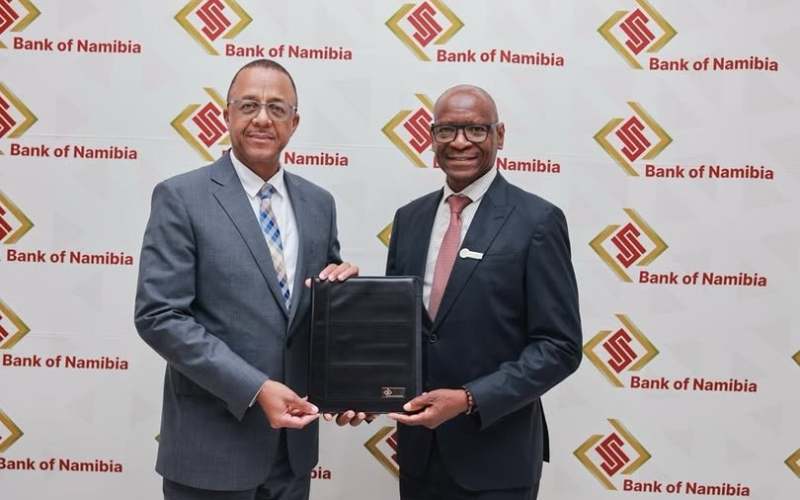
Deputy governor Nicholas Mukasa revealed that the central bank has so far purchased 425kg of gold from local mines as part of its gold accumulation strategy.
“If you look at the increase in our foreign reserves between the two MPC meetings, a significant part has come from gold. We have this programme where we are accumulating gold. We want to buy 600kg of gold. We are sitting at 425kg, and a lot of the growth in our foreign exchange reserves is coming from our gold purchase programme,” he said.
Mukasa said gold complements other assets traditionally held in the central bank’s reserves, making it useful for diversification.
“We like gold because, if you look at gold and some of the other assets we have traditionally held in the portfolio, it seems to complement one another. In terms of diversification, they do not tend to move together, so gold is very complementary to what you can call traditional reserve assets,” he said.
The central bank launched its gold accumulation strategy last year to diversify the country’s foreign exchange reserves and strengthen economic stability amid global uncertainty.
Namibia’s international reserves rose to N$59.3 billion at the end of September from N$58 billion at the end of July.
In its monetary policy statement, the central bank said the increase was mainly attributable to higher monetary gold holdings and customer foreign currency placements.
The level of reserves translates into an estimated import cover of 3.6 months and remains sufficient to support the currency peg and meet the country’s international financial obligations, the bank said.
On Wednesday, the Bank of Namibia increased the repo rate by 25 basis points to 7%.
The bank noted that key commodity prices had remained elevated since the August Monetary Policy Committee (MPC) meeting, with crude oil prices recently surging above US$100 per barrel, mainly due to heightened tensions in the Middle East.
Governor Ebson Uanguta said domestic economic activity was projected to remain subdued, while inflation continued to face upward pressure. Growth in private sector credit extension (PSCE) increased, while the trade deficit widened further.
Uanguta said the stock of international reserves remained adequate to support the currency peg and meet the country’s international financial obligations.
He added that, in determining the appropriate monetary policy stance, the MPC considered the need to narrow the interest rate differential between Namibia and South Africa, the anchor country, to limit potential capital outflows and safeguard international reserves.
The Namibian economy is expected to remain under pressure as previously identified risks materialise, particularly the outbreak of foot-and-mouth disease (FMD).
Nevertheless, economic growth is projected to improve from 1.7% in 2025 to 2.1% in 2026 and 2.8% in 2027, supported by recoveries in the agriculture and manufacturing sectors.
Other key downside risks to the domestic outlook include subdued global growth prospects and the potential occurrence of El Niño conditions.
Domestic inflationary pressures have persisted, disrupting the disinflation trend observed up to March this year.
Going forward, domestic prices are expected to remain elevated, with headline inflation projected to rise from 3.5% in 2025 to 4.2% in 2026 before easing slightly to 4% in 2027.