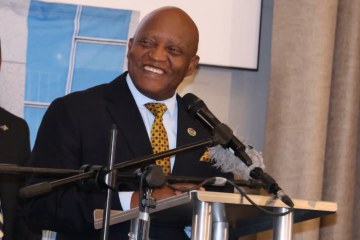
Sostenus Wilherm
The Arandis Town Council has agreed to pay businessman Simon Shaninga N$95,292.81 to settle a High Court dispute over money he paid to the local authority in connection with a contested property lease.
The settlement follows a dispute over N$74,375.40 paid by Shaninga to the council on 4 December 2024, after he believed he had been allowed to take over the rights and obligations attached to a property leased to Hans Pieter Somaeb.
Under the settlement agreement signed by Shaninga and the Arandis Town Council, the council will pay Shaninga N$74,375.40 in full and final settlement of his claim, while also covering his legal costs of N$20,917.41.
The combined amount of N$95,292.81 must be paid within 30 days after the settlement agreement is made an order of the High Court of Namibia.
Shaninga had initially approached the court seeking repayment of the N$74,375.40, together with interest and legal costs, after the council refused to refund the money.
According to his claim, the dispute centred on Erf 748 in Arandis, which is owned by the Arandis Town Council and had been leased to Somaeb.
Shaninga alleged that during November 2024, he approached the council after Somaeb indicated that he could no longer afford the rates, taxes and general maintenance of the property.
The court documents stateby that Somaeb informed Shaninga that he could take over the lease, subject to conditions imposed by the council.
Shaninga further alleged that a certain Robi Strauss, acting on behalf of the council and its chief executive officer, advised that the existing lessee should obtain a police declaration confirming that he was unable to afford the rates and taxes and wished to voluntarily transfer his rights, duties and obligations relating to the property.
Somaeb subsequently made the declaration, which was handed to Shaninga and then delivered to the council.
Thereafter, Shaninga and Somaeb entered into a memorandum of understanding.
According to Shaninga’s claim, the MOU recorded that he would take over the rights, duties and obligations relating to the property, including responsibility for rates, taxes and monthly rental.
It further provided for Shaninga’s use and enjoyment of the property and, according to his claim, placed him in the position of Somaeb regarding the rights and duties arising from the lease. On 4 December 2024, Shaninga paid N$74,375.40 to the council.
His particulars of claim state that the payment was made “in good faith as settlement for the outstanding rates and taxes on the property” so that he could commence using and enjoying the property. The arrangement was subsequently rejected by the council.
On 7 January 2025, the council informed Shaninga that the MOU between him and Somaeb was not a valid and binding agreement.
The council also maintained that Somaeb did not possess the legal rights to transfer ownership of the property to Shaninga.

According to the claim, the council further stated that the transactions through which Shaninga paid money to it were “neither endorsed or authorized by the first defendant”.
The council consequently took the position that Shaninga had paid the money “at his own instance” and that it did not see a valid basis for repaying the money.
Shaninga disputed that position and subsequently demanded that the council return his money.
His court papers allege that the council “despite repeated demands failed/refused and or neglected” to repay the N$74,375.40.
He therefore instituted proceedings claiming repayment of the amount, interest and costs.
Shaninga also advanced an alternative claim based on unjustified enrichment.
He argued that the council had been enriched at his expense because it retained the N$74,375.40 despite the failure of the arrangement surrounding the property.
His claim states that the council was “unlawfully enriched at the expense of the plaintiff” and that the enrichment was “without lawful and just cause”.
The council and Shaninga have now agreed to settle the dispute without the matter proceeding to a final determination on the merits.
Under the settlement, the N$74,375.40 will be paid free of interest, while the council will cover Shaninga’s legal costs.
The agreement also provides a strong consequence should the council fail to meet the payment deadline.
If the council defaults, the full outstanding settlement amount will immediately become due and payable without further notice or demand.
The outstanding balance will then attract 20% more interest per annum from the date of default until final payment.
Shaninga will also be entitled to apply for judgment against the council for the outstanding balance, interest and legal costs.
The settlement agreement states that it constitutes the “whole agreement” between Shaninga and the council, with the parties agreeing that they will have no further claims against each other arising from the dispute.
Both parties have further agreed to approach the High Court for an order making the settlement agreement an order of court.
The agreement was signed on behalf of the Arandis Town Council in Walvis Bay on 7 September 2026, while the matter remains subject to the court formally granting the agreed order.