Staff Writer
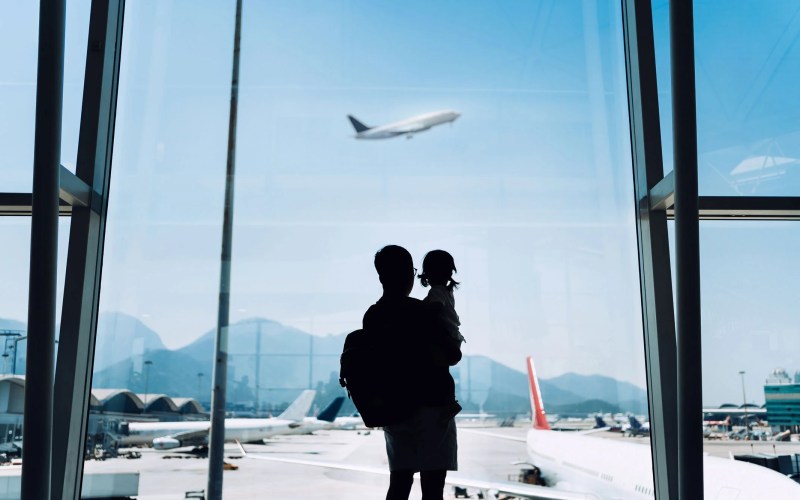
Aviation is preparing to move twice as many passengers within a generation, without doubling the airports, the fleet, or the people standing at the borders.
Société Internationale de Télécommunications Aéronautiques (SITA)’s Impact Report 2025 sets out how the industry is closing that gap, and the answer is increasingly software rather than concrete.
The industry will carry 8 billion passengers a year within 20 to 25 years, heading toward 10 billion by 2050, according to IATA.
Drawn from a year of work with airlines, airports, governments and travel partners worldwide, the SITA Impact Report 2025 tracks how technology is becoming the principal way the industry adds capacity, manages disruption and reduces its environmental footprint.
David Lavorel, CEO of SITA, said: “With passenger numbers heading toward 10 billion a year by 2050, the question is unavoidable: how do we move twice as many travelers without doubling our infrastructure?
The SITA Impact Report 2025 shows how that shift is already underway. Airports are scaling capacity within the buildings they already have, avoiding the cost and timelines of new construction.
Governments are clearing borders before passengers ever reach a queue or an officer’s booth. AI is moving out of pilot programs and into the operations rooms where flights are run.
None of this is one company’s achievement. It is a shared tech transformation, where airlines, airports, governments and partners are powering the future of air transport together.”
Some of the most visible changes are at the border. In Aruba, pre-cleared passengers complete border processing on arrival in as little as 8 seconds, 78% faster than before, by combining digital travel credentials with biometric checks.
Behind these visible shifts, more than 271 million travelers a year now receive a risk assessment supported by SITA before they arrive, most completed in under four seconds.
AI is moving in the same direction, out of trials and into live operations. SITA OptiFlight uses machine learning and digital-twin modeling to recommend fuel-efficient climb and cruise profiles to pilots; in 2025 it processed 2.9 million flights for 59 airline customers, saving 127 732 tons of fuel and the equivalent of 403 633 tons of CO₂.
At Toronto Pearson and Abu Dhabi Airports, AI-driven Total Airport Management tools are recovering minutes per turnaround, gains that compound across the day.
At Thai Airways, AI-driven routing in SITA automatically rebooks mishandled bags onto the next viable flight, cutting reconciliation from three minutes to one second.
The same technology that scales capacity makes the network more resilient when disruption hits.
In a 2025 proof of concept at France’s Reims Control Centre, air navigation service provider DSNA gave controllers the same live weather picture that pilots and dispatchers already use, cutting weather-driven delays by up to 65% and saving up to 105 000 delay minutes over 21 days of weather-affected operations.
The strong customer relationships set out across the report were also reflected in SITA’s financial performance. Revenue grew 7% to US$1.71 billion in 2025, the fourth consecutive year of 7 to 8% growth.