Sostenus Wilherm
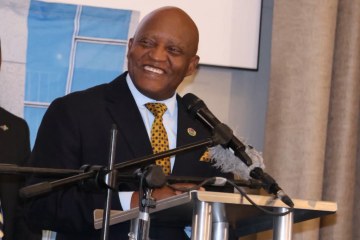
Industries, mines and energy minister Modestus Amutse has called for stronger action against the repeated use of short-term employment contracts in Namibia’s mining sector.
He warned that the practice undermines job security, skills development and workers’ access to employment benefits.
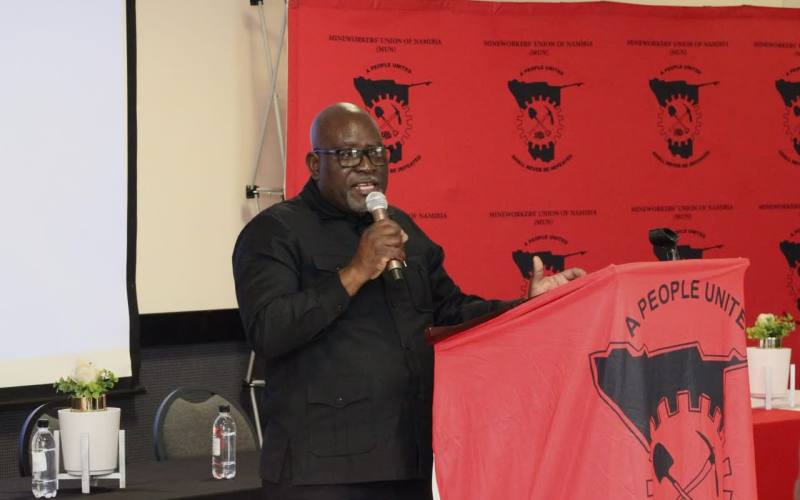
Speaking at the Mineworkers Union of Namibia’s (MUN) Northern Regional Roundtable in Tsumeb on Saturday, Amutse criticised arrangements in which workers are employed for a few months before being replaced, arguing that mining investment must deliver more than temporary job opportunities.
“We must therefore pay attention not only to the number of jobs created, but also to their quality, their stability and prospects for career development,” he said.
He added that repeatedly employing workers for short periods prevents meaningful skills transfer and creates uncertainty for employees who need stable incomes to support themselves and their families.
“And that is dangerous when you employ people for six months and then they are gone, and then you employ again others for maybe three or five months, seven months, that process does not properly transfer skills and we have to fight it and discourage it,” Amutse said.
The minister’s remarks come amid growing concerns over labour practices in the mining and industrial sectors, particularly the use of labour brokers and subcontractors to recruit workers who perform duties similar to those of permanently employed employees but may not enjoy the same benefits.
Amutse challenged mining companies to take greater responsibility for the welfare of workers employed through third-party contractors, saying businesses should not use subcontracting arrangements to avoid their obligations to employees.
“This is a problem, an ongoing problem, and we cannot be silent about it. Because people cannot perform the same duty, they possess the same skills, but somebody is hiding behind other things, not wanting to pay them, therefore subjecting them to subcontracting and them not getting the benefits that they deserve to get,” he said.
He proposed stronger enforcement of labour legislation, joint liability between mining companies and labour hire agencies, equal pay for work of equal value, and statutory limits on prolonged temporary employment arrangements.
Amutse also highlighted government efforts to increase Namibian participation in the mining industry, saying new mining licences include conditions intended to improve local representation in management, promote skills transfer and increase opportunities for Namibian businesses.
He called for stronger labour inspections, improved occupational health and safety standards and closer cooperation between government, employers and trade unions.
However, he stressed that discussions and commitments must translate into practical action.
“Because I realized that we have spoken enough, now is time for implementation,” he said.
Justice and labour relations minister Wise Immanuel, who also addressed the roundtable, called on trade unions to strengthen their influence in policymaking and become more active in driving institutional and socioeconomic change.
“Trade unions in the 21st century need to be more than the voices of protest, they need to be centres of influence, they need to be the engines of change, and they need to be credible forces for social impact,” Immanuel said.
He emphasised the need for unions to review their leadership structures, strategies and methods to remain relevant as workers face changing economic conditions and employment challenges.
Meanwhile, MUN acting president Poco-Key Mberiuana said workers’ welfare should remain central to economic development, calling for stronger support for union members beyond their active employment years.
He highlighted the importance of post-retirement medical aid and education assistance, saying workers’ needs extend beyond earning a salary during their working lives.
“These efforts recognise that a worker’s aspirations extend to education, financial security and a dignified life beyond active employment,” Mberiuana said.
He added that protecting workers required collective responsibility and a willingness to speak for those who could not defend their own rights.
“We speak on behalf of those that can’t speak for themselves. We defend the rights of those that can’t defend themselves, it is our responsibility collectively,” he said.
Labour Commissioner Kyllikki Sihlahla outlined the role of her office in registering trade unions and employers’ organisations, as well as preventing and resolving labour disputes.
“The Office of the Labour Commissioner is the office that registers trade unions and employers’ organizations, as well as preventing and resolving labour disputes,” she said.
Sihlahla explained that labour administration provides the framework through which the government develops, implements and enforces labour laws and policies to promote decent work and protect both workers and employers.
MUN member Paulus Heita welcomed the engagement, saying it gave workers an opportunity to raise concerns directly with senior government officials and receive clarification on issues affecting them.
Heita commended the union for creating a platform where workers could express their frustrations and engage policymakers, expressing hope that the discussions would lead to tangible improvements.