Patience Makwele
Education minister Sanet Steenkamp has urged the newly inaugurated Namibia Qualifications Authority (NQA) Council to accelerate key reforms, including a review of the authority’s governing law and the finalisation of a policy on microcredentials.
Speaking at the council’s inauguration in Windhoek on Monday, Steenkamp said the authority needed to complete outstanding reforms and ensure its progress translated into improvements in the services it provides.
The reforms include reviewing the NQA’s legislative framework, implementing the National Policy on Qualifications Standards, finalising the National Policy on Microcredentials and modernising the National Qualifications Framework Information Management System and accreditation processes.
“I encourage the Council to approach these priorities with urgency, clear sequencing and measurable outcomes,” she said.
The review of the NQA’s legislative framework began in April 2025, while the National Policy on Qualifications Standards was launched in March 2026.
The authority was still consulting stakeholders on its draft microcredentials policy in October, with public submissions due by 19 November.
The NQA introduced an automated qualifications evaluation system in March to modernise the assessment process.
However, no figures were provided in the minister’s address on whether the system had reduced processing times or the number of applications awaiting evaluation.
Steenkamp said qualifications needed to carry value for learners, employers and education institutions.
“A qualification must carry meaning and credibility. Learners must have confidence in what they achieve, employers must be able to trust the competencies represented by qualifications, and education and training institutions must operate within a system that upholds quality and consistent standards,” she said.
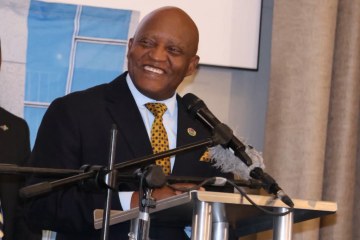
The newly inaugurated council’s chairperson, Colen Tuaundu, said reviewing the National Qualifications Framework would be among the council’s immediate priorities.
Tuaundu said he had received reports that the NQA had been telling universities their policies had expired while continuing to rely on a national qualifications framework that was about 20 years old.
“So we need to clean our house first before we go into an institution and tell them that our policy is expired,” he said.
Tuaundu also identified appointing a substantive chief executive officer as a priority, alongside monitoring service turnaround times, acting on audit findings and improving accessibility while maintaining standards.
The microcredentials policy concerns shorter, targeted learning programmes that demonstrate specific skills and competencies.
Its finalisation and implementation are among the priorities identified by Steenkamp.
The minister also called on the council to strengthen oversight of the authority’s performance and use of public resources, saying members should monitor progress, manage risks and hold the institution accountable for results.
“Performance expectations must be clear, reporting must be reliable, and challenges must be addressed in a timely manner,” she said.
Steenkamp acknowledged the NQA’s consecutive unqualified audit outcomes, full compliance with its Governance Scorecard, strengthened financial oversight and the establishment of an internal audit function.
She said these achievements needed to translate into tangible improvements in the authority’s services.
Tuaundu said the council would focus on governance, financial sustainability and evidence-based decision-making.
He said members would disclose conflicts of interest, protect confidential information and base decisions on research and best practices.
He also called for the NQA to respond to changing skills requirements and technological developments, including artificial intelligence in higher education.
He said the authority should develop guidelines to help institutions use the technology and strengthen digital systems for qualification verification and information management.
Steenkamp said cooperation between government ministries, education and training institutions, professional bodies, employers, organised labour and learners was necessary to maintain a qualifications system that responds to Namibia’s needs.
“Ultimately, our objective is clear. Namibia needs a qualifications system that upholds quality, supports lifelong learning, recognises skills acquired through different pathways and responds to national skills and development priorities,” she said.