…minister raises concerns over unexplained withdrawals by chiefs and their relatives
Patience Makwele
Traditional authorities receiving proceeds from fishing-quota will face audits by the ministry of urban and rural development and the ministry of finance following concerns that money is being withdrawn from their accounts without clear explanations of how it is spent.
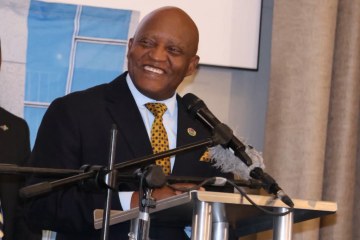
Minister of urban and rural development James Sankwasa announced the planned audits at the opening of the 27th annual meeting of the Council of Traditional Leaders in Aon Monday, warning that those who misuse the funds could face prosecution.
“From now on, there will be auditors coming from the ministry and the ministry of finance, to audit your books, what has happened to the money? Who withdrew it, and what did you use it for? Was that expenditure authorised by the traditional authority or not?” Sankwasa told traditional leaders.
Sankwasa alleged that some traditional authority councillors were unaware of transactions involving accounts controlled by chiefs and their family members.
“When the money lands in that bank account, you find that the signatory to those bank accounts, sometimes the chief and his daughter, the chief and his son, or the chief and the wife,” he said.
“And the traditional authority councillors do not even know what is happening with that money.”
Sankwasa did not identify the traditional authorities involved, disclose the amounts under question or specify when the audits would begin.
The announcement comes amid earlier public concerns about the management of fishing-quota proceeds intended to benefit traditional communities.
In May 2021, there was a dispute involving about N$24 million generated from fishing-quota sales, including concerns about the transfer of proceeds and access to information about the money.
The earlier dispute however did not establish that the withdrawals Sankwasa referred to are connected to that case.
However, it highlighted the longstanding importance of transparency over revenue intended for traditional communities.
Sankwasa said the government had established an arrangement under which fishing quotas were marketed and proceeds distributed to traditional authorities.
He referred to Oonani Investments Group as the organisation responsible for receiving and marketing the quotas before the money was deposited into the authorities’ respective accounts.
He questioned what happened to the proceeds after they reached those accounts.
“When we make a follow-up, we find that the money is no more in the account. It’s withdrawn, but that withdrawal does not refer to any particular service for which the money was to be used. No explanations being given,” he said.
The minister said the money was intended to address community needs, including connecting households to electricity, helping people establish gardens and assisting sick people who needed transport to hospital.
He warned traditional leaders against treating the proceeds as personal funds simply because the money was deposited into accounts under their control.
“As much as we want public servants, civil servants, to be accountable for the state money, you chiefs also must understand that the funds you are getting are still state funds. It’s not private funds,” he said.
Sankwasa said traditional leaders were custodians of the money and had a responsibility to ensure it benefited the communities they represented.
“Your job as a chief is to be custodian of that money, to make sure it benefits your community,” he said.
He warned that misuse of the funds could amount to a breach of the law.
“When you misuse the money, you must know you have violated the law. And anybody who violates the law is subject to prosecution,” Sankwasa said.
He added that the government had opted to warn traditional leaders before invoking the law.
“We did not want to invoke the provisions of the law before we have warned you,” he said.
Sankwasa also raised concerns about complaints against traditional authorities, saying his ministry had received numerous grievances over decisions and judgments that he believed did not meet the requirements of justice.
“I’ve got a whole two files already full of complaints, of various subjects complaining against their traditional leaders,” he said.
He cited Article 18 of the Constitution, which requires administrative bodies and officials to act fairly and reasonably, and said traditional authorities must comply with the law when exercising their powers.
“I want to emphasise the issue that, as a traditional authority, you are an administrative body. And as your chief or the traditional councillor working for that administrative body, you are an administrative official,” he said.
He said that decisions made by traditional authorities could be challenged in court if they failed to meet legal requirements.
The planned audits will establish whether the management of proceeds from fishing-quotas can be accounted for and whether the expenditure was authorised, as the minister has demanded.
“Your job as a chief is to be custodian of that money, to make sure it benefits your community,” Sankwasa said.
Questions sent to Oonani Investment Group were not answered by the time of publication.