CHAMWE KAIRA
Namibia’s quarterly diamond production declined to 495 000 carats in the quarter ending 30 September compared to 531 000, De Beers production figures showed.
De Beers Group’s latest production report shows that Namibia produced 1.58 million carats between January and September, down 3% from 1.62 million carats in the same period of 2025.
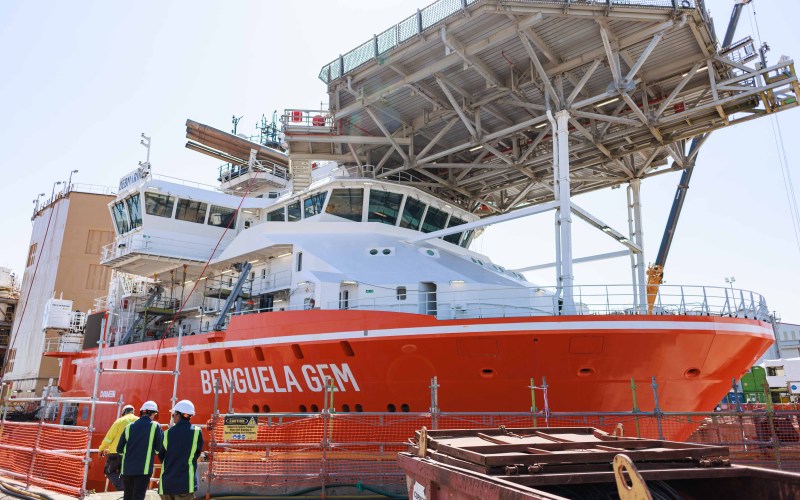
Debmarine Namibia produced 366 000 carats during the quarter, an increase of 21% from 303 000 carats in the third quarter of 2025. However, its output declined slightly from 370 000 carats in the preceding quarter.
For the first nine months, Debmarine produced 1.09 million carats, down 5% from 1.15 million carats a year earlier.
Namdeb’s land-based operations recorded 129 000 carats in the third quarter, down 16% from 154 000 carats in the corresponding period last year and 20% below the 161 000 carats produced in the second quarter.
Namdeb’s year-to-date production reached 492,000 carats, up 4% from 474 000 carats in the first nine months of 2025.
The increase in Namibia’s third-quarter production came as De Beers’ overall output declined by 11% to 6.8 million carats, compared with 7.66 million carats a year earlier.
The group attributed the decline mainly to planned plant maintenance at Orapa in Botswana and reduced production at Venetia in South Africa ahead of a planned two-year production pause.
Botswana’s output fell 20% year-on-year to 4.83 million carats, while South African production declined 37% to 418 000 carats.
Canada recorded a 108% increase to 1.06 million carats, driven by the planned processing of higher-grade ore at the GahchoKue mine.
De Beers said rough diamond trading conditions showed signs of stabilisation during the third quarter, supported by a more balanced supply-demand environment and improved consumer demand in the United States and India.
However, laboratory-grown diamonds continued to affect demand for lower-value natural diamonds, putting pressure on more price-sensitive market segments.
The group generated US$731 million in consolidated rough diamond sales revenue during the third quarter, up 4% from US$700 million in the same period last year.
Consolidated sales volumes increased 91% to 8.71 million carats from 4.56 million carats a year earlier.
Despite higher sales volumes, the average realised price for the first nine months fell 37% to US$97 per carat from US$155.
De Beers attributed the decline to an 18% reduction in its average rough diamond price index and a change in the mix of diamonds sold.
The company revised its 2026 production guidance to between 25 million and 28 million carats, from the previous range of 21 million to 26 million carats, following its assumption of full ownership of Canada’s Gahcho Kue mine on 16 October.
De Beers also lowered its unit cost guidance for 2026 to approximately US$70 per carat from US$80, citing the increased contribution from Gahcho Kue, the planned production pause at Venetia and continued cost-control measures across its operations.