Renthia Kaimbi
The government’s consideration of livestock culling as part of its response to the Foot-and-Mouth Disease (FMD) outbreak has raised questions about who will ultimately bear the financial burden when animals are destroyed to contain the disease.
Ministry of agriculture, fisheries, water and land reform spokesperson Romeo Muyunda confirmed that culling is being considered as one of the measures to reduce the spread of FMD, particularly in affected and high-risk areas.
“Culling is being considered as one of the control measures to reduce the spread of Foot-and-Mouth Disease (FMD), particularly in affected and high-risk areas. The modalities for culling are currently being worked out, taking into consideration the relevant legal requirements, animal-health considerations and the financial implications involved,” Muyunda said.
He said the ministry was giving the matter urgent attention and would communicate the procedures once the modalities had been finalised.
The possible culling comes as the government has invoked the Animal Health Act in its response to the outbreak in the Karasburg Veterinary District.
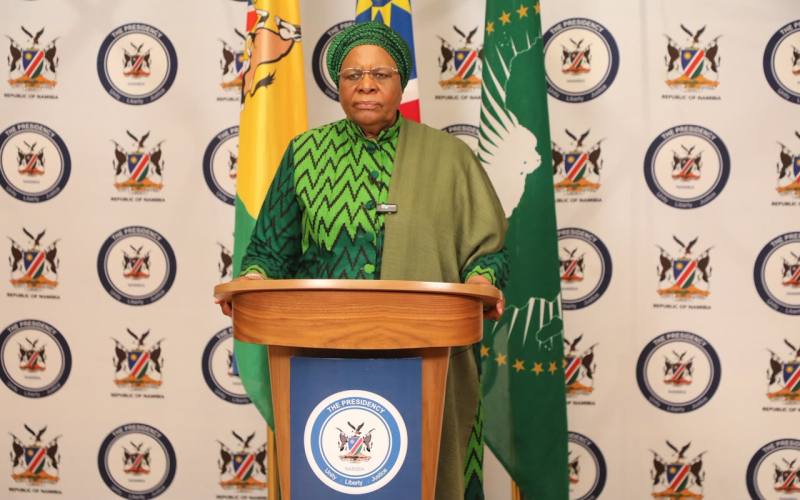
President Netumbo Nandi-Ndaitwah said in her high-level address on the outbreak on Monday that the Cabinet had met on 4 October to determine interventions required under the Animal Health Act and had directed the immediate implementation of relevant provisions of the law.
As of 5 October, the Presidency announced that surveillance teams had inspected 29 313 animals across 68 farms, with 127 confirmed positive cases recorded across 15 farms, according to the President.
The Animal Health Act, however, gives veterinary authorities extensive powers to destroy livestock in circumstances involving disease outbreaks.
Section 29 allows animals seized or isolated under the Act to be destroyed where, among other circumstances, effective isolation or treatment is not practical, the cost of isolation and treatment would exceed the animal’s estimated value, or no effective means of treatment or isolation is available.
The law also specifically provides for destruction during an outbreak or suspected outbreak of a disease that is not known to be established in Namibia where the disease is fast-spreading, poses a serious risk to human or animal health, or presents a potential risk of becoming established or spreading further.
According to the law, in such circumstances, animals may be destroyed by, or with the approval of, the Chief Veterinary Officer.
But the legislation does not simply state that farmers must absorb the value of animals destroyed for disease control without compensation.
Section 30 provides that an owner is entitled to compensation where an animal is destroyed by, or at the direction of, a veterinary official for the purpose of controlling a disease and the owner suffers a loss as a result.
The entitlement is, however, subject to exceptions, including where the animal was destroyed as a consequence of a contravention of the Act, was infected when imported into Namibia, or was destroyed while being transported through Namibia.
Compensation is also capped at the fair market value of the animal at the time of destruction, less the value of its carcass, and does not cover lost profits, production losses or other consequential losses.
According to farmers who spoke to the Windhoek Observer on condition of anonymity, said the legislation therefore creates a distinction between compensation for the animal itself and other financial costs incurred by a farmer as a consequence of an outbreak.
Separately, the Act allows the State to recover reasonable expenses relating to the removal, keeping, care and treatment of animals seized under the disease-control provisions from the owner.
This, the farmers said, creates a potentially significant financial issue for livestock producers if large-scale culling is ordered.
Farmers are further expected to comply with veterinary controls, movement restrictions and other disease-control measures, while the government has stressed that interventions must be coordinated through veterinary authorities rather than undertaken independently.
At the same time, the Nandi-Ndaitwah acknowledged the financial strain already being experienced by farmers and businesses as a result of movement restrictions and disruptions to trade.
“Government will continue to assess these effects and engage relevant stakeholders to ensure that this animal health crisis does not lead to prolonged financial distress for otherwise viable farmers and businesses,” Nandi-Ndaitwah said.
The issue is particularly sensitive for farmers because livestock owners who are prevented from moving or independently treating their animals have limited options to protect the value of their herds when disease-control measures are imposed.
The Animal Health Regulations also place restrictions on the movement and slaughter of susceptible animals where a notifiable disease is present or suspected, requiring veterinary authorisation in specified circumstances.
This means that as the government works out the modalities for possible culling, the compensation framework is likely to be as important to farmers as the veterinary procedures themselves.
The ministry has yet to announce how any proposed FMD culling programme would operate, which animals would be targeted, how valuations would be conducted, who would bear the operational costs and how compensation claims would be processed.
Farmers are reportedly already facing movement restrictions, disrupted markets and uncertainty over their livestock, especially after the European Union suspended fresh beef, sheep and goat exports from Namibia, including processed meat products such as biltong.
Farmers said those details could determine whether culling becomes primarily a disease-control intervention or another significant financial burden on producers.
Nandi-Ndaitwah said the government’s immediate objective was to contain the outbreak, prevent its spread and protect unaffected herds so that production and trade could resume as quickly and safely as possible.