
CHAMWE KAIRA
The government has raised more than N$29.1 million from two recent auctions for pilchard and freezer monk fish quotas, according to results released by the ministry of finance and the ministry of agriculture, fisheries, water and land reform.
The two auctions generated a combined N$29.13 million, including application fees. The pilchard auction, held on 4 September 2026, offered 5 000 metric tonnes (MT), but attracted only two bids for a combined 3500 MT. Both bids were allotted in full, leaving 1 500 MT unallocated.
The auction was conducted at a reserve price of N$2 700 per tonne. The marginal price was N$3 500, while the highest bid reached N$4 310 per tonne. The weighted average price was N$3 962.86 per tonne.
The pilchard auction generated N$13.87 million, including N$2 000 in application fees. Settlements were completed on 11 September 2026.
In contrast, the freezer monk fish auction was oversubscribed. The auction, held on 17 July 2026, offered 1 000 MT and attracted six bids totalling 2 500 MT.
The government allocated the full 1 000 MT on offer, leaving no residual quota. Two bids were allotted in full, while one was partially allotted. The reserve price was N$10 000 per tonne, but the marginal price reached N$12 000, while the highest bid was N$15 400 per tonne. The weighted average price was N$15 250 per tonne.
The monk fish auction generated N$15.26 million, including N$6 000 in application fees. The settlement was completed on 24 July 2026.
The ministry said both auctions recorded prices above their respective reserve prices, with the monk fish auction showing particularly strong demand relative to the quota available.
The results show differing demand between the two fisheries, with the pilchard auction leaving 1 500 MT unallocated, while the entire 1 000 MT of monk fish offered was taken up.
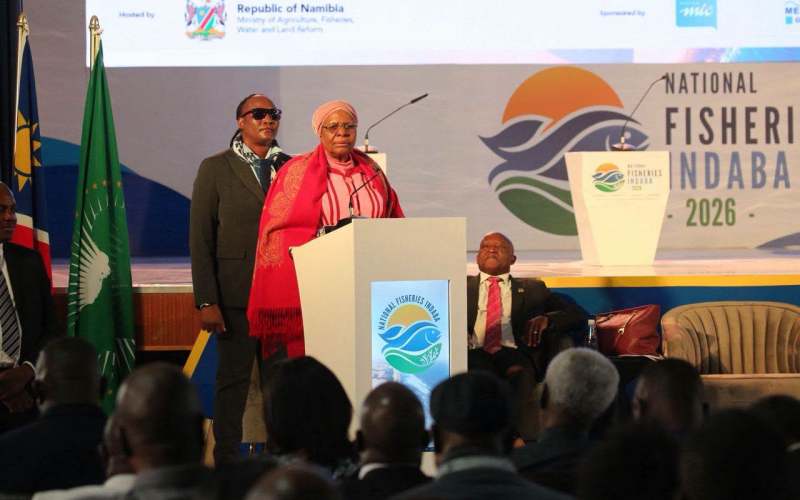
At the recent 2026 National Fisheries Indaba, President Netumbo Nandi-Ndaitwah provided reflections and strategic direction emphasising the fisheries sector as a vital and strategic pillar of the national economy.
Nandi-Ndaitwah called on the industry to broaden its economic reach and ensure that the wealth generated from Namibia’s marine resources translates into greater value addition, sustainable employment and tangible benefits for the wider population.
She highlighted the industry’s responsibility to create sustainable opportunities for Namibian youth and emphasised the importance of landing catches locally to strengthen domestic processing, employment and the fisheries value chain.
Going forward, the President said the government must rigorously assess performance and compliance when allocating fishing quotas, ensuring that access to the country’s marine resources rewards those who demonstrate meaningful contribution to Namibia’s development.


