
Sostenus Wilherm
Namibia has turned to Chinese water experts in a nationwide search for new groundwater sources, with a two-week feasibility study set to assess borehole drilling potential across all 14 regions at no cost to the Namibian government, as the country faces growing pressure to secure reliable water supplies.
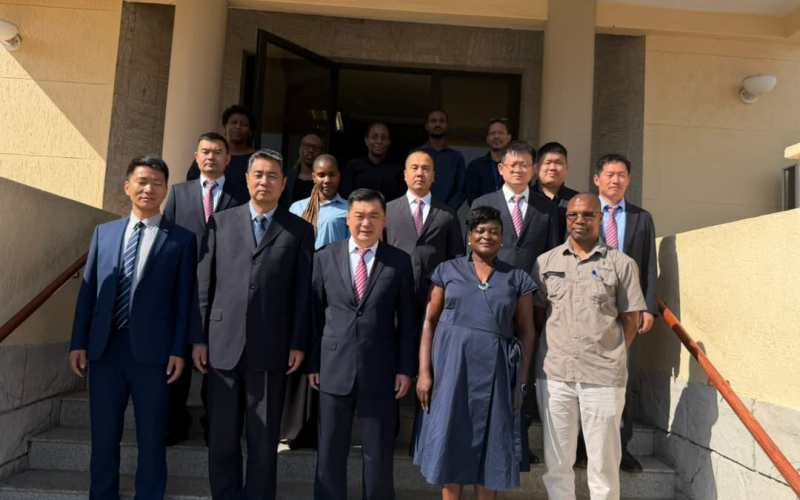
A Chinese expert team arrived in Namibia this week to investigate groundwater availability, water quality and the technical conditions required to drill boreholes in identified areas.
The study could become the foundation for future groundwater development projects and deeper cooperation between Namibia and China, including possible agreements on water provision.
The team was received by Teofilus Nghitila, executive director in the ministry of agriculture, fisheries, water and land reform, who said identifying new water resources was becoming increasingly important for the country.
“Finding and securing water resources is critical for Namibia, particularly during the current season. This exercise is therefore important as it will help us better understand where potential water resources are located and what is technically required to develop them,” said Nghitila.
The experts are expected to engage regional councils during the feasibility study as they assess areas with potential for groundwater development.
According to the ministry spokesperson Romeo Muyunda, the assessment will examine not only whether groundwater is available, but also whether the water is suitable for use and what technical requirements would be needed to develop the resources.
“The study will assess potential groundwater availability, water quality and the technical requirements and conditions for borehole drilling in identified areas,” Muyunda said.
The findings are expected to give the government a clearer technical picture of Namibia’s groundwater resources and guide future decisions on where boreholes could potentially be developed.
Namibia is one of the world’s driest countries, making groundwater an important component of water supply, particularly in areas where communities and other users have limited access to reliable surface water sources.
Muyunda said the study would provide a “technical basis for future planning and potential water provision initiatives”, suggesting that the assessment could influence future government investments and projects aimed at improving access to water.
The involvement of the Chinese experts also carries a broader diplomatic and development dimension, as the findings are expected to inform future cooperation between Namibia and China on groundwater development.
“The outcome of the feasibility study will also inform future cooperation between Namibia and China, including discussions towards potential Memoranda of Understanding (MoUs) on groundwater development and water provision,” Muyunda said.
This means the current assessment is not necessarily the end of the process but could be an initial step towards formal cooperation on the development of Namibia’s groundwater resources.
For communities facing water shortages, the potential significance of the study lies in whether it can translate technical findings into actual water infrastructure.
The ministry said it welcomed the initiative as an important step towards strengthening technical cooperation and exploring sustainable solutions to Namibia’s water challenges.


