Sostenus Wilherm
The Independent Patriots for Change (IPC) has called for an urgent review of senior appointments in the public sector, alleging that the government continues to appoint or retain officials who have previously been implicated in forensic investigations and disciplinary proceedings.
The party says the practice is eroding accountability and weakening state institutions.
IPC shadow minister of works and transport, Nelson Kalangula said Namibia’s public administration is facing what he described as a “crisis of governance and vetting”, where officials accused of misconduct are not held accountable but instead transferred or promoted to other influential positions.
Kalangula said the trend, which IPC describes as the “recycling of failure”, undermines public confidence in government and allows governance failures to persist across state-owned enterprises and ministries.
“The public sector faces persistent structural leakages and governance failures, frequently characterised by a phenomenon known as executive recycling. When senior leadership is implicated in misconduct, gross negligence or financial irregularities, the systemic failure to enforce institutional accountability and the subsequent promotion or transfer of flagged individuals severely undermines the integrity of public administration,” Kalangula said.
The opposition party pointed to the current executive director in the ministry of works and transport, alleging that while serving as general manager for technical and operations at Air Namibia, he was implicated in a Deloitte forensic investigation completed in April 2014.
According to IPC, the investigation linked the official to several administrative and financial transgressions, including the signing of an aircraft-related contract with Reliance Aerospace Solutions without the necessary authority, bypassing company procurement procedures and financial delegation policies.
The party further alleged that the investigation also found shortcomings in the management of a Frankfurt catering contract involving GIC International Catering and poor contract management during the extension of Air Namibia’s onboard duty-free services agreement with Paragon Investment Holdings.
IPC said despite those findings, the official later became executive director in the ministry of works and transport and is now among the officials advising the government on the establishment of Namibia Air.
The party noted that the government has already spent N$20 million on feasibility studies for the proposed national airline.
Kalangula said the appointment raises serious concerns about the government’s commitment to accountability.
“Despite these heavily detailed forensic findings of policy disregard and insubordination, the former Air Namibia executive’s trajectory moved upward into national public policy. Today, he and several others who were part and parcel of failing Air Namibia are planning, advising and negotiating agreements for a new airline, Namibia Air, despite the country’s previous experiences,” he said.
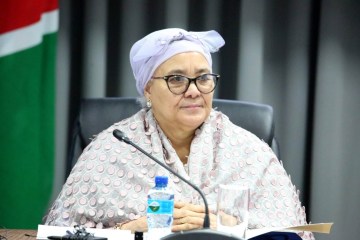
IPC also questioned the appointment of the current executive director of the Namibia Civil Aviation Authority (NCAA), alleging that she had previously been found guilty in a disciplinary inquiry while serving as strategic executive for business strategy at the Namibia Airports Company (NAC).
According to Kalangula, the disciplinary chairperson found the executive guilty of colluding with a private company to bypass public tender procedures for a five-year strategic planning contract, leaking confidential procurement information to a preferred bidder and attempting to influence procurement outcomes.
He said the inquiry recommended her dismissal and further recommended that the matter be referred to the Anti-Corruption Commission (ACC), describing the conduct as amounting to criminal collusion.
Despite this, IPC said she now occupies a senior leadership position in the aviation sector and advises the minister of works and transport on aviation regulatory matters.
The party further argued that repeated failures to implement recommendations contained in forensic investigations have resulted in continued governance failures across the public sector.
IPC cited what it described as unnecessary expenditure on repeated feasibility studies, procurement irregularities, poor infrastructure management, communication failures at regional meteorological offices and unpaid government utility accounts as examples of the consequences of weak oversight.
“Without an uncompromised, centralized system of state vetting, clear legal frameworks for blacklisting non-compliant officials and a strict commitment to performance accountability, governance frameworks will continue to experience severe friction, obstructing sustainable socioeconomic progression,” Kalangula said.
He added that the continued appointment of officials with questionable records comes at the expense of qualified professionals who remain unemployed despite possessing the necessary qualifications and technical expertise.
Kalangula said taxpayers continue to bear the cost of paying senior officials whose decisions, according to IPC, have contributed to operational failures and financial losses in state institutions.
The party called on the minister of works and transport, Veikko Nekundi to review all investigation reports involving senior officials in state-owned enterprises under the ministry and to ensure that the recommendations contained in those reports are implemented.
IPC also called for the introduction of stricter vetting procedures and legal mechanisms that would prevent officials found guilty of serious misconduct from being reappointed to senior public positions.
Kalangula further revealed that IPC wrote to the Director General of the Anti-Corruption Commission on 22 July requesting a progress report on the forensic investigations referenced in the statement.
He said the party is awaiting the Commission’s response.