Patience Makwele
The government is drafting a national nuclear energy policy backed by legislation as it moves to harness Namibia’s uranium resources for domestic electricity generation, marking a major shift in the country’s long-term energy strategy.
The development was announced by President Netumbo Nandi-Ndaitwah on Tuesday during her State Visit to China after touring the China General Nuclear Power Corporation (CGN) in Guangdong Province, where the Namibian delegation was shown how uranium from Namibia is processed into nuclear fuel used to generate electricity.
According to the Head of State, the announcement signals the government’s intention to move beyond exporting uranium and explore using the country’s mineral wealth to strengthen energy security, industrialisation and value addition.
“As a producer of uranium, we cannot run away. We cannot allow our natural resources not to be used by us to the maximum and the maximum is when it’s going to create energy,” Nandi-Ndaitwah said.
She said the visit gave the delegation valuable insight into the nuclear fuel cycle, from uranium processing to electricity generation, reinforcing government’s resolve to develop a domestic nuclear energy programme.
Nandi-Ndaitwaj further explained that the proposed policy and supporting legislation form part of Namibia’s broader strategy to diversify its energy mix, promote technology transfer and maximise the benefits of its natural resources.
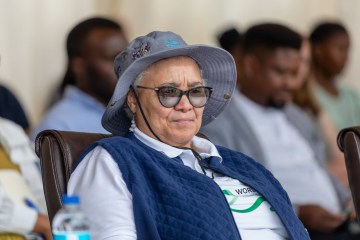
Commenting on the matter, political analysts and commentator Jourbert Harushando described the announcement as a significant policy shift.
“For decades, Namibia has been one of the world’s major uranium producers, but we have largely exported the raw resource while importing a significant portion of our electricity,” he told the Windhoek Observer.
“What the President is proposing is essentially asking: how do we extract more value from our natural resources? That conversation is long overdue.”
However, Harushando cautioned that the announcement should be viewed as the beginning of a lengthy process rather than an immediate solution.
“A policy is only the first step. The real test will be whether the government can develop the technical expertise, regulatory institutions and financing needed to make such an ambitious vision feasible,” he said.
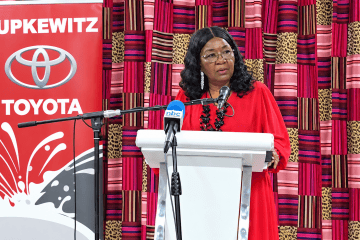
Political analyst Marius Kudumo said Namibia already possesses one of the key ingredients needed to pursue nuclear energy because of its position as the world’s third-largest uranium producer.
He said success would depend less on natural resources than on sustained political commitment.
“Readiness in this case is dependent on a clear national vision, intentionality, long-term human resource and financial investments and a capable and professional state to drive and achieve set objectives,” Kudumo said.
While both analysts agreed the proposal is ambitious, they said it should not be dismissed.
Harushando said the government would still need to determine whether conventional nuclear power plants, small modular reactors or strategic international partnerships would provide the most practical and affordable option.
“The feasibility studies will ultimately determine whether the idea is practical,” he said.
Kudumo echoed similar sentiments saying that nuclear energy could become one of the options for reducing Namibia’s dependence on imported electricity, provided the necessary investments are made.
Both analysts also stressed the importance of developing a robust legal and regulatory framework before implementation begins.
Harushando said transparency would be critical as government develops the policy.
“Citizens deserve to know what model government is considering, how much it could cost, who would finance it, what environmental safeguards would be in place and what benefits ordinary Namibians can realistically expect,” he said.
“Nuclear energy isn’t simply an engineering project; it’s a national development project that requires public confidence.”
Kudumo said the legislation should clearly address safety, security and regulatory oversight while outlining the various applications of nuclear technology in energy, healthcare, agriculture and food security.
Harushando added that although nuclear energy has the potential to transform Namibia’s economy by supporting mining, manufacturing and industrialisation while reducing electricity imports, expectations should remain realistic.
“These projects typically take many years, sometimes more than a decade, before they begin producing power. This should be viewed as a long-term national investment rather than a quick solution to today’s energy challenges,” he said.
The President’s visit to CGN forms part of her official State Visit to China, where Namibia and China are exploring deeper cooperation in clean energy, industrialisation, innovation and sustainable economic development.