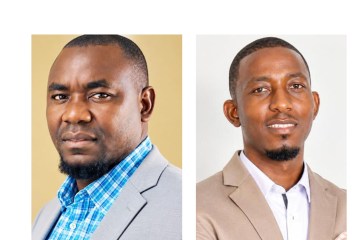
Paul T. Shipale (with inputs by Folito Nghitongovali Diawara Gaspar)
History is not only shaped by events but also by the rare individuals whose lives become turning points within it. Founding father H.E. Dr Sam Shafiishuna Nujoma stands among those figures whose personal journey became inseparable from the liberation and reconstruction of an entire nation. His legacy is not merely political; it is foundational to the modern identity of Namibia and, more broadly, to the unfinished project of Southern African emancipation.
Emerging from the harsh realities of colonial rule, Founding President Nujoma was formed in a system designed to suppress African agency and entrench racial domination. In that context, where dispossession and exclusion were institutionalised, he chose a path of organised resistance.
That choice came at a heavy cost of years in exile, separation from family and homeland, and sustained political persecution. Yet it also defined the moral clarity of his generation: that liberation is not granted but actively pursued through collective struggle, discipline, and endurance.
As the founding leader of the South West Africa People’s Organisation (Swapo), he helped transform fragmented opposition into a structured national movement capable of confronting one of the most entrenched systems of apartheid colonialism in Africa. Under his leadership, SWAPO evolved into more than a liberation movement and it became a vessel of national consciousness, carrying the aspirations of a people determined to reclaim sovereignty and dignity.
Founding father H.E. Dr Sam Shafiishuna Nujoma’s political vision extended beyond Namibia’s borders. He understood the struggle for liberation in Southern Africa as interconnected and mutually reinforcing. The anti-colonial victories in Angola, Mozambique, Zimbabwe, and later South Africa formed part of a broader historical arc in which Namibia’s independence was both a consequence and a catalyst. He belonged to a generation of leaders who rejected the fragmentation of colonial geography in favour of a deeper Pan-African solidarity rooted in shared struggle and shared destiny.
Central to his regional outlook was his engagement with the Southern African Development Community. Founding President Nujoma viewed regional cooperation not as an abstract diplomatic arrangement but as a strategic necessity for post-colonial survival. He consistently argued that political independence without economic coordination would leave Southern African states vulnerable to external dependency. In his vision, SADC carried the potential to become a platform for industrial coordination, infrastructure integration, resource sovereignty, and collective bargaining power in global affairs. It was, in essence, a framework for transforming liberation into long-term economic emancipation.
Beyond the arena of statecraft and regional politics, his legacy also extends into social responsibility, spatial redesigning and engineering with his vision of the port of Cape Fria. Indeed, through the Sam Nujoma Foundation, his commitment to vulnerable and orphaned children as well as mothers reflects a continuity of his liberation philosophy into the domain of human development. The foundation’s work in supporting access to education, healthcare, and social welfare for pregnant mothers with the Indira Gandhi Clinic and disadvantaged children with the Etunda Primary School and clinic speaks to a deeper understanding that the meaning of independence is ultimately measured in the protection and empowerment of the most vulnerable members of society. In this sense, national liberation is incomplete without social justice, and political sovereignty is hollow without human dignity.
When Namibia achieved independence in 1990, it marked not only the birth of a new state but also the closing of a long and violent colonial chapter in Southern Africa. Founding father H.E. Dr Sam Shafiishuna Nujoma assumed the demanding task of transforming a liberation movement into a governing authority, tasked with unifying a society shaped by deep historical fractures. His leadership in that period reflected the complex realities of post-liberation governance, balancing reconciliation with justice, stability with transformation, and continuity with change.
As with all historical figures of consequence, his legacy invites reflection rather than simplification. Yet the central reality remains intact: Namibia’s independence and its early consolidation as a nation cannot be understood without acknowledging his role as a principal architect of its political foundation.
In a contemporary moment where historical memory is often compressed into symbolism, Founding Father Sam Nujoma’s life resists reduction. It represents the harder truths of liberation: its sacrifices, its demands, and its enduring obligations.
As we mark his birthday, we are not only reflecting on an individual life but also on a broader historical struggle that redefined Southern Africa. Founding father H.E. Dr Sam Shafiishuna Nujoma remains a defining figure of that era, a freedom fighter, a statesman, a regional thinker, and a symbol of the long and unfinished journey toward African self-determination, unity, and social justice.