Patience Makwele
The Namibia National Students Organisation (NANSO) in the Zambezi Region says a lack of government support is hampering its efforts to address students’ concerns and implement resolutions adopted at its 19th national congress.
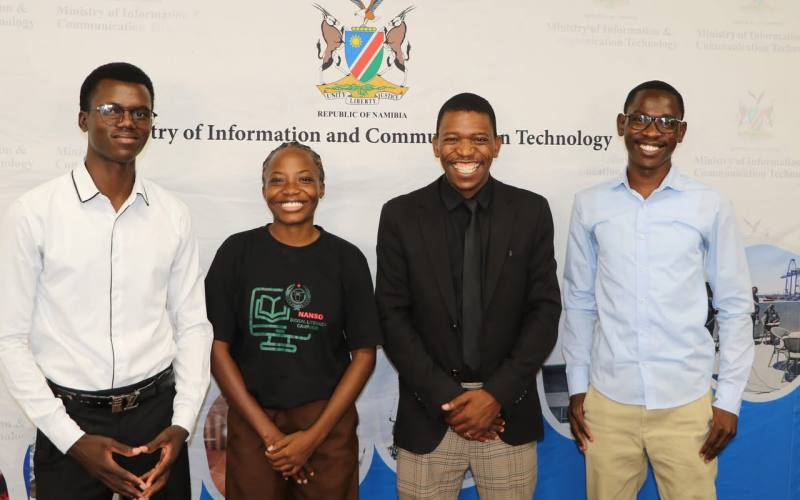
The regional representatives raised the concerns during a panel discussion hosted by the ministry of information and communication technology’s (MICT) Zambezi Regional Office on Wednesday, under the theme “19th Nanso Congress Resolutions: Turning Students’ Voice Into Action in Zambezi Region”.
The representatives cited difficulties in securing assistance from government offices, including transport and logistical support for activities, saying stronger collaboration was needed to translate students’ concerns into practical interventions.
The concerns come after NANSO sought N$445 000 to finance its 19th National Students Congress in August, with The Namibian reporting that the organisation had been affected by government funding cuts.
The congress subsequently adopted resolutions calling for improved student welfare, more reliable funding and sustained government support for recognised student organisations.
Shazzy Liswaniso, who oversees gender affairs in the regional leadership, said collaboration with government and educational institutions should go beyond meetings to include regular communication, consultations and follow-ups on issues raised by students.
“We are looking forward to gaining a stronger structure of us working together, so that discussions… can be put into action,” she said.
Liswaniso said the regional leadership had struggled to obtain support when approaching ministries for collaboration, adding that stronger cooperation was needed to address students’ concerns and develop programmes focused on entrepreneurship, digital skills, career development and student welfare.
The representatives identified accommodation, registration, mental welfare, inadequate learning resources and classroom management among the challenges affecting students.
NANSO regional finance officer Munisola Munisola said the leadership had drafted plans for activities next year but had yet to establish its planned fundraising programme since taking office.
He said fundraising would require support from government and other stakeholders, including assistance with logistics for meetings and other activities.
“We are also looking into that,” Munisola said, explaining that the organisation was still working on its fundraising plans.
He said NANSO had made courtesy visits to government ministries, including the ministry of education, in pursuit of collaboration.
Munisola said the organisation had encountered difficulties when seeking assistance, including transport support from ministries and other government offices.
He said the regional leadership hoped to organise fundraising activities next year but would need cooperation from stakeholders to make the plans successful.
The funding concerns raise questions about how the regional leadership intends to finance activities aimed at implementing the congress resolutions and supporting students across the region.
The panel also highlighted concerns about the representation of students in rural areas, where the representatives said closer cooperation with government and school authorities was needed to address challenges affecting learners.
Liswaniso cited difficulties in securing assistance over an issue at Simataa Secondary School, questioning how NANSO could respond when concerns required urgent attention but the organisation struggled to obtain support.
She said government offices should work more closely with the organisation to ensure students’ concerns were addressed.
Guilty Matapa, NANSO’s regional information and communication technology representative, said the organisation had structures intended to ensure rural students were represented.
He said NANSO operated through its national executive committee, regional executive committee and school-level branch executive committees, which enabled student leaders to collect concerns from schools and communicate them to the regional leadership.
Matapa said these structures were important in ensuring that students in rural areas were not excluded from the organisation’s activities and representation.
The representatives also called for more practical training and entrepreneurship opportunities to help students develop skills beyond the classroom and prepare for life after graduation.
Munisola said NANSO could advocate for entrepreneurship workshops and student innovation activities where learners could develop business ideas, prepare business plans, manage finances and turn their skills into income-generating opportunities.
He said educational institutions should work with relevant stakeholders to provide practical training that responds to real-life needs.
Students should not only be prepared to seek employment but also equipped to create jobs, he said.
Matapa urged students and the wider community to support NANSO, saying cooperation was necessary to achieve equitable and quality education in the region.
“Please come through. NANSO is here for you. If you have any issue affecting you with studies and everything, please reach out to us. We are here for you,” he said.
Munisola also called on vocational and other tertiary institutions in the region to participate in NANSO, saying the organisation should be open to students across different institutions.
The MICT Zambezi Regional office and the ministry of education had not responded to requests for comment by the time of publication.