Patience Makwele
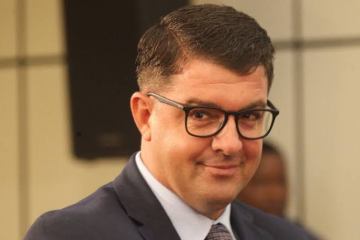
Minister of Education, Innovation, Youth, Sport, Arts and Culture Sanet Steenkamp has warned that Namibia risks future instability if young people continue to be excluded from governance, economic opportunities and national decision-making.
Speaking at the opening of the dual capacity-building programme on Namibia’s National Action Plan on Youth, Peace and Security in Windhoek on Tuesday, Steenkamp said Namibia’s future stability depends on how the country responds to the realities facing young people.
Steenkamp said about 37% of Namibia’s population is under the age of 15.
“That is not background information. That is the central fact around which everything we do in governance, education, economic planning and peace and security must be organised,” she said.
She noted that Namibia continues to face high youth unemployment, economic frustration and growing disengagement among young people.
Steenkamp warned that excluding young people from opportunities and decision-making structures could create long-term problems for the country.
“A young and growing population is a dividend, but only if we invest in it. A demographic reality that finds no meaningful entry point into the institutions built to govern and protect it does not simply wait patiently. It responds.”
Steenkamp said young people should not be treated as a problem to manage but as partners in governance, peacebuilding and national development.
“The risk we should focus on is not the risk that young people pose. It is the risk of a future we build without them,” Steenkamp said.
The programme forms part of African Union and United Nations efforts aimed at increasing youth participation in governance, peacebuilding and conflict prevention.
Steenkamp said Namibia’s National Action Plan on Youth, Peace and Security aims to turn international commitments into practical systems that respond to the realities facing young people.
“The international normative architecture for youth inclusion in peace and security has existed for years. What has been slower is the domestic translation of those commitments into structures that a young person from any corner of Namibia can actually encounter in daily life.”
Steenkamp said Namibia’s future development depends on whether institutions are able to integrate young people into governance, peacebuilding and economic systems.
“When peace breaks down, it is young people who bear the heaviest cost. When peace is built to last, it is because young people had a hand in building it,” she said.
National Youth Council (NYC) executive chairperson Patience Masua said young people have often been excluded from important decisions affecting their future.
“The conviction behind this process is straightforward: young people have for too long been spoken about in rooms where peace and security decisions are made without being genuinely equipped to shape those decisions themselves,” Masua said.
The National Action Plan seeks to institutionalise youth participation in governance and peacebuilding.
“The outputs of this process are not workshop documents. They are the building blocks of a national framework that must eventually be financed, implemented and defended,” said Masua.
Youth delegates who attended the workshop also raised concerns about exclusion and unemployment.
Selma Nekwaya Emvula said many young people feel disconnected from institutions meant to represent them.
“There is a growing feeling among young people that decisions about our future are constantly being made without us being present in those conversations,” Emvula said.
“Young people are expected to carry the weight of unemployment, social pressure and economic uncertainty while still being treated as if our voices are secondary when policies are developed.”
She said frustration is increasing because many young people continue to struggle despite repeated promises around empowerment.
“We are constantly told that young people are the future, but many youths are struggling in the present. When young people begin losing hope in institutions, leadership and opportunity, that becomes dangerous for the future stability of any country,” she said.
Another participant, Natangwe France Shikongo, said discussions around youth and peace should also include unemployment, poverty and inequality.
“A young person who feels excluded economically and socially is already living in instability. You cannot separate peace from unemployment, poverty, mental health struggles and hopelessness because these are the realities many young Namibians are dealing with daily,” Shikongo said.
He said young people want meaningful opportunities and participation in shaping the country’s future.
“What young people want is not sympathy. We want meaningful participation, opportunities and the feeling that we are part of shaping the future of this country,” he said.
Youth activist Rebecca Owens said many African governments are beginning to realise that youth exclusion can become a broader governance challenge.
“If you look at this issue closely across Africa, governments are beginning to understand that peace and security are no longer defined only through policing or military responses,” Owens said.
“They are increasingly connected to questions of inequality, unemployment, social inclusion, mental wellbeing and whether young people believe institutions are still capable of responding to their realities.”
She said countries with large youth populations cannot afford to ignore economic frustrations among young people.
“A generation that feels unheard, excluded and economically trapped will eventually disengage from institutions altogether. The long-term danger is not only unemployment itself but also the erosion of trust, belonging and confidence in national systems,” she added.
The discussions come as youth leadership and governance programmes continue expanding across Namibia amid rising concerns over unemployment and limited economic opportunities.
During the opening of the programme, the National Youth Council also launched the Northwest Cluster Capacity Building Workshop in the Oshana region.
The workshop brought together young leaders from Kunene, Omusati, Ohangwena and Oshikoto.
Opening the workshop, Ongwediva mayor Naemi Amuthenu encouraged young leaders to focus on responsible leadership.
“People will not follow you because you are elected, but because you are influential,” Amuthenu said.