CHAMWE KAIRA
Critical formulas and governance safeguards are still missing from Namibia’s draft Welwitschia Fund Bill, raising concerns that the legislation could leave the sovereign wealth fund vulnerable to political pressure and economic shocks, Simonis Storm has warned.
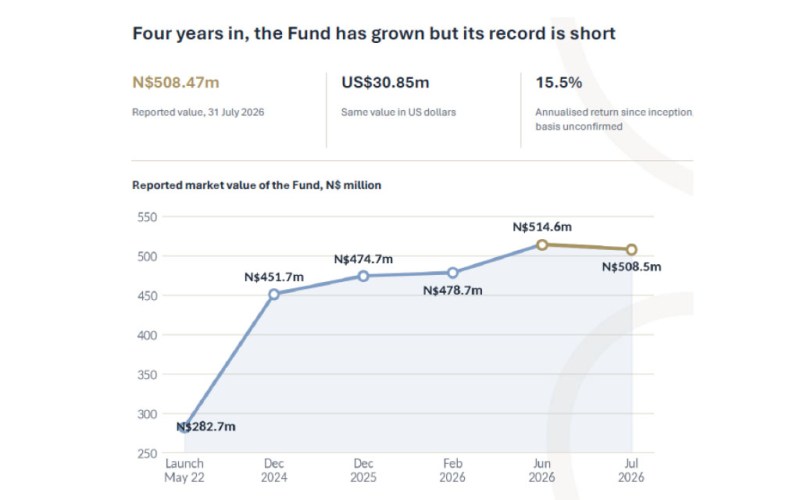
The local brokerage firm says the 2023 draft Bill is “not ready to enact” ahead of its anticipated tabling in Parliament this month, despite the fund having grown to N$508.47 million as at July 31, 2026, with an annualised return of 15.5% since inception.
According to Simonis Storm’s macro-insight report released on 5 October, key parameters determining petroleum-related deposits and withdrawals have not yet been specified in the Bill.
The firm also identified a provision under which deposits into the fund would automatically stop if total public revenue falls below 30.5% of GDP.
Simonis Storm warned that the fixed threshold could prematurely halt long-term saving during an economic downturn or in circumstances where GDP grows faster than government revenue.
The report also raised concerns over the concentration of powers in the minister of finance. Under the current draft, the minister would have sole authority to appoint the entire custodian board, determine its investment mandate and set directors’ remuneration, without requiring parliamentary confirmation.
Simonis Storm said the bill should provide stronger checks and balances before it is enacted. The analysis also highlighted a fiscal trade-off facing Namibia as it seeks to save future petroleum revenues while carrying high levels of public debt.
The Welwitschia Fund, established in 2022 to preserve part of Namibia’s finite national wealth, currently represents only 0.17% of projected 2026 GDP.
Public debt, meanwhile, is projected to reach 66.3% of GDP in 2026 and rise to 70.7% by 2027/28.
Simonis Storm estimates that retaining money in the fund at an illustrative nominal return of 7% while the government borrows at a nominal rate of 10% creates a net annual cost difference of about N$40 million for every N$1 billion saved.
The firm therefore recommended that the fund be incorporated into a broader fiscal responsibility framework, with saving decisions linked to public debt targets.
Simonis Storm also pointed to international experience showing that sovereign wealth funds can come under pressure when governments face fiscal constraints.
It cited Timor-Leste, where repeated excess withdrawals reduced the buffers of its Petroleum Fund, and Botswana’s Pula Fund, where prolonged diamond-related revenue deficits contributed to declining buffers alongside continued structural spending pressures.
First commercial oil production from major projects such as Venus is tentatively expected around 2033, giving lawmakers an opportunity to settle the rules governing petroleum revenues before significant inflows begin.
Simonis Storm has called for all deposit and withdrawal formulas to be completed, audit independence to be secured through the Auditor-General, and the minister of finance’s directive powers to be narrowed before the legislation is advanced.