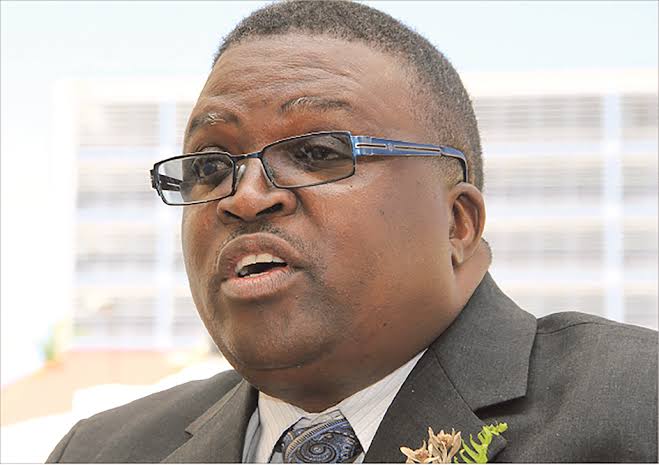
CHAMWE KAIRA
The Department of Transport does not have an approved IT disaster recovery plan, leaving critical government transportation data vulnerable to permanent loss or becoming unretrievable in the event of a server failure or cyber disaster.
The finding is contained in Auditor-General Junias Etuna Kandjeke’s qualified audit opinion on the Department of Transport’s financial statements for the year ended 31 March 2025.
The audit identified weaknesses in the department’s financial controls, record-keeping, operational systems and information technology, alongside significant underspending of its approved budget.
According to the report, the department underspent its budget by N$143.8 million, representing 5.72% of the available funds.
The Auditor-General noted that the unspent funds could have been redirected to other priority national needs.
The IT vulnerability forms part of wider operational weaknesses identified during the audit.
The department’s lack of a disaster recovery plan means there are no approved arrangements to ensure the recovery of critical information and systems following a major IT disruption.
The audit also found significant weaknesses at the Keetmanshoop government garage in the //Kharas region, where several government vehicles had remained abandoned and non-operational for extended periods because required spare parts were not procured on time.
The workshop store also lacked formal handover procedures, appointment letters for clerks and properly maintained job cards for tracking work.
The Auditor-General further found that the department could not provide signed contracts and supporting documentation for N$8.33 million paid to four suppliers for capital infrastructure projects.
The department also purchased 53 vehicles valued at N$35.5 million during the financial year, but none were recorded in the official pool vehicle registers.
Auditors were also not provided with payment, issuing or receipt vouchers for the vehicles.
In another finding, 64 permanently allocated vehicles valued at N$20.3 million were disposed of without entries being made in the vehicle registers.
The audit identified further accounting irregularities, including more than N$200 000 in travel, subsistence, danger and risk allowances that were incorrectly charged to construction and renovation expenditure codes.
The department also spent N$18.46 million on the DR4103 Okatana-Amutanga-Omulathitu-Onanime road project through a general maintenance ledger, despite there being no specific approved budget allocation for the project.
The Auditor-General also questioned N$37.3 million in reported outstanding commitments attributed to insufficient funds, with the department failing to provide supporting documentation for several overtime claims and supplier payments.
The department’s Performance Management System was rated unsatisfactory.
The Auditor-General said the system failed to provide reasonable assurance that services were being delivered to the public.
For example, the department reported an 80% completion rate against a 30% pre-construction target for the Opuwo Aerodrome and a 27% achievement for the Impalila Island Aerodrome.
However, the department could not provide physical or documentary evidence to substantiate the reported achievements.
The findings contributed to the qualified audit opinion issued on the department’s accounts for the 2024/25 financial year.