When Namibia became independent in 1990, the country inherited a public infrastructure network that, whatever its political and historical context, provided the new government with a significant foundation on which to build.
Railway lines traversed much of the country. Hospitals and clinics served communities across the regions. Government offices, houses for public servants, official residences, police facilities, military barracks and other state properties formed part of an established public infrastructure system.
The task of the independent Namibian state was therefore not to build a country from scratch. It was to take what existed, maintain it, improve it and progressively expand it to meet the needs of a growing population.
Thirty-five years later, that basic proposition appears to have been lost.
Across Namibia, public infrastructure is showing unmistakable signs of prolonged neglect. Government buildings, nurses’ homes, clinics, hospitals, railway facilities, police stations, official residences and other state properties are, in many instances, in a condition that would be difficult to accept from any serious institution responsible for managing valuable public assets.
The deterioration is not confined to one ministry, one region or one category of infrastructure. It is becoming a national problem.
In some places, government buildings look as though they have been abandoned rather than maintained. Roofs leak. Walls deteriorate. Plumbing fails. Windows are broken or damaged. Electrical installations require attention. Paint peels away. Toilets and ablution facilities become increasingly unsuitable. Grounds are left unattended, with grass and weeds growing unchecked.
Perhaps most troubling is that some facilities have reached a condition where, under ordinary circumstances, they might reasonably be considered candidates for condemnation. Yet government cannot simply close them because there are often no alternatives.
That is the cruel paradox of Namibia’s infrastructure problem: the state cannot afford to abandon buildings that it has allowed to deteriorate because it has not built enough replacements.
A legacy that was supposed to be protected
There is a legitimate debate about the quality, distribution and historical purpose of the infrastructure inherited in 1990. But there should be little debate about the responsibility that came with inheritance.
Infrastructure is an asset.
A railway line is an asset. A hospital is an asset. A government house is an asset. A clinic is an asset. A police station is an asset. A government office is an asset.
Like any asset, each has a life cycle. It requires routine maintenance, periodic refurbishment, capital renewal and, eventually, replacement.
The failure to perform those functions does not make the infrastructure disappear. It simply converts a manageable maintenance bill into an enormous capital replacement bill.
That is precisely the danger Namibia now faces.
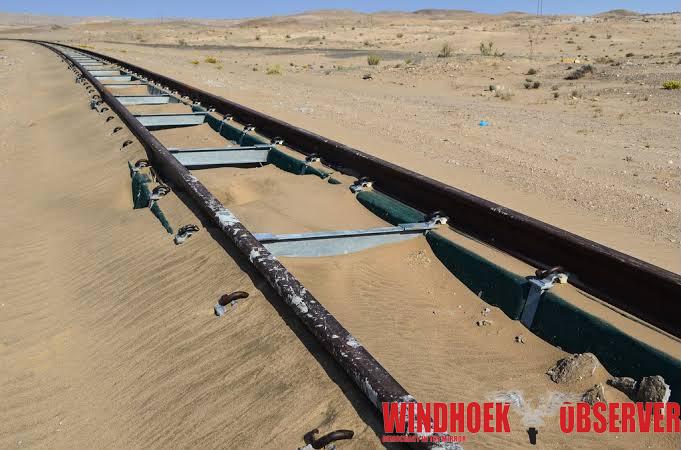
For years, relatively modest maintenance requirements have been allowed to accumulate. A leaking roof that could once have been repaired cheaply eventually requires major structural intervention. A deteriorating railway line becomes a reconstruction project. A neglected government house becomes uninhabitable. A clinic that should have undergone regular refurbishment becomes so degraded that a new facility is eventually required.
The cost of neglect compounds.
And it is not only a financial cost.
It affects the dignity of public servants. It affects the quality of healthcare. It affects the morale of security personnel. It affects the ability of government employees to perform their duties. Ultimately, it affects citizens who depend on public services.
Visit the barracks
One of the clearest illustrations of this problem can be found in the accommodation provided to members of the security services.
Visit some of the barracks where the men and women serving the country are expected to live.
What should be orderly, functional and dignified accommodation can, in some instances, resemble a version of the informal settlements that the government itself is struggling to address.
This is not merely about whether a building is aesthetically pleasing. It is about basic living standards.
Overgrown grass and weeds are left unattended. Grounds deteriorate. Buildings show obvious signs of ageing and neglect.
Facilities that should provide a reasonable standard of accommodation become increasingly difficult to distinguish from places that have simply been left to decay.
There is something profoundly wrong when people whose responsibility is to protect the country are expected to live and work in facilities that the state itself appears unwilling or unable to maintain.

The same principle applies to nurses and other healthcare workers.
Nurses’ homes were built for a reason. Healthcare workers often serve far from their permanent homes and require safe and decent accommodation close to their places of work.
Yet some nurses’ residences have deteriorated to such an extent that the question must be asked: what message does this send to the people expected to keep Namibia’s health system functioning?
A country cannot repeatedly demand more from its public servants while providing them with less.
The infrastructure we don’t see
The most visible examples are buildings, but the infrastructure crisis extends beyond walls and roofs.
Railway infrastructure is particularly important because it represents one of the country’s strategic economic assets. Namibia cannot seriously aspire to become a regional logistics hub while allowing sections of its rail infrastructure to deteriorate.
The railway system should not be viewed merely as an inherited relic. It should be part of Namibia’s economic future.
The same applies to hospitals and clinics.
Healthcare infrastructure has to be maintained continuously because it carries consequences that go beyond inconvenience. A deteriorating hospital can affect infection control, patient privacy, staff morale, operational efficiency and the quality of care.
A clinic serving a rural community cannot simply be treated as an old building that needs attention when money becomes available. For many citizens, that clinic may be the only accessible point of contact with the public healthcare system.
Government offices are equally important.
The public often encounters the state through its physical infrastructure: the building where a birth certificate is obtained, the office where land is administered, the facility where social services are accessed or the regional office where citizens seek assistance.
When those spaces deteriorate, the physical condition of the state becomes a visible expression of its administrative capacity.
The capital-budget trap
Namibia does make capital budget allocations. Governments announce major infrastructure programmes. New projects are periodically unveiled, commissioned and celebrated.
But there is a growing danger that Namibia has fallen into a familiar African governance trap: focusing on new capital projects while neglecting the basic maintenance of what already exists.
New infrastructure is politically attractive.
A new hospital can be opened with a ceremony. A new government building can be photographed. A new road can be inaugurated. A new facility can be presented as evidence of development.
Routine maintenance is different.
There is no ribbon-cutting ceremony for fixing a leaking roof. Nobody holds a grand event to celebrate the replacement of broken toilets at a government hostel. No politician receives much public recognition for repainting a nurses’ residence or clearing weeds from a barracks.
Yet these seemingly mundane interventions are what keep infrastructure functional.
The danger is that capital budgets gradually become smaller relative to the country’s enormous infrastructure needs, while maintenance remains an afterthought. The result is a state that spends money building some new things while allowing existing assets to deteriorate.
This is not development.
It is asset depletion.
Namibia cannot build its way out of neglect
The answer is not simply to build more.
Namibia needs a national infrastructure maintenance philosophy.
Every government asset should have a condition assessment, a maintenance schedule, an expected lifespan and a replacement plan. There should be a transparent national register of government properties and infrastructure showing what exists, where it is, what condition it is in and what it will cost to maintain or replace.
More importantly, maintenance should become a protected budgetary priority rather than something sacrificed whenever fiscal pressures emerge.
The government should also distinguish between maintenance and capital development. Repairing an existing facility should not be treated as less important simply because it lacks the political glamour of a new project.
There must also be accountability.
If a government building deteriorates because its maintenance budget was inadequate, that is a policy problem. If money was allocated but not spent, that is an administrative problem. If money was spent but the work was poorly executed, that is a procurement and oversight problem.
Each requires a different response.
What should not be accepted is a permanent cycle in which everyone acknowledges the deterioration but nobody is responsible for stopping it.
A national asset deserves national attention
Namibia has changed dramatically since 1990. Its population has grown. Towns and cities have expanded. New economic sectors have emerged. Expectations of government services have increased.
The country therefore needed to expand its infrastructure significantly.
But expansion should have occurred alongside preservation.
Instead, Namibia now finds itself with a paradoxical infrastructure landscape: new buildings standing alongside old buildings that are falling apart; new projects being announced while existing facilities desperately require maintenance; and public servants occupying facilities that increasingly fail to meet reasonable standards.
The answer cannot be to condemn everything and start again. Namibia does not have the financial resources for such an approach.
Nor can the answer be to continue patching up buildings indefinitely.
The country needs a deliberate infrastructure renewal strategy that identifies what can be rehabilitated, what must be replaced, what should be consolidated and what can be disposed of.
Most importantly, it needs to rediscover the value of maintenance.
The infrastructure inherited at independence was not perfect. But it was a foundation. The independent state had an opportunity to preserve that foundation while building something better.
Thirty-five years later, the question is no longer simply how much infrastructure Namibia has built.
The more uncomfortable question is: how much of what Namibia already owns has it allowed to deteriorate?
The answer should concern every citizen.
Because public infrastructure ultimately belongs to the public. Every hospital, railway, government house, clinic, office and barracks is a public asset paid for, directly or indirectly, by Namibians.
Allowing those assets to decay is not merely an administrative failure. It is a failure to protect national wealth.
Namibia does not need to choose between development and maintenance.
It needs both.
A mature state builds new infrastructure while protecting what it already has. It repairs before it replaces. It plans before buildings become emergencies. It understands that maintenance is not an expense to be postponed until better times, but an essential investment in the country’s future.
After 35 years of independence, Namibia should be looking at the next 35 years with ambition.
But ambition cannot be built on foundations that are allowed to crumble.
The state must begin by fixing what is broken, maintaining what remains sound and replacing what has genuinely reached the end of its useful life.
That is not glamorous politics.
It is simply responsible government.