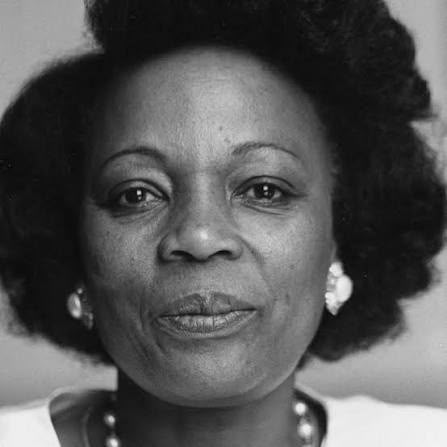
..leaders remember Amathila for a lifetime of service to Namibians
Patience Makwele
Political leaders and liberation struggle veterans have remembered the late Dr Libertina Amathila as a freedom fighter and public servant who dedicated her life to improving the living conditions of vulnerable and disadvantaged Namibians.
President Netumbo Nandi-Ndaitwah, former president Nangolo Mbumba, Independent Patriots for Change (IPC) leader Panduleni Itula, Namibia Economic Freedom Fighter (NEFF) deputy leader Kalimbu Iipumbu, Swapo Party deputy secretary general Uerukua Herunga and Swapo Party secretary general Sophia Shaningwa were among those who paid tribute to Amathila following her death on Wednesday morning at the age of 85.
Amathila, Namibia’s first female medical doctor, served as minister of regional and local government and housing from 1990 to 1996, minister of health and social services from 1996 to 2005 and deputy prime minister from 2005 to 2010.
Minister in the Presidency Charles Mubita announced her death on Wednesday, describing her as a veteran of the national liberation struggle whose life was defined by courage, sacrifice and service.
“Her immense contribution to nation building, particularly in advancing public healthcare and improving the living conditions of our people, will remain an enduring part of our national history,” Mubita said.
He said her compassion for the less fortunate and commitment to improving the lives of vulnerable members of society were defining features of her life.
President Nandi-Ndaitwah also paid tribute to Amathila, describing her death as a loss to the country and calling on members to observe a minute of silence in her honour.
“Today we have lost Dr Libertina Amathila, and I ask us to say a minute of silence in her honour,” she said.
Mbumba said Amathila decided at a young age to dedicate her life to the liberation struggle and made sacrifices in the interest of oppressed and impoverished people.
In a statement, he said her passion for helping people who could not help themselves led her to pursue medical studies at the Warsaw Medical Academy, where she graduated in 1969.
“Her passion to help those that could not help themselves is what propelled her to pursue her studies, graduate from the Warsaw Medical Academy and become Namibia’s first female doctor,” Mbumba said.
Her work extended beyond Namibia during the liberation struggle. After qualifying as a doctor, she worked among Namibian refugees in Zambia and Angola, providing healthcare to women, children and other displaced people.
Historical accounts of her work in exile document her involvement in health and education facilities for Namibian refugees, including the Nyango Health and Education Centre in Zambia and the Mavulu Centre in Angola.
Itula said Amathila would be remembered for her contribution to the liberation struggle and medical services provided to Namibians in exile.
He recalled her academic achievements and said she was among the pioneers who understood that liberation was necessary to achieve equality and prosperity.
“She will still be remembered as one of those pioneers,” Itula said.
Meanwhile, Herunga described Amathila’s life as one well lived, saying she made a difference in the lives of vulnerable and previously disadvantaged communities across the country.
“She was a person who lived her life to the fullest. There is nothing else that one could expect from any human being that she couldn’t have achieved in her lifetime,” Herunga said.
He said Amathila did not allow her educational background or position in government to distance her from ordinary people.
Recalling her contribution to helping disadvantaged communities obtain identification documents so they could access government programmes.
He said she continued “making a contribution even after leaving active leadership,” adding that she chose to step down after serving rather than wait to be removed.
Another significant part of Amathila’s public service was her work among San communities.
Historical reporting on her tenure as deputy prime minister documented her visits to disadvantaged San communities, where she investigated their living conditions and challenges involving food, housing, education and access to government services.
Her work contributed to the establishment of the San Development Programme in 2005, aimed at improving the living conditions and opportunities of San communities.
Amathila also campaigned for the Married Persons Equality Act, which was passed in 1996 and removed the marital power husbands had over their wives in civil marriages.
Kalimbu Iipumbu described her as a “liberation icon and scholar whose contribution to the country should be studied by future generations.”
He said “she was among the women who took up leadership responsibilities at a time when political spaces were dominated by men.”
Iipumbu said Amathila was concerned about ensuring that people were not excluded from the country’s development.
“You could see, she was never the person who wanted someone to be left behind,” he said.
He said her understanding of prosperity went beyond political statements and included practical improvements in people’s lives.
Swapo Party secretary general Sophia Shaningwa described Amathila as her mentor and a veteran of the national liberation struggle.
In a Facebook statement, Shaningwa said her leadership was shaped by strong principles, even when it meant standing alone.
“Mama Libertine Appolus-Amadhila was a noble leader, whose leadership journey was shaped by solid principles even if it meant she has to stand alone. Most of us looked up to her for guidance, wisdom and inspiration,” Shaningwa said.
She said Amathila’s leadership placed “unmeasurable hope in the girl child” and extended condolences to her children, family and the nation.
Amathila also received international recognition for her humanitarian and medical work. She was awarded the UNHCR Nansen Refugee Award in 1991 and later served as president of the World Health Assembly in 2000.
She published her autobiography, Making a Difference, in 2012, documenting her experiences in exile, medical career and political service.
Mbumba said her contribution would continue to inspire future generations, particularly young women.
“Her passion will continue to inspire generations of Namibians, especially the Namibian girl child,” he said.