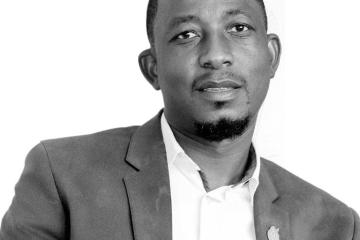
Kae Matundu Tjiparuro
Yours Truly Ideologically entitles this week’s ideological indulgence Russia-Africa (Namibia) Entanglement, likening it to the famous, or perhaps notorious, Russian roulette.
Russian roulette is described as “a lethal game of chance where a single round is placed inside the cylinder of a revolver, the cylinder is spun and a player points the muzzle at their head or body and pulls the trigger.”
Reflecting on the recent visit of the Namibian President to Russia, where she attended the Third Russia-Africa (Namibia) Summit, Yours Truly Ideologically cannot help but be circumspect about the true meaning and essence of the Summit, particularly from the African, and specifically Namibian, perspective.
The local Namibian media, during Her Excellency’s visit, appeared to have had a field day based on her pronouncements.
“President invites Russia to make Namibia production hub,” read one headline in a local English daily.
“NNN says Russia-Africa (Namibia) ties should benefit rural communities,” read another.
“Nandi-Ndaitwah calls for Africa’s economic emancipation,” proclaimed yet another headline, while another declared: “Nandi-Ndaitwah pushes economic freedom in Moscow.”
Among these headlines, none seemed to offer a reflection, let alone an introspection or analysis, of what the Summit actually means for Africa, and Namibia in particular, both now and ultimately.
This is especially important in terms of placing Africa, and Namibia, on a different trajectory of socio-economic advancement.
An advancement designed and intended to structurally transform the continent’s development path into something different, a business-as-unusual approach, if you wish, with a focus on the exploited masses, including Her Excellency’s rural communities.
All these headlines could not but leave Yours Truly Ideologically not only ideologically wanting but also mesmerised as to what they actually mean and what their sum total amounts to.
Beyond this, does Namibia actually need the Russia-Africa (Namibia) Summit to articulate her aspirations in this regard?
Would she have needed such a platform for Her Excellency to make her wishes, and indeed those of the country and Africa at large, known to the world?
Granted, Namibia needs, if only, the moral solidarity of her fellow Africans, if not their total support and commitment in this regard.
This is because whatever socio-economic challenges she is currently experiencing, a legacy of capitalist colonialism, are not unique to her but common to many African countries that endured colonial capitalism.
Equally, it may not have been outlandish for Her Excellency to ventilate her aspirations in Russia. After all, Russia does not carry the colonial blame and legacy associated with many other powers.
This perhaps makes Russia an ideal place for Her Excellency to express her country’s concerns, with the hope of finding in Russia and its President a listening and sympathetic ear.
But, be that as it may, as free as Russia may be from colonial blame and guilt, she cannot by any means be said to be without her own national and geopolitical interests, which ultimately define and inform her engagement with other African countries, including Namibia.
Not to mention her own ideological interests, shaped by her particular ideological disposition.
Equally, Namibia has her own national interests, which ordinarily should and would be defined by her own ideology. An ideology that, unfortunately, remains undefined, or perhaps completely non-existent.
Hence, Her Excellency’s references to a “production hub” and “economic emancipation”, while inherently well-intentioned, will remain meaningless unless they are grounded in an ideological framework.
Otherwise, they risk amounting to little more than wishful thinking, empty political vision and daydreaming.
Speaking at the Russia-Africa (Namibia) Summit, Russian President Vladimir Putin could not but have been conscious of Africa’s rising power, while simultaneously denouncing neo-colonialism.
He observed that Russian companies were successfully conducting business in Africa, including Namibia, while new firms were establishing themselves on the continent.
“They do not engage in plunder or colonial exploitation in Africa, but work for the development of the continent,” the Russian President was quoted as saying.
Perhaps this is all the more reason for Her Excellency’s invitation to Russian companies to invest in Namibia and establish joint ventures that would turn the country into a production centre for the wider African market.
Certainly, this is easier said than done. But, critically, it is something that the President’s men and women, not to mention the private sector, must embrace and actively pursue.
For starters, they must give Her Excellency’s aspiration a concrete framework and meaning.
However, Yours Truly Ideologically cannot help but wonder what the Russian experience has been within Russia itself, particularly in terms of embracing and uplifting its own rural communities, as Her Excellency has called for Russia-Africa (Namibia) relations to benefit rural communities in Namibia.
Not to mention that Russian companies are already operating in Namibia, particularly in the mining sector.
The question that begs an answer is whether they are any different from other private-sector companies that have operated in Namibia from the colonial period to the present.
The answer is no. They are no different, having operated on the same capitalist business principles, where profit is the primary motive and the welfare of the rural poor remains a distant consideration, if it is considered at all.
Likewise, critics and regional analysts have argued that Russian corporate and security engagement often creates a form of political and economic dependence, trading immediate military backing or access to cheaper commodities for long-term concessions involving mining, natural resources and sovereignty.
While the penetration of Russian companies into Namibia remains a work in progress, their modus operandi has, nevertheless, been no different from that of other capitalist entities, whose primary motive is profit maximisation.
Nor is there, as yet, conclusive evidence of local processing and manufacturing ventures, something the Eighth Namibian Administration has repeatedly been advocating.
The Russian Federation’s strategic partner in Africa is Egypt. However, their engagement has not been without challenges and limitations, some of them geopolitical.
Egypt has also remained cautious about jeopardising its existing trade relations with the West, particularly its free-trade arrangements with the Eurasian Economic Union (EAEU).
It has had to balance its deep strategic and economic ties with Moscow against its Western and regional alliances.
Thus, the Namibian President’s vision for engagement with Moscow in this regard requires, to say the least, a serious and well-considered approach by her experts in the various fields of international trade.
Lest Namibia finds herself playing Russian roulette with the master at his or her own game.
But do Namibia’s rural communities really need to wait for the realisation of the Namibian-Russian dream before they can experience genuine and meaningful upliftment?
Certainly not.
A beginning must be made in all earnestness, rather than the kind of development allocations reportedly amounting to N$74 000 for entire regions, such as Kunene, as reported in the media.
Any future windfalls from Russia or elsewhere should serve to strengthen and complement locally initiated and financed development initiatives, rather than become a prerequisite for them.
As things stand, needless to mention, Namibia’s rural communities remain neglected and are little more than the debris left behind by whatever economic progress the country has achieved.