Patience Makwele
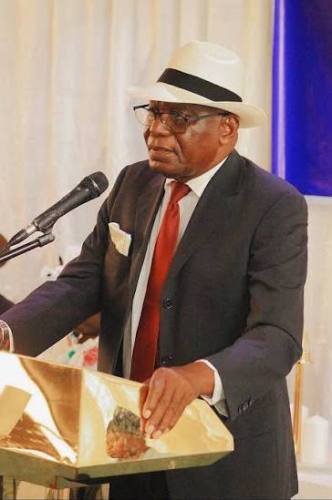
Young Namibians struggling to find work are being urged to explore opportunities beyond formal employment, as First Gentleman Epaphras Denga Ndaitwah calls for stronger partnerships to help young people turn their skills and ideas into economic opportunities.
Speaking at the Russia-Africa Youth Forum at MGIMO University in Moscow on Wednesday, Ndaitwah acknowledged the difficulties facing young people who have qualifications but cannot find work, business ideas but lack capital, and talent without access to networks.
“Too many of our young people have qualifications but no job, ideas but no capital, talent but no network,” he said.
His remarks reflected the challenges faced by graduates entering a labour market where a qualification does not necessarily translate into employment.
The Namibia Statistics Agency’s 2023 Labour Force Report puts unemployment among people aged 15 to 34 at 44.4%, compared with 36.9% nationally. Among young women, the rate was 48.2%.
Speaking to this publication earlier this year, Jastina Ndahafa Uugwanga, a Namibian graduate who spent four years looking for a job, the search eventually led her to cross-border trading between Namibia and Angola.
After repeatedly applying for jobs without success, Uugwanga decided to explore a business opportunity by sourcing clothes, hair accessories and other goods from Angola for resale in Namibia.
“After making my second sales which gave me a profit of N$15 000.00 I decided then, if a job was not going to find me, I was going to create a job for myself,” she said.
Uugwanga has since expanded her business and now takes other aspiring traders to Angola, teaching them how to source products and build their own businesses.
Her experience illustrates one of the alternatives available to young people who struggle to secure formal employment, although starting a business also requires resources, knowledge and a willingness to take risks.
Ndaitwah called for greater cooperation between Russia and African countries to help young people access opportunities in entrepreneurship, technology, logistics, new media and diplomacy.
He said trade between the two regions should not be limited to large companies, arguing that young entrepreneurs should also be able to move goods, services and ideas across borders.
“Trade between our continents should not belong only to large companies. Young entrepreneurs can carry goods, services and ideas in both directions,” he said.
Beyond entrepreneurship, Ndaitwah called for stronger links between universities in Russia and Africa, including joint research projects addressing challenges in water, energy, health and agriculture.
He also urged African countries to develop their own technological capacity, particularly in artificial intelligence.
“Africa must not only consume new tools like artificial intelligence. Our young people must design and build them,” he said.
For young people entering specialised industries, access to relevant training and practical experience is another part of preparing for available opportunities.
Kevin Kevanhu, a solar technician in training at the Windhoek Vocational Training Centre (WVTC), had earlier told the Young Observer that Namibia’s renewable energy sector could open opportunities for young people beyond conventional engineering roles.
“For young people, this sector creates an entirely new value chain. Opportunities range from renewable energy installation and hydrogen production to engineering, logistics, catering and safety management,” he said.
Kevanhu said young people needed to prepare through skills development and exposure to industry, while training institutions should strengthen their links with companies operating in emerging energy sectors.
“TVET institutions are the backbone of Namibia’s energy transition because industries require technicians and artisans who understand real systems, equipment and operational procedures,” he said.
Ndaitwah said Namibia’s youthful population made it important to ensure that young people could learn, work, create and participate in development.
According to the 2023 census, more than 71% of the population is under the age of 35.
He said the Russia-Africa Youth Forum offered young people an opportunity to build relationships and explore areas of cooperation, adding that the challenge was to turn the relationship between the two regions into prosperity, knowledge and lasting peace.