Sostenus Wilherm
Ohangwena has called on investors, financial institutions and local entrepreneurs to turn the region’s identified economic potential into actual businesses, jobs and household income, warning that an investment plan will have little meaning if it remains on paper.
The call was made during the official launch of the Ohangwena Regional Investment Map and Action Plan on Friday, at the Helao Nafidi Business Expo Hall in Omafo.
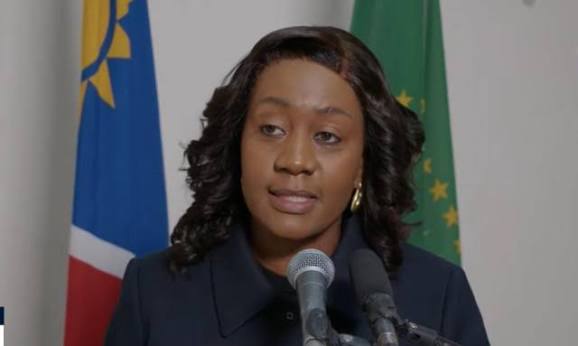
Governor Kadiva Hamutumwa said the region was deliberately moving away from simply talking about its potential and was now seeking concrete investment that would create employment, develop enterprises and improve the livelihoods of residents.
“Potential, on its own, does not create jobs, potential does not build enterprises, potential does not increase household incomes, potential must be organized, promoted, financed and transformed into investment,” Hamutumwa said.
The governor said Ohangwena was “open for business”, but stressed that the region was not only looking for capital.
She said investment must be productive, sustainable and inclusive, while creating employment, developing skills, supporting local enterprises, encouraging innovation and expanding productive capacity.
According to Hamutumwa, local businesses must not remain on the sidelines of major investment projects but should become suppliers, service providers, partners and co-investors.
She said the region needed to build local value chains in which farmers supply industries, small and medium enterprises provide services to larger businesses, and young people gain the skills required to participate in the economy.
The Investment Map identifies opportunities across agriculture and agro-processing, livestock and value addition, logistics and trade, manufacturing, tourism and hospitality, renewable energy, ICT and the digital economy, property and infrastructure, as well as youth entrepreneurship and creative industries.
Hamutumwa placed particular emphasis on Helao Nafidi’s strategic position as a gateway to Angola, saying the border town could support logistics, warehousing, distribution, agro-processing, manufacturing, hospitality, tourism and financial and business services.
She said Ohangwena’s location should be used to develop cross-border value chains and position the region as “a dynamic economic gateway between Namibia and the wider Angolan market.”
The governor also called for a shift from an economy that largely consumes goods and services produced elsewhere to one that produces, processes, adds value and exports.
“We must move from consuming goods and services produced elsewhere to producing, processing, adding value and exporting,” she said.
Minister in the Presidency Charles Mubita said the launch marked “a new era of opportunity and strategic progress” for Ohangwena, describing the region as open, ready and organised for business.
“No region develops by accident. Prosperity is planned, built, and defended through deliberate choices, sound partnerships, and the courage to invest in tomorrow,” Mubita said.
He said the Investment Map and Action Plan was aligned with the Government’s Eight Administration priority areas, NDP6 and Vision 2030, while identifying what he described as bankable opportunities in agriculture and agro-processing, tourism and hospitality, manufacturing, logistics and transport, healthcare, renewable energy, the creative economy and emerging industries.
Mubita stressed that the document should not become another government plan that remains unused.
“This plan is not to be admired from a shelf. It is a living, working tool, a roadmap for investors, financial institutions, development partners, and policymakers alike,” he said.
He said the government was committed to streamlining administrative processes, removing regulatory bottlenecks and strengthening transparent governance to create an environment in which businesses could operate and invest with confidence.
The minister further called on financial institutions and development partners to support the opportunities identified through financing, technical assistance and strategic partnerships.
She said its success should ultimately be judged by whether it attracts investors, enables local entrepreneurs to enter value chains, creates jobs for young people, increases local value addition and improves the lives of communities.
“The launch is not the destination,” Hamutumwa said, urging stakeholders to “move from planning to implementation, from opportunity to investment, and from investment to measurable development outcomes.”
She called on investors to explore the opportunities, build partnerships with local people and contribute to jobs, skills development, infrastructure and community empowerment.
Entrepreneurs and young people were also urged to seize the opportunities identified, innovate, formalise their businesses and grow into drivers of regional economic development.
“Ohangwena is open for business. Ohangwena is ready for investment. Ohangwena is ready for partnerships and above all, Ohangwena is ready to turn its potential into prosperity,” she said.