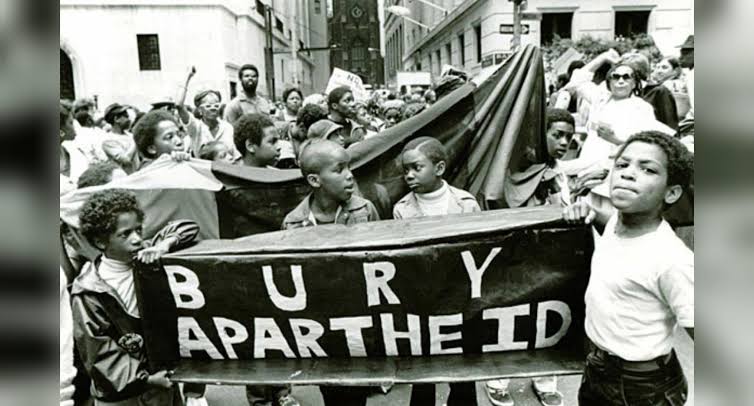
Namibia must be brave enough to ask whether, in rejecting apartheid, we sometimes threw out good systems along with the bad
There are some questions in Namibia that people discuss quietly but rarely dare to ask publicly.
One of them is this:
Did apartheid have anything that independent Namibia could have retained or learnt from?
Before the outrage begins, let us be absolutely clear.
Apartheid was an evil system.
It was based on racial discrimination, political exclusion and the deliberate denial of rights and opportunities to the majority of Namibians. Its education system was deeply unequal. Its urban planning was designed around racial segregation. Its labour system exploited black Namibians and restricted their freedom of movement.
The Constitution of independent Namibia quite rightly declares apartheid and racial discrimination prohibited.
But there is a difference between defending apartheid and examining the systems, standards, disciplines and institutional practices that existed under the regime.
And perhaps Namibia has been too afraid to have that conversation.
Recently, a woman phoned one of Namibia’s popular radio programmes and made a statement guaranteed to provoke outrage.
“Apartheid was treating black people terribly, but things worked and functioned under that regime.”
Then she went further.
She argued that the education system reserved for whites could have been retained and extended to the entire country. She pointed to government infrastructure that, in her view, was better maintained. She spoke of annual maintenance programmes. She referred to apprenticeship systems attached to institutions that eventually became part of Namibia’s electricity, water, roads and railway sectors.
And she asked, implicitly: Why did we not keep what worked and simply make it available to everybody?
That is not an endorsement of apartheid.
It is a question about institutional memory.
And it deserves an answer.
We must separate the system from the systems
This is where Namibia’s political debate often becomes intellectually lazy.
We have a tendency to put everything associated with apartheid into one giant historical rubbish bin.
Apartheid? Evil.
Therefore everything that existed under apartheid? Bad.
That is simplistic.
The white education system was superior in resources, facilities, teacher-pupil ratios and opportunities. That superiority was itself part of the injustice: the colonial administration deliberately spent vastly more on white education than on black education.
At one point, the colonial administration was spending approximately six times more per white child than per black child.
That is not something to romanticise.
But here is the uncomfortable question:
Why didn’t independent Namibia simply take the better-funded, better-resourced model and replicate its standards for every Namibian child?
Why should equality mean bringing everyone down to the same level rather than bringing everyone up to the highest standard?
That is the question worth asking.
The problem was never standards. It was access.
There is nothing inherently racist about demanding disciplined schools, properly maintained classrooms, qualified teachers, strict academic standards, vocational training and accountability.
The problem with apartheid education was that those benefits were distributed according to race.
Black Namibians were deliberately denied equal access.
Independent Namibia rightly dismantled that architecture.
But did we dismantle the racial discrimination while retaining the best institutional features?
Or did we sometimes dismantle the entire structure without adequately replacing the machinery that made it function?
That is the uncomfortable part.
Maintenance is not glamorous, but it matters
Look around Namibia today.
Government buildings deteriorate. Roads deteriorate. Schools deteriorate. Public facilities deteriorate.
Then comes the predictable cycle.
A building becomes dilapidated.
A crisis develops.
A tender is issued.
Millions are spent repairing what could have been maintained for a fraction of the cost.
We should therefore ask whether there was something to learn from the old culture of planned maintenance.
Maintenance does not win elections.
A new hospital does.
A new road does.
A new school does.
But a government that spends billions constructing new infrastructure while failing to maintain what it already owns is not necessarily developing the country. It may simply be replacing yesterday’s neglected infrastructure with tomorrow’s neglected infrastructure.
Perhaps the lesson is not “bring back apartheid”.
Perhaps the lesson is: institutional discipline matters.
Where did our apprenticeship culture go?
Another issue deserves serious examination: apprenticeships.
The old state-controlled utilities and technical institutions had structured pathways through which young people could learn practical trades.
Electricians.
Fitters.
Turners.
Mechanics.
Welders.
Technicians.
Artisans.
These were not university graduates.
They were skilled workers.
And they were essential to making the economy function.
Today Namibia talks endlessly about unemployment while simultaneously complaining about a shortage of skilled artisans.
There is something fundamentally wrong with that equation.
We produce thousands of young people looking for jobs and then import skills we could have developed ourselves.
Why?
Perhaps we should revisit the old principle of earn while you learn.
Not because apartheid was right.
Because apprenticeships are right.
Namibia’s own institutions still recognise the importance of this. NamWater, for example, operates a Human Resources Development Centre that trains young people in areas including water artisans, mechanics and electricians.
The question is whether such programmes should be dramatically expanded across the economy.
And then there is the housing question
The woman on radio made another provocative observation: there were no sprawling informal settlements like those we see today.
That statement requires context.
The reason was not simply that apartheid governments had solved housing.
They hadn’t.
Black Namibians were subjected to draconian urban controls. Movement into urban areas was restricted, permits were required and families were often separated. Residential areas were racially segregated.
Informal settlements were controlled precisely because the apartheid state controlled who could live where.
That system was profoundly unjust.
Independent Namibia could never have retained it.
But here is the lesson we can retain:
Urbanisation requires planning.
When Namibia gained independence, the constitutional right to live and settle anywhere in the country was an important liberation.
But freedom of movement without sufficient urban planning, serviced land and housing supply inevitably creates pressure.
People move to Windhoek because they are looking for opportunity.
The city grows.
Land becomes scarce.
Housing becomes expensive.
Informal settlements expand.
And government runs behind the problem.
We should never return to apartheid-era population controls.
But we should return to serious long-term urban planning.
The danger of romanticising the past
There is an obvious danger here.
Once we begin saying “things worked better under apartheid”, someone will inevitably use that argument to sanitise the brutality of the system.
We must not allow that.
The infrastructure that existed did not magically become efficient because apartheid was good.
The education system did not become excellent because apartheid was good.
The bureaucracy did not function because apartheid was morally superior.
Much of the system was designed to serve a privileged minority.
That is precisely why Namibia must be careful about what it remembers.
But rejecting apartheid should never mean rejecting competence.
Reject racism.
Reject oppression.
Reject segregation.
Reject political exclusion.
But don’t reject discipline.
Don’t reject standards.
Don’t reject maintenance.
Don’t reject apprenticeships.
Don’t reject accountability.
Don’t reject long-term planning.
Don’t reject excellence.
Perhaps the real failure was not what we rejected, but what we failed to replace
Thirty-six years after independence, Namibia has to be mature enough to examine itself honestly.
We cannot continue blaming apartheid for every contemporary institutional failure.
At some point, responsibility becomes ours.
The generation that inherited Namibia in 1990 had every right to dismantle an unjust system.
But subsequent generations had the responsibility to build institutions that were better.
And this is where the debate becomes particularly uncomfortable.
If a system maintained roads properly, keep the maintenance culture.
If it produced skilled artisans through apprenticeships, keep the apprenticeships.
If it demanded high academic standards, keep the standards.
If it planned infrastructure systematically, keep the planning.
If it had functioning public institutions, strengthen them.
But remove the racism.
Remove the exclusion.
Remove the oppression.
Remove the inequality.
That is what mature nations do.
They don’t inherit history wholesale.
They edit it.
Perhaps Namibia’s greatest mistake was believing that because something belonged to the apartheid era, it automatically had to disappear.
That is not nation-building.
Nation-building requires the courage to distinguish between the ideology of a system and the competence of its institutions.
So, should Namibia revisit some of the lessons of the past?
Absolutely.
Not because apartheid was good.
It wasn’t.
Not because white Namibia had all the answers.
It didn’t.
But because an independent Namibia should be confident enough to say something even more powerful:
We can reject apartheid completely while still learning from whatever worked.
That is not betrayal.
That is maturity.
And perhaps the most inconvenient truth of all is that the opposite of apartheid is not dysfunction.
The opposite of apartheid is equality , combined with excellence, competence, accountability and opportunity for everyone.
That is the standard Namibia should now demand.