Patience Makwele
The National Planning Commission (NPC) is looking to mobilise private-sector capital to support Namibia’s development priorities as pressure on traditional sources of development financing grows.
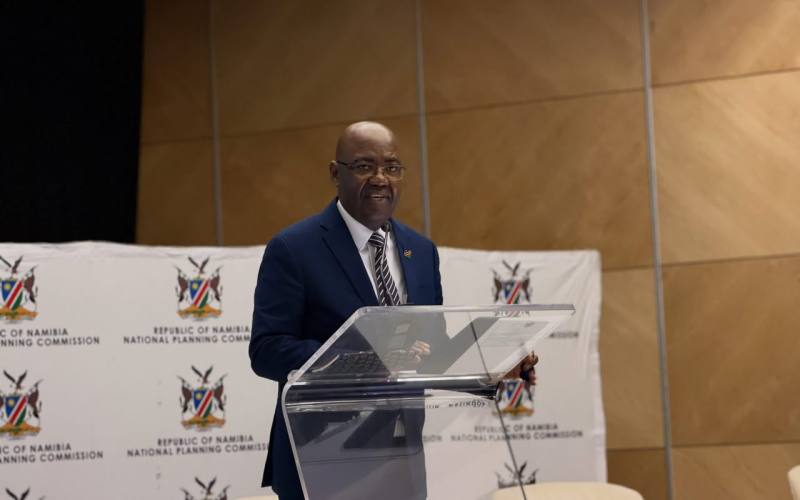
The call was made on Tuesday in Windhoek at the 2026 Joint Development Partners Forum and Development Partners Coordination Open Day, held under the theme “Harnessing Emerging Economic Opportunities for Inclusive and Sustainable Growth”.
NPC executive director I-Ben Nashandi said the changing global economic environment and geopolitical developments were contributing to declining official development assistance (ODA), making it necessary for Namibia to explore partnerships that could unlock private-sector investment.
“The capital of the private sector can support our development,” Nashandi said.

He said development cooperation should go beyond mobilising financial resources to include knowledge exchange, institutional strengthening and innovation, while ensuring that assistance remains aligned with national development priorities.
His remarks come as the NPC seeks to align development partnerships with the country’s Sixth National Development Plan (NDP6), which runs from 2025/26 to 2029/30.
National Development Advisor at the NPC, Ester Nanus, said ODA currently contributes between 3% and 5% of Namibia’s national budget, with the commission responsible for coordinating and augmenting the resources available locally.
“With regards to ODA, we are responsible for coordinating and augmenting our national budget because what we have locally is not always enough,” Nanus said.
She explained that the NPC works with the ministry of finance to coordinate development assistance, including grants, technical cooperation and budget support, while concessional loans are handled by the finance ministry.
United Nations (UN) Resident Coordinator in Namibia, Hopolang Phororo, called for development partners to strengthen coordination beyond the annual forum, proposing regular engagements to assess progress on selected NDP6 priorities, identify bottlenecks and coordinate support.
“We are all being asked to do more with less,” Phororo said.
Phororo also emphasised the importance of country-led partnerships that connect dialogue with evidence, implementation and results, reaffirming the UN’s commitment to supporting Namibia through its convening role, knowledge-sharing and coordination of development efforts.
She pointed to the National Health Partners Forum as an existing coordination model, saying the focus should be on strengthening mechanisms already in place rather than creating new structures.
Nanus also outlined resolutions from the 2025 Development Partners Forum, which called on development partners to align their programmes with national priorities and NDP6, while the private sector was encouraged to expand internship, apprenticeship and graduate programmes.
The resolutions also called for continued dialogue between young people, government and development partners.
Nanus said the government had facilitated 734 internship placements by June 2025.
She also highlighted the NPC’s consultations with China from 3 to 8 August 2026 and Germany from 28 September to 2 October 2026 as part of its engagement with development partners.
She said local and regional authorities seeking development assistance should identify projects aligned with NDP6 priorities, conduct needs assessments and submit proposals through their respective line ministries to the NPC.
The commission then engages development partners for possible support, followed by processes such as exchanges of notes, feasibility studies and implementation agreements.
Nashandi said development cooperation should extend beyond financial assistance and support inclusive economic growth, employment creation, entrepreneurship, innovation and the digital economy.
He said the country’s development priorities were organised around four NDP6 pillars: economic growth, transformation and resilience; human development and community resilience; environmental sustainability; and effective governance and public service delivery.