Staff Writer
The Namibia Investment Promotion and Development Board (NIPDB) is encouraging eligible micro, small and medium enterprises (MSMEs) to apply for support under the SME Fund before applications close on Friday, 24 July.
The fund, established under the ProSME Project, is a partnership between the National Planning Commission (NPC), NIPDB and the Deutsche Gesellschaft für Internationale Zusammenarbeit (GIZ), with funding from Germany’s Federal Ministry for Economic Cooperation and Development (BMZ).
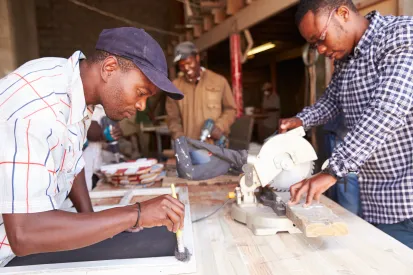
The initiative provides grants ranging from N$50 000 to N$100 000, alongside pitch coaching, business advisory services and opportunities to showcase businesses on local and international platforms.
Priority will be given to youth-owned businesses owned by entrepreneurs aged 18 to 34, women-owned enterprises, social enterprises, cooperatives and export-ready businesses operating in sectors including agriculture, agro-processing, artisanal mining, the blue economy, circular economy, creative industries, financial services, health and wellness, information and communications technology (ICT), manufacturing and tourism.
The funding call comes as Namibia and South Africa continue efforts to strengthen bilateral trade and investment through the South Africa-Namibia Business Forum, held in Midrand, South Africa, on 17 July under the theme ‘Driving Regional Industrialisation, Investment and Sustainable Growth through Strategic South Africa-Namibia Partnerships.’
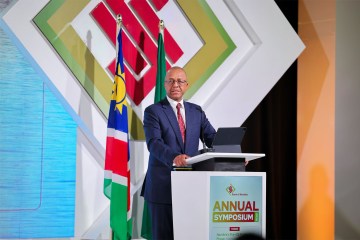
The forum was convened alongside the fourth South Africa-Namibia Bi-National Commission (BNC) and featured addresses by President Netumbo Nandi-Ndaitwah and President Cyril Ramaphosa during a dedicated presidential session.
Hosted through a collaboration between South Africa’s department of trade, industry and competition (DTIC), the ministry of international relations and trade (MIRT), NIPDB and the Namibia Chamber of Commerce and Industry (NCCI), the forum aimed to strengthen economic cooperation by increasing private sector participation and facilitating investment opportunities.
Discussions focused on priority sectors including agriculture and agro-processing, energy, manufacturing, metals and mining, chemicals, financial services, and transport and logistics.
Delegates also examined opportunities to deepen regional value chains in livestock and leather, meat products, fruits and vegetables, textiles and clothing, as well as cosmetics and essential oils.
Panel discussions explored green energy and hydrogen, manufacturing and industrialisation, and logistics, transport and trade corridors, with participants seeking to improve market access, support industrial partnerships and advance implementation of the African Continental Free Trade Area (AfCFTA).
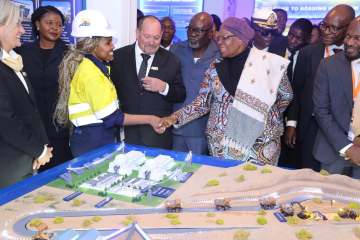
The programme also included matchmaking sessions and site visits to South African companies, providing Namibian businesses with opportunities to engage directly with potential partners.
According to NIPDB, South Africa remains one of Namibia’s largest trading partners and its second-largest source of foreign direct investment after China.
Trade between the two countries expanded significantly between 2021 and 2025, with Namibia’s imports from South Africa increasing from N$45.6 billion to N$56.7 billion over the period. Namibia’s exports to South Africa more than doubled from N$13.5 billion in 2021 to N$28.8 billion in 2025.
The growth in exports contributed to a narrowing of the bilateral trade deficit from N$35.9 billion in 2024 to N$27.9 billion in 2025, reflecting increased demand for Namibian products in the South African market.