CHAMWE KAIRA
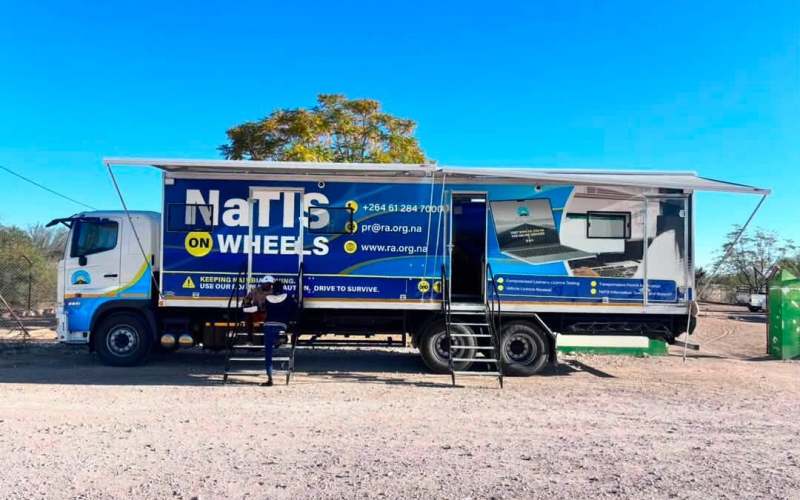
NaTIS revenue collections increased by 5% to N$895.05 million during the 2024/25 financial year, driven largely by road user charges, while the number of registered vehicles in Namibia rose to 419,716.
According to the Roads Authority’s (RA) 2024/25 Annual Report, road user charges contributed N$817.86 million to total NaTIS collections, reflecting continued growth in revenue generated from Namibia’s transport sector.
The number of registered vehicles increased by 2.19% to 419716, with Windhoek accounting for 41% of the national vehicle fleet. The licensed driver population also grew by 4.53% to 379023.
The authority’s overload control programme weighed 524 684 heavy vehicles at 10 weighbridges during the period. Of these, 15% were found to be overloaded, although 99.6% complied with prosecutable tolerance limits.
The revenue growth came as the Roads Authority completed several major road infrastructure projects, despite significant funding constraints that affected routine road maintenance and preservation.
The authority received a revised budget of N$4.07 billion, comprising N$2.17 billion from the Road Fund Administration (RFA) and N$1.90 billion from the government.
However, the RFA allocation represented only 37% of the N$5.88 billion requested by the authority to meet its strategic construction and maintenance requirements.
The authority spent N$3.97 billion, representing 98% of its allocated budget. Among the major infrastructure projects completed was the Windhoek–Okahandja dual carriageway, including a 21-kilometre extension.
The authority also completed the rehabilitation of 87.3 kilometres of the Grünau–Keetmanshoop–Mariental road, upgraded the Tses–Gibeon station stretch and completed a 12-kilometre dual carriageway extension between Swakopmund and Walvis Bay.
Labour-based road projects created 350 jobs and awarded contracts to approximately 10 small and medium enterprises.
However, funding shortages severely affected the authority’s road preservation programme.
The RA rejuvenated no kilometres of road against its annual target of 1 200 kilometres. Re-gravelling reached 151 kilometres against a target of 1 200 kilometres, while resurfacing covered 31.43 kilometres against a target of 688 kilometres.
The shortfall in maintenance has contributed to deteriorating road conditions, with 10% of bitumen roads and 49% of gravel roads classified as being in unacceptable condition.
Board chairperson Lily Brandt said the authority secured an unqualified audit opinion from the Office of the Auditor-General and obtained its Affirmative Action Compliance Certificate during the reporting period.