CHAMWE KAIRA
Namibia’s livestock industry plans to submit a proposal to veterinary authorities seeking measures to allow animals to be moved to abattoirs under veterinary control amid the foot-and-mouth disease (FMD) outbreak and the suspension of livestock trade.
The proposal will outline safeguards, traceability measures and documentation required to facilitate the movement of animals without compromising Namibia’s animal health status, according to the Namibia Agricultural Union (NAU).
The industry will also ask authorities to consider interim arrangements to allow some trade to continue while formal market-access processes are under way.
The NAU said formal processes could take six to seven months, a period it said would be difficult for farmers to endure without income.
The proposed measures follow informal discussions held in Windhoek between Namibian livestock organisations and representatives of South Africa’s red meat industry.
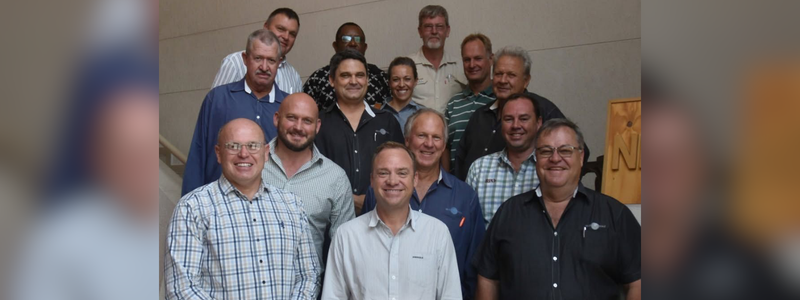
The NAU, Livestock Producers’ Organisation (LPO) and Livestock and Livestock Products Board (LLPB) met representatives of South Africa’s Red Meat Producers’ Organisation (RPO), AgriSA and Red Meat Industry Services (RMIS).
The NAU stressed that the meeting was an exchange between industry organisations and not a negotiation.
Only the governments of Namibia and South Africa can negotiate market access and trade arrangements, and no agreements were reached.
The union said industry organisations intended to present producers’ concerns to the government and develop an evidence-based proposal for consideration by veterinary authorities.
Namibia’s livestock industry has been at a standstill since 23 September. By 15 October, 131 animals on 18 farms in the Karasburg district had tested positive for FMD. A separate outbreak was confirmed in the Zambezi Region on 7 October.
NAU president Thinus Pretorius said the economic consequences of the outbreak extended beyond the direct loss of animals.
“FMD seldom kills a cow, but it slits the economic throat of a farm,” Pretorius said, adding that South African farmers understood the impact because they had experienced the disease.
The NAU said the discussions also highlighted the effects of the trade disruption on South Africa’s red meat industry.
According to the RPO, weaner calf prices at some South African auctions had increased to between R57 and R60 per kilogram, while lamb carcass prices had risen sharply in certain areas.
Namibian lambs account for about 15% of South Africa’s sheep slaughter this year, according to the NAU.
At some South African abattoirs built specifically to process Namibian lambs, they account for more than 70% of throughput.
The union said those facilities could not survive on their own lamb supplies alone.
RPO chief executive officer Frikkie Maré said the disease threatened livelihoods beyond those directly linked to animal losses.
“This virus has the potential to cut off the livelihoods of more people than the number of animals it will kill,” Maré said.
NAU chief executive officer Roelie Venter said the industry could not afford to wait for lengthy formal processes without considering interim measures.
“Waiting is not a plan. Every week has a price, and the farmer pays it first,” Venter said.
LPO chairperson Jako van Wyk said the government was working to contain the disease, while the NAU was representing the interests of its members.
“The government is fighting against the disease. The NAU is fighting for our members,” van Wyk said.