Staff Writer
Namibia has called for stronger partnerships between Africa and the European Union (EU) to ensure that critical minerals and other raw materials are processed locally, with producer countries benefiting through technology transfers, skills development, infrastructure investment and improved market access.
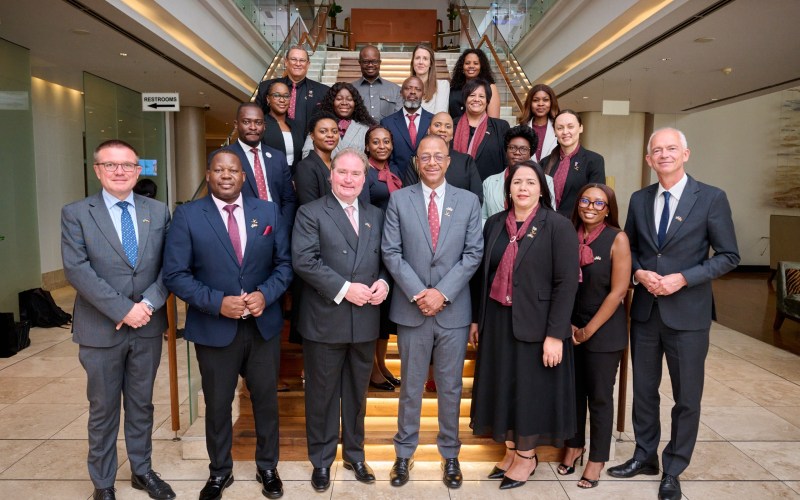
The position was outlined in a parliamentary report on Namibia’s participation in the Organisation of African, Caribbean and Pacific States (OACPS) and European Union Partnership Meeting and the first Africa-EU Parliamentary Plenary Session, held in Eswatini.
The Namibian delegation called on the Africa-EU Council of Ministers to prioritise economic frameworks that promote local beneficiation and industrialisation rather than leaving African countries dependent on exporting unprocessed natural resources.
The recommendation aligns with the Africa Mining Vision and Agenda 2063, which seek to increase the economic benefits African countries derive from their natural resources through industrial development, employment creation and stronger domestic value chains.
The delegation was led by parliamentarian Hilma Iita, alongside Immanuel Nashinge and Sebastiaan Karupu.
The report states that partnerships involving critical raw materials should include technology transfers and specialised skills development in producer countries, alongside substantial infrastructure investment and fair access to markets.
The push comes as African countries seek to expand their role in mineral value chains and capture more economic value from their natural resources.
Beyond critical minerals, Namibia also raised concerns about national sovereignty and the implementation of international agreements, particularly the Samoa Agreement, which replaced the Cotonou Agreement.
Namibia signed the Samoa Agreement in December 2023, but its parliamentarians stressed that implementation must not undermine the country’s sovereignty or conflict with domestic legislation.
The country entered the agreement with specific reservations concerning undefined terms and commitments relating to sexual and reproductive health rights, as well as external demands concerning wildlife management.
On wildlife, the delegation highlighted concerns about foreign-driven demands under the Convention on International Trade in Endangered Species of Wild Fauna and Flora (CITES) for the destruction of wildlife stockpiles, which it said conflict with Namibia’s national policy.
The report states that parliamentary standing committees will maintain oversight of the agreement’s implementation, particularly in areas covered by Namibia’s reservations.
The delegation also called for greater fairness in youth mobility between Europe and Africa, pointing to disparities in visa requirements and the costs faced by African young people travelling to Europe.
It proposed that Namibian academic institutions develop joint mobility arrangements based on mutual respect and co-investment, rather than relying on one-sided assistance.
The report further identifies manufacturing and local industrialisation as important responses to irregular youth migration across the Mediterranean, arguing that employment opportunities and improved living standards are necessary to retain skills on the continent.
Women’s participation in agricultural value chains was another priority raised during the parliamentary discussions.
The delegation advocated increased access to capital and co-investment for women-led agribusinesses, with women securing ownership and participation throughout the value chain, from seed production to retail.