Namibia has a problem that should force us to rethink how we plan and finance national development.
The Government Institutions Pension Fund (GIPF) has N$5.1 billion awaiting investment in viable Namibian projects, yet the country continues to grapple with unemployment, a housing crisis, infrastructure deficits and an economy struggling to create sufficient opportunities.
This is a contradiction we should not accept as normal.
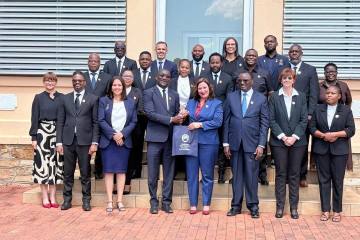
At the recent GIPF Investment Symposium, board chairperson Penda Ithindi disclosed that the Fund had committed N$28.2 billion to its unlisted investment portfolio, of which N$23.1 billion had already been invested. The remaining N$5.1 billion is available for suitable opportunities.
Ithindi was clear that GIPF cannot compromise its investment principles. Projects must be financially viable, properly governed and sufficiently secured. That is entirely reasonable.
These are pension contributions belonging to thousands of Namibians, not money that can be distributed to satisfy political promises.
But his remarks also expose a weakness in our national development planning. We have capital looking for projects, while we have a country full of unmet needs looking for capital.
The answer is not to lower investment standards. It is to improve our ability to develop bankable projects.
The government should establish a dedicated national project preparation facility, bringing together the ministry of finance, the National Planning Commission, development finance institutions, local authorities and private-sector experts.
Its purpose would be to identify viable projects, conduct feasibility studies, prepare business cases, secure land and regulatory approvals, and structure proposals that meet institutional investors’ requirements.
There are several areas where this capital could make a meaningful difference.
Housing and urban infrastructure should be a priority. GIPF has already demonstrated its capacity to invest in housing and property.
More partnerships with municipalities and private developers could finance serviced land, affordable housing, rental developments and essential infrastructure.
The emphasis must be on projects that are commercially sustainable and accessible to working Namibians.
Energy is another obvious opportunity. Namibia needs additional generation capacity, transmission infrastructure and storage to support industrialisation and reduce dependence on imported electricity.
Renewable energy projects, developed through transparent public-private partnerships, could attract long-term institutional capital.
Water infrastructure deserves similar attention. Desalination, water recycling, storage and regional distribution projects are essential to economic security.
These investments can support households, agriculture, mining and manufacturing while generating predictable revenue streams where appropriately structured.
Agriculture and food production also offer opportunities. Irrigation schemes, cold-storage facilities, abattoirs, grain-processing plants and logistics infrastructure could help move Namibia beyond exporting raw commodities and importing a significant share of its food requirements.
There is also scope to expand financing for small and medium-sized enterprises.
This should be done through professionally managed investment funds, credit-enhancement structures and carefully assessed businesses rather than direct political allocations.
Entrepreneurs need patient capital, but investors need credible business models and accountability.
Namibia should also consider infrastructure and development bonds, project-specific investment vehicles and blended-finance arrangements that combine public funding, development finance and private capital.
Such structures can distribute risk appropriately and make projects attractive to institutional investors.
However, none of this will happen without discipline. Projects must be independently assessed, procurement must be transparent, and political interference must be kept out of investment decisions. GIPF’s primary responsibility remains protecting its members’ retirement savings.
The bigger responsibility lies with those entrusted with planning and implementing national development.
The government, municipalities and state-owned enterprises must stop treating feasibility studies, project preparation and implementation capacity as administrative afterthoughts.
A country with Namibia’s development needs should not have billions of dollars’ worth of potential investment opportunities existing only on paper. Nor should it have pension capital waiting indefinitely because projects are not ready.
The objective is not to spend N$5.1 billion for the sake of spending it. It is to create an environment in which good projects are continuously prepared, assessed and financed.
Namibia does not lack needs. It must demonstrate that it can turn those needs into viable investments.
The money is available. The question is whether we have the leadership, planning capacity and institutional discipline to put it to work.