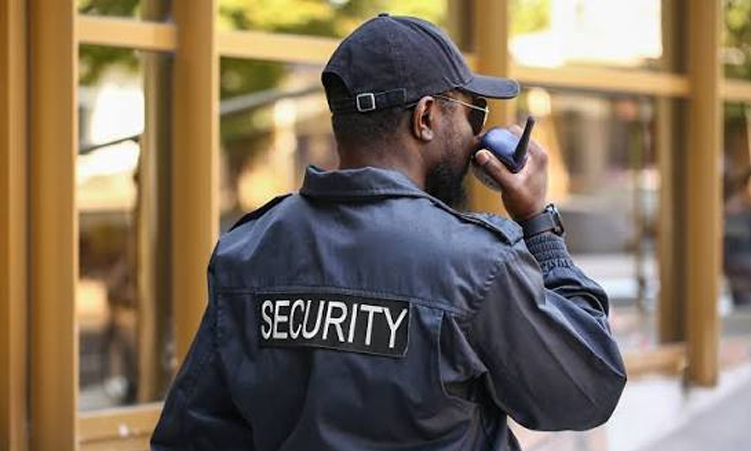
Khorixas owes 13 guards N$97 680 as workers face uncertain employment futures.
Desmarius Hansen and Patience Makwele
Security guards across Namibia say higher minimum wages will mean little if employers continue delaying salaries, making partial payments and failing to meet their employment obligations.
The concerns come as the sector prepares for a further minimum wage increase to N$18 an hour from January 2027, while 13 security guards employed by Khorixas Town Council are still awaiting N$97 680 in outstanding termination benefits.
The Khorixas Town Council has acknowledged that all 13 guards are affected by the outstanding payments, saying it is still trying to secure funds to settle the amount.
Council spokesperson Simson Oxurub confirmed that the workers’ remuneration had been revised from a fixed monthly salary of N$2 500 to an hourly rate of N$16, based on actual hours worked and applicable work schedules.
The guards have reportedly worked for the council for between one and three years, with concerns raised about their 12-hour rotating shifts, overtime compensation and the uncertainty surrounding their employment.
“The council is in the process of [securing] funds in order to settle the outstanding termination benefits that totals to N$97 680 collectively,” Oxurub said.
The council has also placed the workers on successive three-month contracts, pending the advertisement and finalisation of a security services tender.
Oxurub said security services were not provided for in the council’s organisational structure, describing the contracts as an interim arrangement intended to ensure the safety of council premises and property.
The council said it had not received or registered any formal grievances from the security officers, although workers have reportedly expressed fears about raising concerns over their employment conditions.
Meanwhile, the Namibia Security Labour Forum (NSLF) announced that the final phase of the national minimum wage adjustment would take effect on 1 January 2027, requiring security companies to pay at least N$18 for every ordinary working hour.
The increase from the current N$16 represents a 12.5% adjustment and completes a three-year phased transition that began at N$13.50 in January 2025.
However, security workers say the increases do not necessarily address the financial difficulties they face.
A 49-year-old Windhoek security guard, who requested anonymity for fear of being recognised by her employer, said she welcomed the increase but believed the hourly rate should have reached at least N$20.
“Personally I support the N$2.00 increase even though it is small, I think they were supposed to at least maybe make it N$20 per hour or something,” she said.
The mother of three said she was the sole breadwinner in her household and struggled to meet the family’s daily expenses.
She also raised concerns about employers delaying salaries until December or paying workers only part of what they are owed.
“It is not good to have your workers begging you for their salaries when they show up to work every day,” she said.
In Zambezi, security guard Martin Likezo, 34, who has worked in the sector for two and a half years, also welcomed the adjustment but said workers continued to face extended shifts, weekend duties and understaffing.
Likezo, a father of two, said some workers had previously experienced significant salary delays.
“We just pray and hope that the companies which are responsible for paying us will also abide by the law,” he said, recalling that workers at his workplace received only half their November salaries in January after failing to receive payment on time.
The concerns come amid several reported cases of unpaid security workers, including employees of Shilimela Security Services in Zambezi, more than 160 Katima Mulilo Security Services employees and workers of Security Training College of Namibia CC stationed at government properties in Mariental.
The issue has also reached parliament, where Independent Patriots for Change member of parliament Elvis Lizazi questioned the labour ministry about measures to address late wage payments by security companies, including whether repeat offenders should be disqualified from public tenders.
In February, justice and labour relations minister Fillemon Wise Immanuel issued a circular directing government ministries to verify whether companies providing services to the state complied with minimum-wage requirements.
The NSLF has also warned that security contracts priced below the statutory cost of providing services could encourage labour-law violations and exploitation.
It has urged government institutions, state-owned enterprises and private clients to account for wages, overtime, statutory contributions, leave provisions and severance obligations when awarding security contracts.
Under the N$18 rate, a 12-hour shift would attract a basic payment of N$216, before applicable overtime and Sunday or public holiday premiums.
For workers such as those in Khorixas, however, the immediate challenge is not only how much they earn per hour, but whether they receive the money and employment benefits owed to them.