Sostenus Wilherm
The Mineworkers Union of Namibia (MUN) has been challenged to ensure its next four decades are defined not only by its historic role in advancing workers’ rights but also by its ability to prepare employees for a rapidly changing world of work driven by automation, artificial intelligence and the global energy transition.
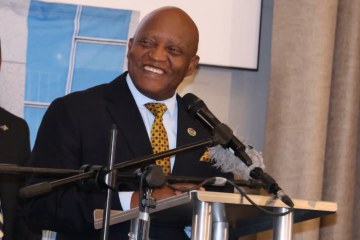
As the union marks its 40th anniversary this year, acting president Poco-Key Mberiuana says MUN’s greatest task is no longer simply defending workers against exploitation but ensuring they remain relevant and empowered in an economy undergoing profound transformation.
Founded in 1986, four years before Namibia attained independence, MUN emerged during one of the country’s most turbulent periods when the struggle for labour rights was closely linked to the fight for political freedom.
According to Mberiuana, the union’s history demonstrates that economic justice and national liberation have always been inseparable.
“Long before Namibia raised its flag as an independent nation, mineworkers were already raising their voices for dignity, fairness and justice,” Mberiuana said.
He noted that the organisation was established at a time when labour protections were minimal, workplace discrimination was widespread and many workers had little legal recourse against unfair treatment.
Against those conditions, organised labour became a powerful platform through which workers could collectively demand fair wages, improved working conditions and representation in decisions affecting their lives.
By 1987, more than 10 000 workers had been mobilised through the labour movement, reflecting growing demands for dignity and social justice. Historic labour actions, including the landmark Tsumeb strike of the late 1980s, became defining moments that influenced not only labour relations but also Namibia’s broader democratic transition.
Mberiuana said those sacrifices laid the foundation for many of the workplace protections enjoyed today, including collective bargaining rights, legal safeguards and improved occupational safety.
While MUN’s historical achievements remain significant, he stressed that the union cannot rely solely on its legacy.
“The legacy of MUN cannot become a museum piece. It must remain a living movement that continues to adapt while remaining rooted in the values that inspired its founding,” he said.
He argued that technological advances and shifting global economic trends are changing the nature of employment at a pace few could have anticipated decades ago.
Automation is increasingly replacing manual tasks, artificial intelligence is reshaping industries, while the global transition towards cleaner energy is expected to alter mining operations and labour requirements worldwide.
According to Mberiuana, these developments require a new generation of trade union leadership capable of helping workers navigate unfamiliar challenges.
“The next generation of workers will confront challenges that previous generations could scarcely imagine,” he added.
He further said that organised labour must play an active role in ensuring workers acquire new skills, remain employable and continue participating meaningfully in economic development rather than being displaced by technological change.
Beyond wage negotiations and workplace conditions, Mberiuana believes worker empowerment must increasingly focus on education, financial participation and long-term economic inclusion.
He said MUN has already demonstrated this broader vision by supporting educational initiatives that have enabled hundreds of young Namibians, particularly from mining communities, to pursue tertiary education.
Such investments, he argued, strengthen families, create opportunities for future generations and contribute to more resilient communities.
“The union has encouraged a vision in which workers are not only contributors to the economy but active participants in shaping their own futures,” he said.
He also highlighted the union’s continued efforts to safeguard jobs during periods of economic uncertainty, saying organised labour remains an important partner in balancing the interests of employees, employers and the national economy.
Namibia’s mining industry remains one of the country’s key economic sectors, employing thousands of workers and contributing significantly to export earnings and government revenue.
In that environment, MUN continues to serve as an important platform for dialogue between labour and industry while advocating for fair labour practices and social justice.
Mberiuana said the union’s contribution should also be measured by the lives it has improved beyond the workplace.
Its legacy, he noted, is reflected in stronger labour relations, expanded educational opportunities and continued efforts to ensure workers benefit from economic growth.
As MUN celebrates four decades of existence, Mberiuana said the anniversary should serve as both a moment of reflection and a call to action.
“The story of the union has always been one of ordinary people achieving meaningful change through unity, courage and collective action. That story remains unfinished,” he said.
He added that if the first 40 years were dedicated to securing workers a seat at the table, the next 40 years must focus on ensuring they remain active participants in shaping Namibia’s future economy.