Patience Makwele
The ministry of home affairs, immigration, safety and security has identified minors as the next priority in its drive to ensure Namibians have legal identity documents.
Deputy minister Edward Wambo said the country’s population register is stronger among adults, but gaps remain among children.
“The population register is strongest among adults but the frontier now is our minors,” Wambo said.
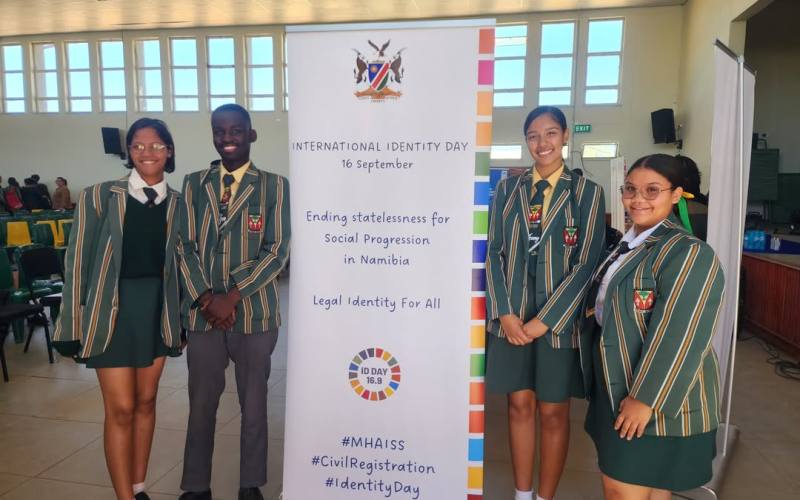
He was speaking on Wednesday at Dr Lemmer High School in Rehoboth during Namibia’s commemoration of International Identity Day, held under the theme “My Identity, My Shadow. Never Apart.”
Wambo urged learners to check the documentation status of children and other family members at home and to encourage those without documents to approach the ministry.
“Go home and ask whether every child in your household has a birth certificate. Ask whether your older siblings have their identity documents. If the answer is no, bring them to us,” he said.
He said learners could play a role as ambassadors by helping spread awareness about identity registration in their families and communities.
The ministry continues to face challenges with late birth registration and undocumented people, particularly in remote and marginalised communities.
Wambo said the ministry was taking registration services closer to communities through regional offices, outreach campaigns and partnerships with traditional leaders, schools, health facilities, police and development partners.
He said the government wants legal identity to become a reality for all by 2030, in line with Sustainable Development Goal 16.9 and the African Union Agenda 2063.
Deputy executive and chief registrar for civil registration Jackson Wandjiva said a birth certificate is a child’s first legal recognition and forms the foundation of a person’s identity throughout life.
“Identity is a human right,” Wandjiva said, adding that identity documents enable people to access services and opportunities, including education, healthcare, banking and employment.
He called for stronger cooperation between civil registration authorities and sectors such as health, education, policing and local government to address documentation gaps.
Wandjiva said Namibia’s population registration system is designed to capture major stages of a person’s life, from birth registration and the issuing of an identity document at 16 to marriage, parenthood and death registration.
Chairperson of the Rehoboth town council management Clcommittee, Gaob Kavango, said the significance of legal identity extends beyond the national identity card.
He said birth certificates, passports and voter cards are among the documents that establish a person’s legal identity and connect them to their family, community and country.
“Identity is like a shadow. It follows you wherever you go, connecting you to your family, your community, your culture and your country,” Kavango said.
Kavango also thanked the ministry for bringing the International Identity Day commemoration to Rehoboth, saying the event provided an opportunity to take the identity message directly to communities.
He described Rehoboth as the largest settlement south of Windhoek and thanked the ministry, local authorities, traditional and community representatives, teachers, learners and development partners for supporting the event.
Wambo said identity should not be viewed as the responsibility of the home affairs ministry alone, but as a cross-sector issue involving health, education, finance, social protection, justice, policing and local government.
“Identity is cross-sectoral. It touches every part of the government and every part of our society.”