Patience Makwele
Namibia’s justice system is struggling with poor court infrastructure, shortages of specialist services, weak record management and avoidable postponements that continue to slow the delivery of justice.
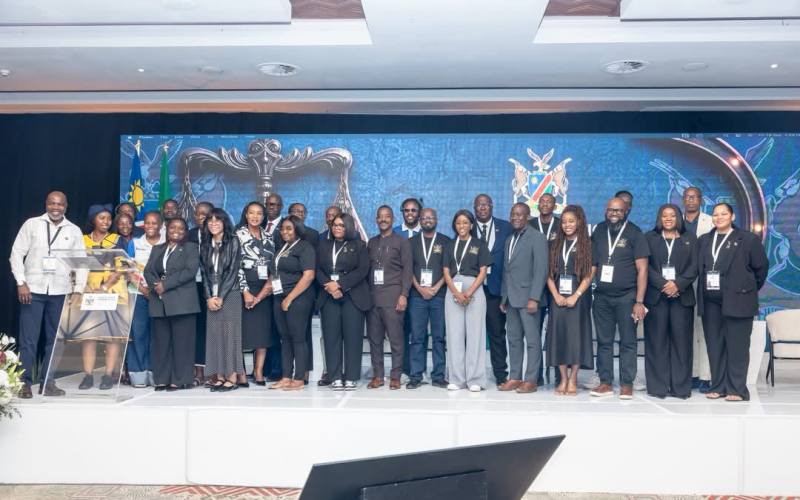
The problems came into light on Friday as the three-day State of Justice Conference in Windhoek concluded, with officials calling for practical measures to address weaknesses across the justice chain.
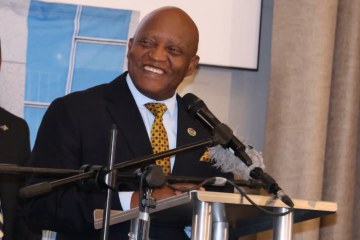
Ministry of justice and labour relations executive director Audrin Mathe said some courts remain inaccessible and poorly maintained, while others lack secure waiting areas, private consultation spaces and suitable facilities for children who have survived gender-based violence.
He also pointed to connectivity and record-management challenges, saying these can affect the movement and handling of information needed for cases to progress.
A shortage of psychiatrists available to conduct forensic assessments was another concern, with lengthy waits for specialist evaluations potentially delaying proceedings.
Mathe said the sector must also tackle avoidable postponements, which he linked to incomplete investigations, missing records, unavailable witnesses, delayed reports, transport problems and poor communication.
“We must move from managing avoidable postponements to preventing them,” Mathe said.
He said better preparation, timely information sharing, effective representation and accurate data could help reduce unnecessary delays.
According to Chief Justice Peter Shivute, the problems identified by Mathe are not confined to individual institutions, citing that weaknesses in one part of the justice chain can place pressure on the rest of the system.
“Delays in investigation may affect prosecution and adjudication. Delays in courts may have consequences for accused persons, victims and correctional facilities,” Shivute said.
He said resource and capacity constraints in one institution could therefore create additional pressure elsewhere.
“Challenges of this nature cannot adequately be addressed within institutional silos. The public does not see the institutional boundaries between us,” Shivute said.
“Nor does it ordinarily distinguish where the responsibility of one institution ends and another begins. It sees one justice system.”
Shivute stressed that the consequences of a slow justice system are ultimately felt across the sector.
“When justice is slow, the system fails to function as it should, the resulting loss of confidence is seldom apportioned, it is shared by all of us,” he said.
He nevertheless cautioned that greater cooperation should not blur the constitutional and statutory mandates of individual institutions.
Shivute also pushed for the conference to produce action rather than another set of recommendations that could lose momentum once delegates leave.
“I’m particularly encouraged by the emphasis placed on implementation and follow up,” he said.
“Considerable effort is often invested in identifying challenges and formulating recommendations, only for implementation to lose momentum once the immediate engagement has concluded.”
He welcomed plans for actionable resolutions with defined responsibilities and timelines, together with a mechanism to monitor implementation and report progress.
“It signals that this is not intended to be an isolated event but the beginning of a process in which commitments are followed through and progress can be assessed,” Shivute said.
Closing the conference, prime minister Elijah Ngurare called for stronger institutional cooperation, improved funding and better access to justice.
He also called for greater cooperation between states and regional bodies and urged justice institutions to integrate their information and communication technology systems while protecting data sovereignty.
Ngurare said the legal profession should also exercise what he termed “legal common sense”, warning against legal processes being used to harass people.
“I call for stronger institutional collaboration, enabling funding, improved access to justice and enhanced cooperation between states and regional bodies,” Ngurare said.