CHAMWE KAIRA
Overall, the latest Consumer Price Index data suggest that inflation is no longer merely rising on account of base effects but is increasingly being supported by strengthening underlying price momentum.
With oil prices rising and pushing up goods prices, fuel subsidies being withdrawn, and El Niño-related food and electricity risks intensifying, the inflation outlook appears increasingly tilted towards an upside-risk scenario over the medium term, Standard Bank Group Economist Helena Mboti says.
Headline inflation accelerated to 5% year-on-year in August 2026 from 4.4% in July and was notably higher than the 3.2% recorded in August 2025.
Mboti said the increase was primarily driven by transport inflation, which rose to 13.2% from -1.0% a year earlier.
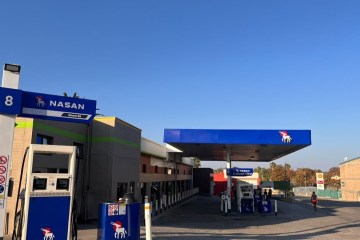
This reflected a sharp increase in petrol prices, which rose from -7.2% in August 2025 to 25.1% in August 2026, as well as higher public transport costs, particularly air transport prices, which increased by 17.0%.
She said these developments were closely linked to rising global crude oil prices, which averaged around US$84 per barrel in August 2026 and are now trading above US$100 per barrel amid growing geopolitical instability in the Middle East.
“Unlike earlier in the year, the government has indicated that it will no longer subsidise rising fuel costs, implying that future increases in global oil prices are likely to pass through more directly to consumers,” Mboti said.
As a result, transport-related inflationary pressures are expected to remain elevated in the near term.
Housing-related costs are also contributing to inflationary pressures, although these remain concentrated in utilities and household fuels rather than rental inflation.
Inflation in the electricity, gas and other fuels category increased from 1.6% in August 2025 to 4.1% in August 2026, largely reflecting higher prices for paraffin, methylated spirits and coal. Electricity tariffs were unchanged over the period, while gas prices declined.
Food inflation moderated from 5.2% year-on-year in August 2025 to 4% in August 2026 but increased from 3.7% in July, suggesting that food price pressures may be re-emerging.
Key contributors included bread and cereals, which recorded inflation of 3.3%, milk, cheese and eggs at 3.5%, and vegetables at 7.9%.
Mboti said upside risks identified in Standard Bank’s previous outlook were now materialising.
The first was the resurgence of Middle East tensions, which has resulted in renewed upward pressure on global oil prices.
Oil prices rose above US$100 per barrel in September, and Mboti said that should prices remain elevated and continue to average above US$90 per barrel, global inflationary pressures were likely to intensify further.
Under this scenario, Standard Bank expects Namibia’s headline inflation to average above 4% but below 5% in 2026 before rising to around 5% in 2027, supported by food price pressures. A second major risk relates to weather conditions.
The World Meteorological Organisation forecasts a near-100% probability that El Niño conditions will persist through late 2026 and into early 2027, with further strengthening expected before peaking towards the end of the year.
Given the historical relationship between El Niño events and agricultural production, Mboti said this raised the risk of higher food prices across the region in the coming quarters.
For Namibia, prolonged drought conditions could also affect electricity generation at Ruacana, potentially increasing the country’s reliance on imported electricity.
This could result in further increases in electricity tariffs depending on the duration of the drought.
While core inflation remains relatively contained, Mboti said the balance of risks to headline inflation had become increasingly skewed to the upside as energy and food-related pressures continued to build.
Monthly inflation trends also pointed to strengthening underlying price pressures. Monthly inflation accelerated to 0.6% in August from 0.1% in July and 0% in August 2025.
The August reading was above the average monthly increase of 0.3% recorded during both 2024 and 2025.
The year-to-date average stands at 0.5%, only marginally below the 0.6% average recorded during the 2022 global oil price shock.
“This suggests that underlying price pressures are strengthening and that inflation momentum is building,” Mboti said. For the first time this year, goods inflation, at 5.2%, exceeded services inflation of 4.7%.
Mboti said this could represent an early indication that higher import and transport costs were beginning to pass through to a broader range of consumer goods, suggesting that external cost pressures were becoming more widely embedded across the Namibian economy.