Sostenus Wilherm
Namibia risks losing parts of its cultural identity if communities fail to actively protect indigenous languages, traditions and knowledge, according to minister of justice and labour relations Fillemon Wise Immanuel.
He said students and institutions should move beyond cultural preservation and explore ways of turning heritage into economic opportunities.
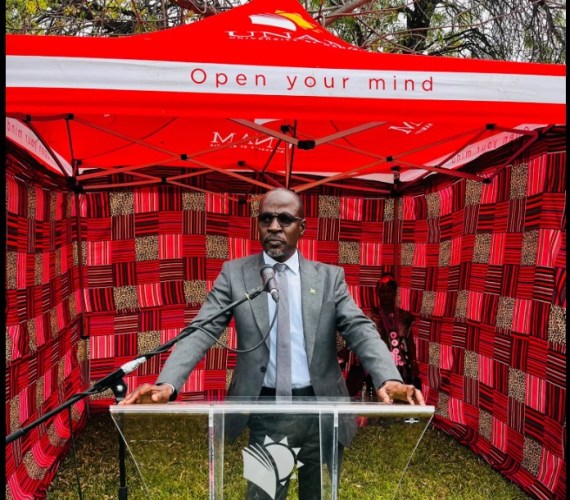
Speaking at the opening of the University of Namibia (Unam) Ogongo Cultural Festival on Wednesday, Immanuel said culture should not be reduced to traditional clothing, food and dancing, arguing that it forms the foundation of a community’s identity, history and way of life.
“Culture is about how we see ourselves in the mirrors. Culture is about how we relate to one another. Culture is the rule of engagement,” he said.
Immanuel said culture provides societies with a framework for how people interact, resolve disputes and understand their place in the world.
He said it also serves as a record of where communities come from while shaping how they understand their present and future.
He warned that cultural practices are increasingly being influenced by foreign cultures, raising questions about what communities are doing to prevent the erosion of their own traditions.
“There is so much that is penetrating our culture in the form of cultural imperialism,” Immanuel said, challenging communities to consider what defence mechanisms they have in place to protect their cultural identity.
One of his key concerns was the gradual loss of indigenous languages and traditional names, which he said should not be treated as a sign of progress or pride.
Immanuel questioned how children from different Namibian cultural groups grow up unable to speak their mother languages, saying parents have a responsibility to ensure that indigenous languages are passed on to younger generations.
He stated that the deviation from cultural norms, including feminism, have influenced cultural practices, adding that Namibians should do some introspection to assess why issues like domestic violence are suddenly occurring more frequently.
“Back then, we didn’t have a high rate of domestic violence because culture was structured. Things like feminism, where a woman wants to take over the role of the other gender were non-existent,” he told the Windhoek Observer.
“Nowadays, you find couples fighting over who names a child. Traditionally and in most cultures, a woman carried a pregnancy while the father named the child. Are we introspecting to assess why so many things are happening?”
He further challenged parents to teach and encourage their children to speak the languages of their communities, warning that the loss of language could weaken the connection between younger generations and their cultural heritage.
Immanuel also shifted the discussion from preservation to the economic potential of culture, challenging students, scholars and institutions to consider how cultural knowledge and heritage could generate economic opportunities.
“How do we turn our culture into an economic asset?” he asked.
He also questioned whether enough is being done to transform traditional knowledge, cultural materials and practices into products that can be marketed locally and internationally.
Immanuel specifically challenged institutions such as the Unam to examine how they can assist communities in adding value to traditional materials and cultural products rather than allowing valuable knowledge and resources to remain largely undocumented or commercially unexplored.
He also called for greater support for local authors and traditional orators to document their work, particularly knowledge contained in spoken word, storytelling and other forms of oral tradition.
According to Immanuel, indigenous knowledge held by authentic traditional healers should also be documented so that such knowledge is preserved and can be passed on to future generations.
He further linked culture and knowledge to education, referring to Articles 19 and 20 of the Namibian Constitution, which provide for the right to culture and the right to education.
Immanuel said education gives people access to knowledge but challenged students to think beyond acquiring qualifications and consider how their knowledge could be applied to benefit their communities.
He urged students and scholars to return to their communities and document indigenous knowledge, strengthen cultural institutions and investigate opportunities in areas such as cultural tourism and value addition.
He further added that the challenge is not simply to keep culture alive, but to ensure that cultural knowledge survives, remains relevant to younger generations and creates opportunities for the communities that have preserved it.