President admits bureaucracy nearly cost Namibia strategic investment
Desmarius Hansen
President Netumbo Nandi-Ndaitwah has revealed that she personally pleaded with Nigerian billionaire Aliko Dangote not to abandon his planned investment in Namibia after government bureaucracy and administrative delays frustrated his team.
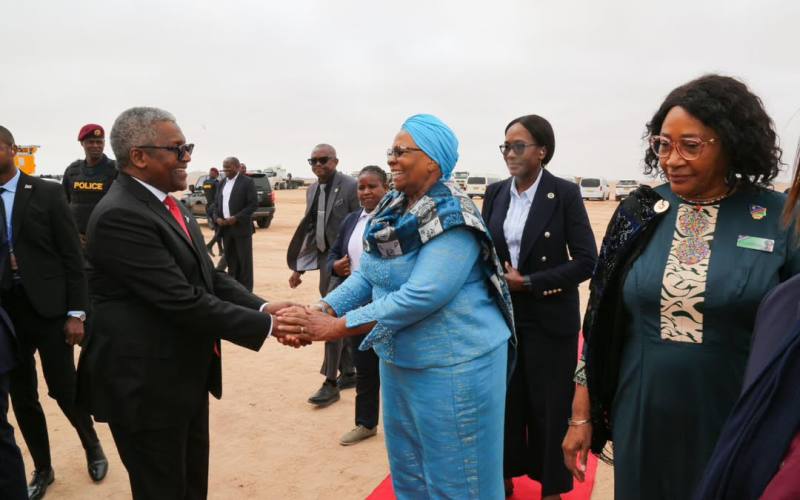
Speaking at the official launch of the Dangote Namibia Tank Farm and Regional Pipeline Project at Farm 58 in Walvis Bay on Wednesday, Nandi-Ndaitwah apologised to the billionaire for the delays, admitting that Namibia could have lost the strategic investment without her direct intervention.
“We could have lost this project had there not been direct communication between you and me,” she said.
Nandi-Ndaitwah disclosed that she had to personally call Dangote when his team was becoming increasingly frustrated, asking him to remain committed to the project despite the challenges encountered.
“I had to call Mr Dangote and plead with him to hold on and make it work,” she said.
She acknowledged that the delays were contrary to the urgency she had anticipated when the two first met in June 2025, when Dangote expressed his intention to invest in Namibia.
Nandi-Ndaitwah said the project was intended to strengthen petroleum supply security for Namibia and its landlocked neighbours, including parts of the Democratic Republic of Congo and potentially parts of South Africa.
“I must say that I was very happy with that undertaking, particularly in light of our discussions. He explained to me, and we fully agreed, that the purpose of this investment is to ensure security of oil supply for Namibia and its landlocked neighbouring countries,” she said.
In an unusual move to prevent the investment from collapsing, Nandi-Ndaitwah said she placed the project directly under the Office of the President, tasking National Planning Commission director-general Ambassador Kaire Mbuende with driving its implementation.
She explained that her decision was informed by previous experiences with investors who became frustrated with Namibia’s bureaucratic systems, resulting in the country losing potentially significant projects.
One such opportunity was a proposed shipyard establishment in Namibia, which she said collapsed after years of delays.
“After four years, they had to withdraw,” she said.
“Please know that this project will remain a presidential project until it is completed,” she declared.
She warned that bureaucratic inefficiencies could continue undermining development.
“I believe the Namibian bureaucracy will now realise that, if we move slowly, our people will continue to languish in poverty,” she said.
The project is expected to strengthen Namibia’s petroleum storage capacity and position the country as a regional energy and logistics hub, with the President emphasising its importance beyond national borders.
Nandi-Ndaitwah called on government institutions, including the ministries responsible for industries, mines and energy, works and transport, finance, as well as Namport, to cooperate with Dangote Industries to ensure smooth implementation.
“In executing this project, priority should be given to Namibians, followed by other Africans, so that together we can support one another,” she said.
She also said the project would provide opportunities for Namibians to acquire skills that could make them internationally competitive, even beyond the lifespan of their employment on the project.
She further revealed that the government was close to finalising its local content framework, which would be broadened beyond the oil and gas sector to cover investments across the country.
In a further indication of the government’s appetite for additional investment from the Nigerian conglomerate, Nandi-Ndaitwah extended an open invitation to Dangote to explore other opportunities in Namibia.
“I am also giving you a blank cheque for development purposes. And I am asking Namibians to join me in deciding what we would like the Dangote Group to invest in here in Namibia,” she said.
She ended by challenging the government to move beyond promises and ensure projects translate into tangible development.
“Today we have spoken, and now we must act.”