
CHAMWE KAIRA
Namibia’s housing shortage has widened dramatically over the past two decades, with the country’s housing deficit now estimated at approximately 300 000 units, compared with about 80 000 units recorded in 2007.
The growing gap highlights mounting pressure on government, municipalities and private developers to accelerate affordable housing delivery as rapid urbanisation, rising construction costs and limited access to mortgage finance continue to constrain supply.
According to macroeconomic analysis by Simonis Storm, Namibia’s housing challenge is increasingly concentrated in urban areas, particularly Windhoek, where population growth and migration are placing significant strain on existing infrastructure and housing availability.
Windhoek’s population is expanding by about 3.1% annually, while informal settlements are growing at an even faster rate of 6.1%.
The capital currently accounts for 150 of the 419 informal settlements identified nationally, accommodating an estimated 213 234 people across 67 077 households.
The analysis indicates that approximately 11 000 new informal dwellings are added each year, while formal housing delivery remains below the estimated demand of 15 000 units annually in Windhoek alone.
The City of Windhoek estimates that it requires around N$1 billion annually in investment merely to keep pace with existing housing demand. This exceeds the N$791.8 million in total building plan values approved across the city during the first six months of 2026.
The mismatch between housing demand and formal construction activity remains significant. In June 2026, Windhoek approved 197 building plans, with an average implied value of about N$1 million per project.
However, the national weighted average house price reached N$1.44 million in the first quarter of 2026, putting formal housing beyond the reach of many households.
An estimated 70% of Namibians cannot afford homes at prevailing market prices, leaving affordable housing, particularly homes priced below N$500 000, largely absent from formal building activity.
The housing shortage has been driven largely by structural migration, with people moving to urban centres in search of employment, education and access to services.
This trend is expected to continue as emerging industries, including oil, gas and green hydrogen developments, attract additional labour migration towards coastal towns and the capital.
The government has responded by increasing investment in housing initiatives. The National Housing Enterprise (NHE) received an additional N$1.5 billion allocation in the 2025/26 national budget to support informal settlement upgrading and low-cost housing development.
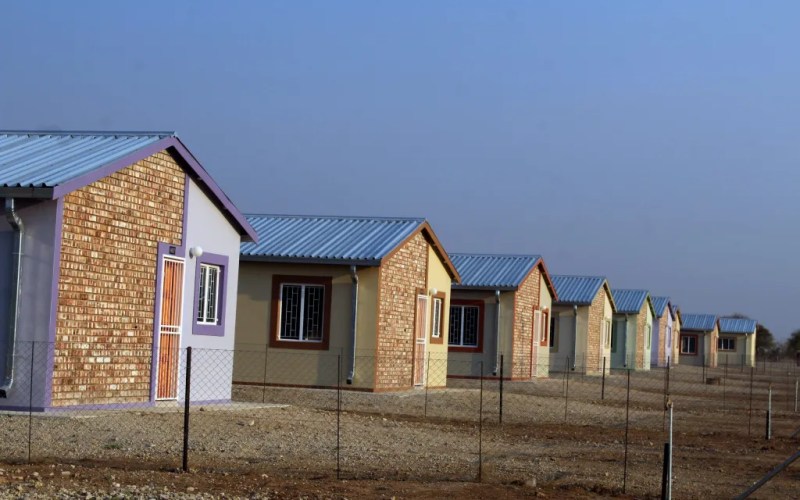
The Mass Housing Development Programme has delivered homes in areas including Otjomuise, Opuwo, Swakopmund, Grootfontein and Gobabis, while the NHE’s National Informal Settlement Upgrading Project aims to deliver about 2 000 low-cost units nationally by mid-2026.
The government has set a target of constructing 50 000 houses by 2030, requiring an average delivery rate of 10 000 units annually, nearly double the current pace of formal housing delivery.
To address the deficit, policymakers and industry stakeholders have identified several interventions, including accelerating land servicing and plot allocation, expanding affordable housing programmes such as Build Together and rent-to-buy schemes, and using institutional capital through social housing bonds.
Other proposed measures include linking informal settlement upgrading with bulk infrastructure investment, improving land tenure security, and developing a stronger construction skills pipeline to address shortages of artisans and project management capacity.


